Sixfold Content
Product Updates
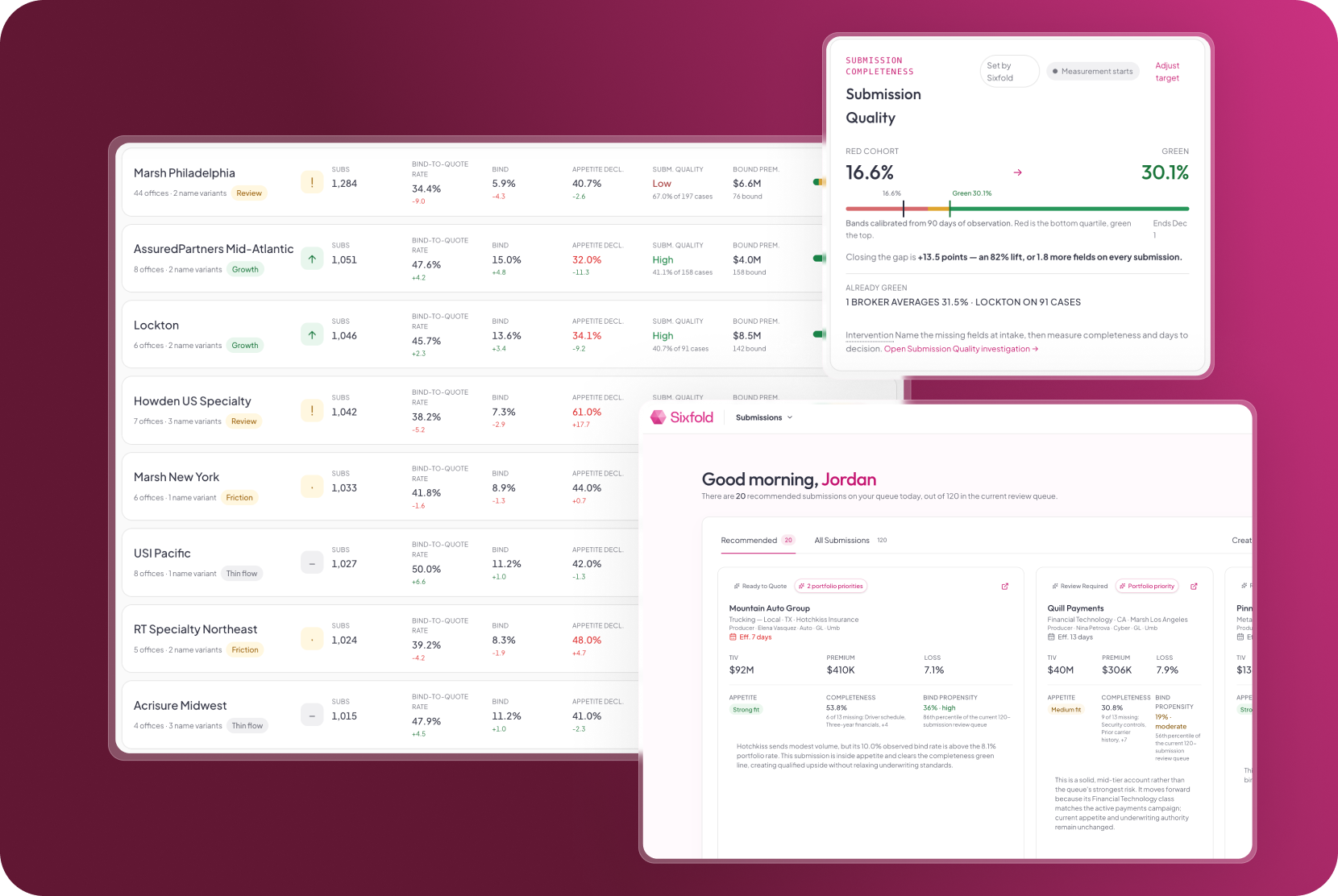
Introducing Distribution Intelligence
Sixfold is launching Distribution Intelligence, giving insurers the data and recommendations they need to proactively manage their distribution.



Explore all Resources
Stay informed, gain insights, and elevate your understanding of AI's role in the insurance industry with our comprehensive collection of articles, guides, and more.
.avif)
New Life & Health Narrative: Meeting Underwriters At Every Step
Narrative is Sixfold's new capability for Life & Health, giving underwriters a customizable, structured summary at initial review. It surfaces the key details needed to move a case forward, reducing back and forth and simplifying triage before deeper analysis.
Life & Health underwriting is a constant balance between speed and quality: getting the right coverage to customers before they go somewhere else. One missed detail can change the whole quote. But the longer pricing takes, the greater the risk of applicant drop-off.
Accelerated underwriting helps with simpler cases that don't require additional evidence, but as recently reported by Gen Re, up to 88% of cases still need some type of human review.
Those cases still go through the same workflow: sorting through documents at initial review, going back to the advisor or broker when something's missing, and when the case is finally ready, reading through hundreds of pages of medical records like EHRs, APS, and lab results to piece together the full health picture before making a decision.
It's a lot of steps and a big manual workload that keeps underwriters from bringing in more premiums and getting back to customers faster with better coverage. That’s where Sixfold comes in; underwriting AI built to help at every step of the process, bringing together the details that matter to your team, and now with our new Narrative, a tailored initial analysis that simplifies triage and reduces the unnecessary back and forth, before the deeper analysis.
The First Look At a Case
At the initial review, underwriters are trying to answer one question: Do I have what I need to move this case forward? Most of the time, that means going through multiple documents just to find out, and when something's missing, at least 30 minutes are spent on a case they'll have to come back to later.
Our new Narrative capability for Life & Health is a focused, structured case summary tailored to what matters to your underwriting team, surfacing the information you want to see upfront to help underwriters with triage and to figure out next steps. Sixfold’s AI agents read through all the case documents, application, APS and labs, and pull together the relevant details into one structured view, so underwriters don't have to. Each narrative is configurable to your team's specific workflow, so what gets surfaced reflects what actually matters for your decisions.
Imagine a case where an applicant has hypertension or a history of elevated cholesterol. The underwriter immediately needs to know if they have all the information about blood pressure and what meds they're on. Does this applicant smoke? What is their family history? This is information they need before they even begin to assess the case.
The Narrative gives you exactly the information you need to know before you move on.
"We want to support underwriters at every point in their workflow. Sometimes that means a focused Narrative to help with triage and next steps. Sometimes that means a deep condition analysis across hundreds of pages. The point is, wherever an underwriter is in the process, Sixfold is there to help."
— Noah Grosshandler, Product Manager at Sixfold
On the reinsurer side, it's a similar story. Underwriters are spending precious time just organizing loosely assembled submissions from cedents because most times the cases come in an inconsistent format, requiring additional questions before quoting, many of which wouldn't even be necessary if the information were clearly structured upfront.
With Narrative, these questions are answered upfront. Fewer emails back and forth with brokers and faster responses.
The Full Clinical Story: Conditions Analysis
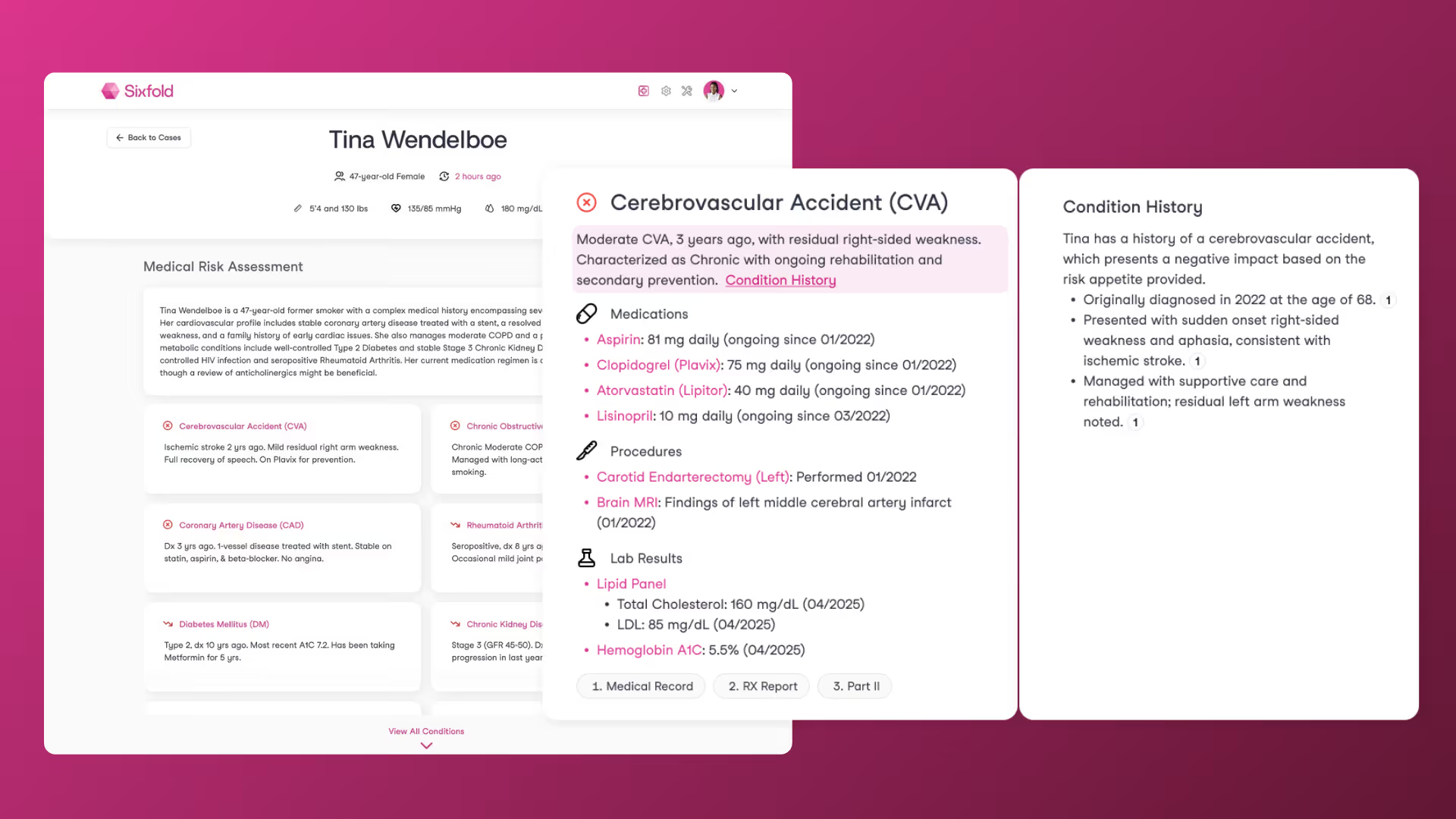
After triaging and making sure a case is ready to quote, underwriters go back to the manual review of hundreds of pages of medical records, trying to spot that one detail that will change the whole quote. It's pretty much like detective work, finding how a medicine connects to a diagnosis and what the impact is on that patient, trying to piece together the full medical story. Assessing history, severity, and how well a diagnosis is managed. Meanwhile, customers are waiting for a response.
That's where Sixfold's in-depth Conditions Analysis comes in. When the case is ready for a full review, our Conditions Analysis connects all the medical pieces, bringing together medications, labs, procedures, and diagnoses under each condition so underwriters can see the full clinical picture without jumping between documents. It highlights what's relevant to your underwriting guidelines, shows how conditions have progressed over time, and surfaces the clinical data that matters most for your decisions.
One example is a case where an applicant is taking Spironolactone, a common medication used to control high blood pressure, but also prescribed for hormonal acne. An underwriter would have to go through lengthy pages of documentation to find what dosage they're on, how long they've been taking it, and what it's actually being prescribed for. And that's just one medication. For complex cases, underwriters are doing this across multiple conditions with years of medical history.
With our Conditions Analysis, underwriters can spend their time on decision-making rather than document review and data gathering. Customers get faster and better quotes. Guardian, for example, saw a 50% reduction in review time using Sixfold.
When Speed is What Matters
Some of our customers work with higher-volume lines like structured settlements and annuities and often process over 10,000 cases per year; they don’t always need an in-depth Condition Analysis to move a case to the next step.
There are fewer key risk details that influence the analysis, so they have been able to use Narrative to move forward on up to 70% of their cases, consulting our full Conditions Analysis only for the most complex ones. For some teams, Narrative handles most of the heavy lifting of manual review.
"One of our customers built Narrative into their workflow for initial case review. It helps their underwriters get up to speed quickly and know exactly what needs attention. When a case requires deeper analysis, they move to our full Conditions Analysis, but Narrative gives them that strong starting point." — Justin Sorce, Customer Success Manager at Sixfold
Confident Underwriting Decisions
Whether it's a quick initial review or a deep dive into a complex case, Sixfold is there to help your team get to a confident underwriting decision faster.
And it works where your team already works, whether that's in our UI, a workbench, or a policy admin system. Every insight ties back to the source documents, so underwriters can verify what they're seeing. Built for underwriting since day one. HIPAA and SOC 2 certified, with single-tenant environments to keep your data secure. Rigorous AI fairness testing to meet evolving regulatory standards and grounded in our Responsible AI principles.
Introducing Institutional Intelligence
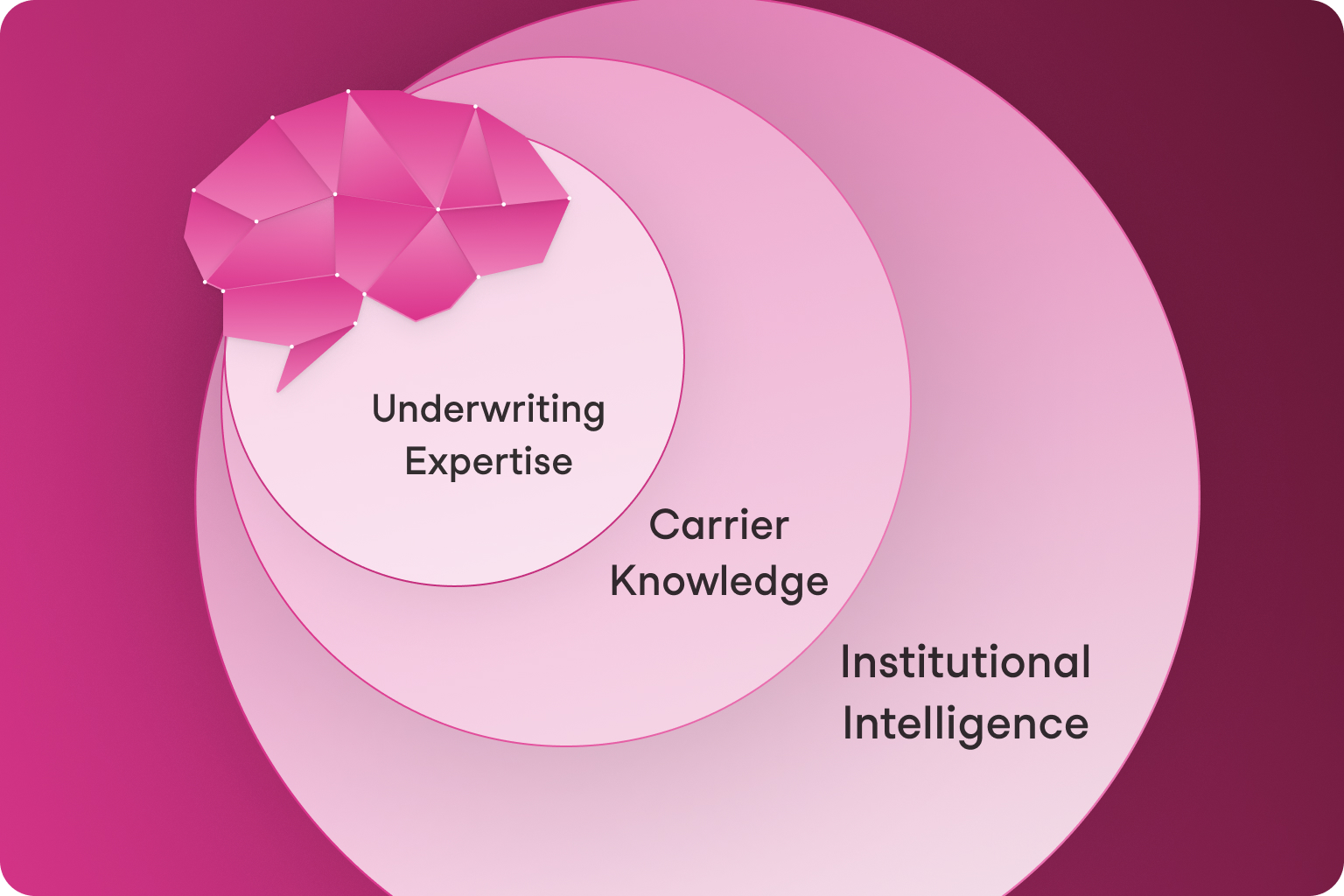
Institutional Intelligence is an advancement in Sixfold's Underwriting Brain connecting risks to the decisions and outcomes that follow. New types of insights and recommendations surface to elevate underwriters and keep you competitive without losing sight of portfolio balance.
Underwriting judgment is one of the most valuable assets an insurer has, and one of the most fragile. Great underwriters develop a feel for risk that goes beyond guidelines, judgment built from thousands of decisions over a career. It's what shapes portfolio quality and shows up in loss ratios. But that judgment is unique to each individual underwriter. The underwriters around them don't have access to it, and when they retire or move on, it's gone. Meanwhile, the portfolio intelligence that should be informing every decision: how similar risks have performed, which broker relationships produce adverse selection, where losses concentrate—doesn't reach underwriters where and when they need it.
AI underwriting changes what’s possible here. Every submission processed leaves behind structured and unstructured traces that are sometimes not easily identified: risk factors extracted, reasoning paths, agent recommendations. When connected to the decisions and outcomes that follow, those traces form a learning loop, and Institutional Intelligence builds.
When this intelligence is properly put to use, your underwriting gets smarter. New underwriters ramp faster, operating on insights with expertise and portfolio context built in. Decisions become more consistent across the team, grounded in collective knowledge rather than individual memory. Expertise doesn't walk out the door when senior underwriters move on. The entire organization is upleveled with knowledge that used to live in silos.
What We’re Building
Strengthening Our Foundation
Sixfold's Underwriting Brain is at the center of everything we do. We’re deepening its expertise through specialty training and certification courses—building a sharper understanding of how underwriters work end-to-end and the nuances across lines of business. The Brain then captures carrier-specific guidelines and appetite with its patented appetite ingestion engine, refined over time through an underwriter feedback loop. Playbooks go further, encoding complex references, ontologies, and documented practices unique to your organization, so Sixfold doesn't just understand underwriting, it understands how you underwrite.
Building Institutional Intelligence
The Brain then builds Institutional Intelligence through a learning loop, the first phase of which is available today. Carriers can feed decision and outcome data back into Sixfold through enhanced case statuses and the Sixfold API. This data further shapes Sixfold’s understanding of your appetite and what wins business.
The learning loop expands as more data flows in. We're working closely with customers to build the data connections that matter most: broker performance, referral decisions, policy structure, losses. The goal is Institutional Intelligence that moves the metrics carriers actually manage to: winnability, portfolio performance, loss ratios. And because we deploy each customer in an isolated environment, the intelligence captured is yours alone.
Agentic self-learning comes next, identifying patterns across submissions, learning which signal combinations predict losses, the Brain self-refining its understanding of your desired portfolio over time. We're building toward self-learning deliberately, with the governance, performance monitoring, and controls enterprise insurers expect from Sixfold.
Putting It To Work
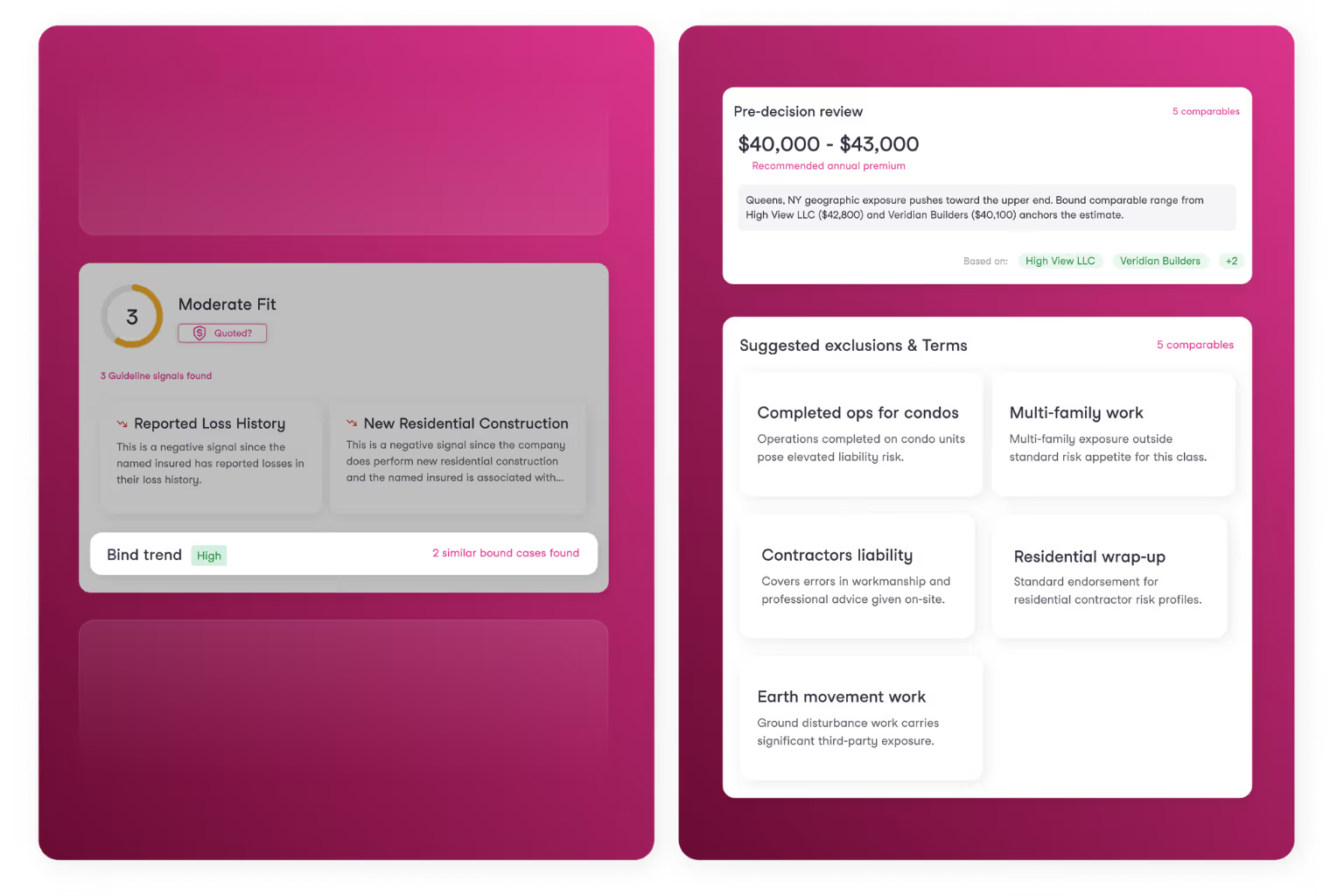
A new agentic backend allows these layers of knowledge to be put to work. The Brain and the agents behind it build a research and assessment plan specific to each submission that comes in, reasoning through what information it needs and what actions it needs to take. Insights and recommendations are surfaced to underwriters, actions are taken, all grounded in the expertise and Institutional Intelligence that sits in the Brain. As Institutional Intelligence deepens, so does what Sixfold can do for your team.
Current customers can begin feeding decision and outcome data into Sixfold today. Contact your Customer Success Manager to learn more.
Sixfold is actively conducting research sessions to help shape the future of our product. If you're interested in participating, reach out to us at hello@sixfold.ai.
Not yet a customer? Request a demo.
At Lloyd’s: The Future of Underwriting
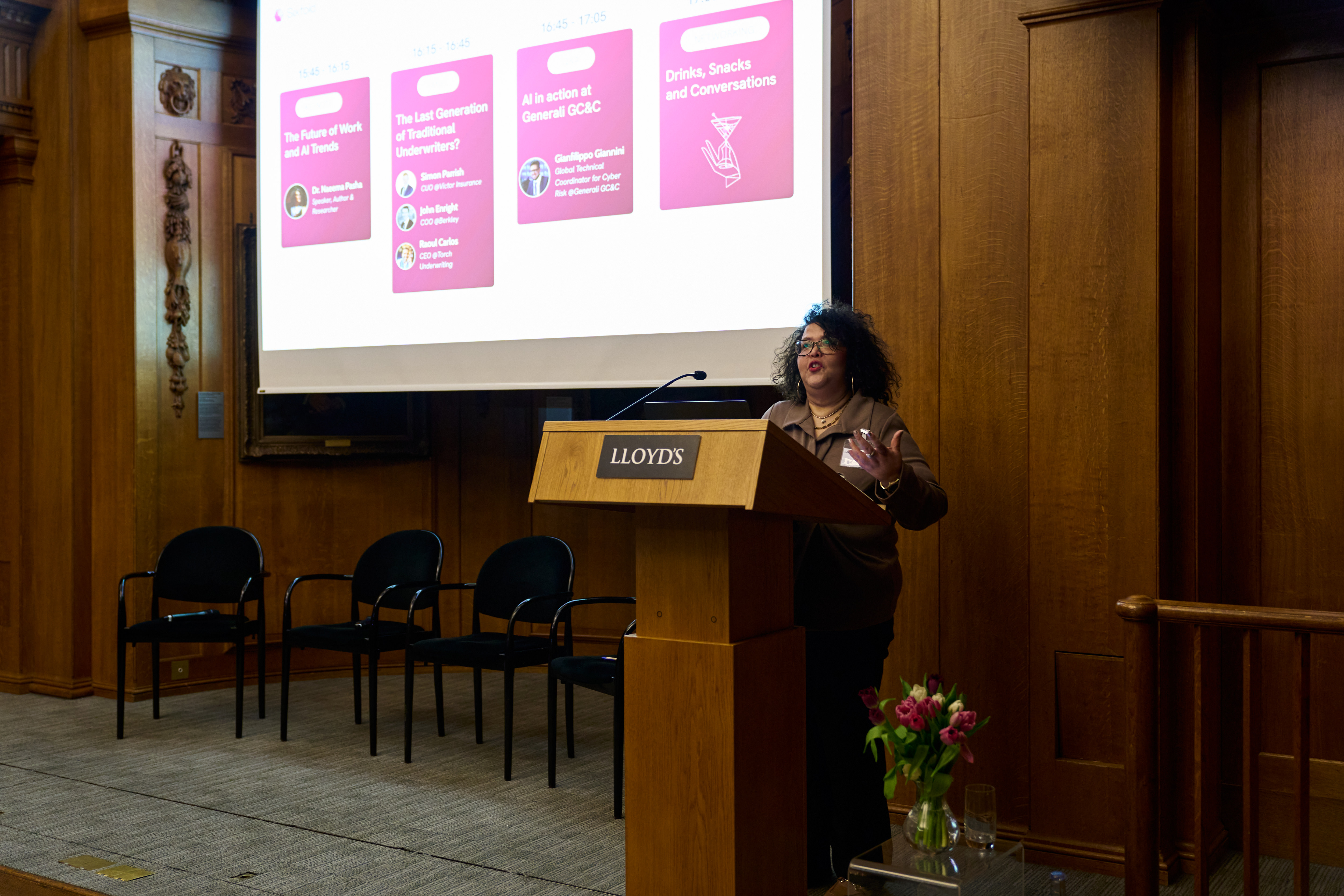
Sixfold hosted an event at Lloyd’s in London focused on the next generation of underwriters, featuring speakers and insights from Berkley, Victor Insurance, Generali GC&C, and Torch Underwriting.
Yesterday, Sixfold hosted an event at Lloyd’s in London on the future of underwriting work.
The event started with a keynote from Dr. Naeema Pasha on the future of work across industries, along with findings from her research with Allianz. One of the key takeaways was that the future of insurance still needs to be focused on people. With AI becoming more present, the question is how to build trust, support empathy and skills development, and design roles for the next generation of talent.
“What stood out in my research with Allianz was how much people in the insurance industry care and are passionate about the industry and its future.“
─ Dr. Naeema Pasha, Researcher, Author and Writer
There was also a great question from an aspiring underwriter asking what skills are needed today. Soft skills came up a lot, things like curiosity and adaptability, but also something simple: get out there, engage with people in the industry, and ask questions.
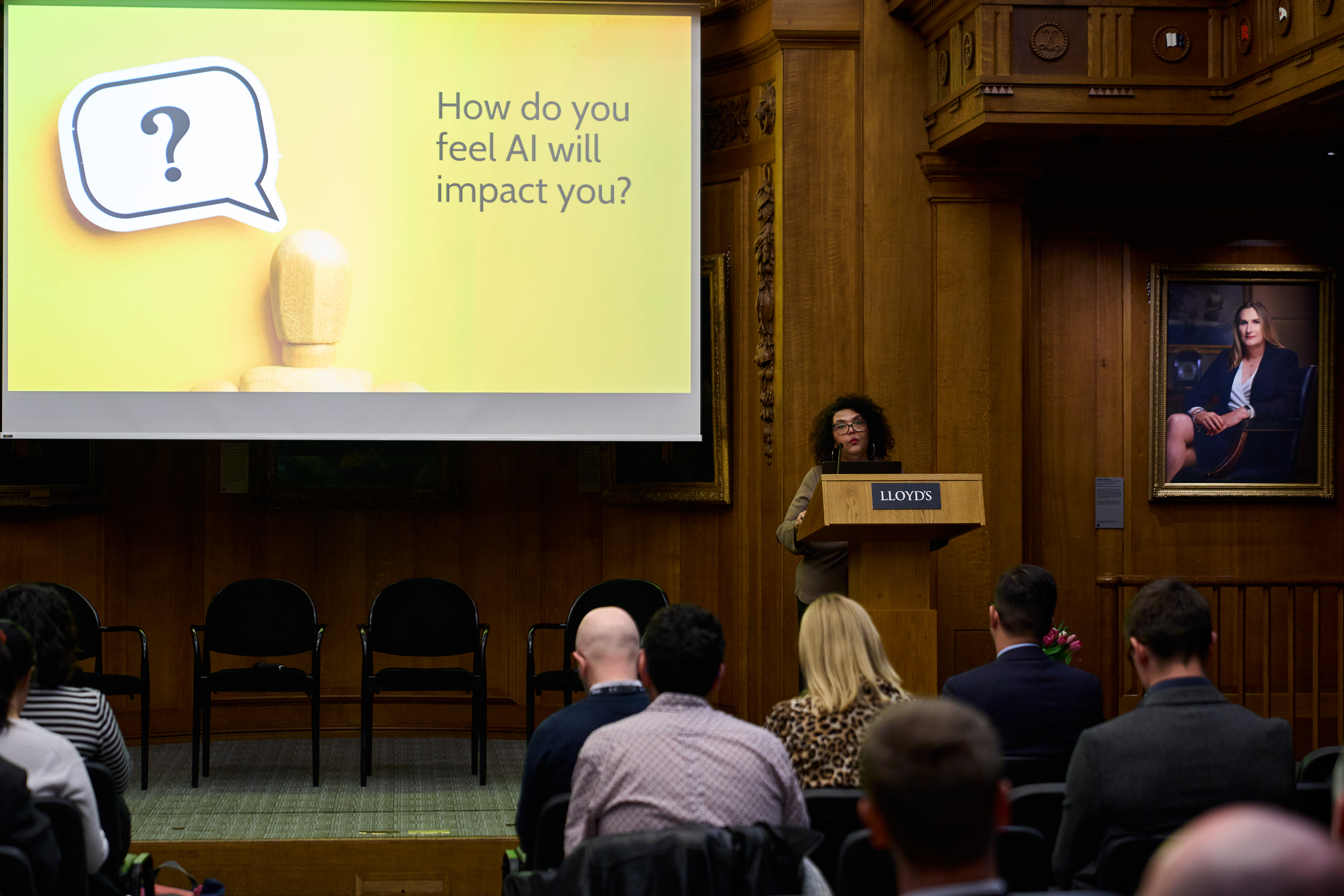
At one point, the audience was asked if they would let a robot cut their hair. Most people wouldn’t. It’s a simple example, but it comes back to trust.
The panel discussion featured Simon Parris, CUO at Victor Insurance; John Enright, COO at Berkley; and Raoul Carlos, Founder & CEO at Torch Underwriting, and focused on whether this is the last generation of traditional underwriters.
They started by sharing where they are today when it comes to AI implementation. A clear theme was that adoption and engagement from underwriters really matters. Agentic AI is moving fast with a lot of potential, and there was a lot of discussion around how AI can improve broker relationships and risk assessments as a whole. Raoul talked about building AI into their foundation from day one, including the data layer needed to support institutional intelligence over time.
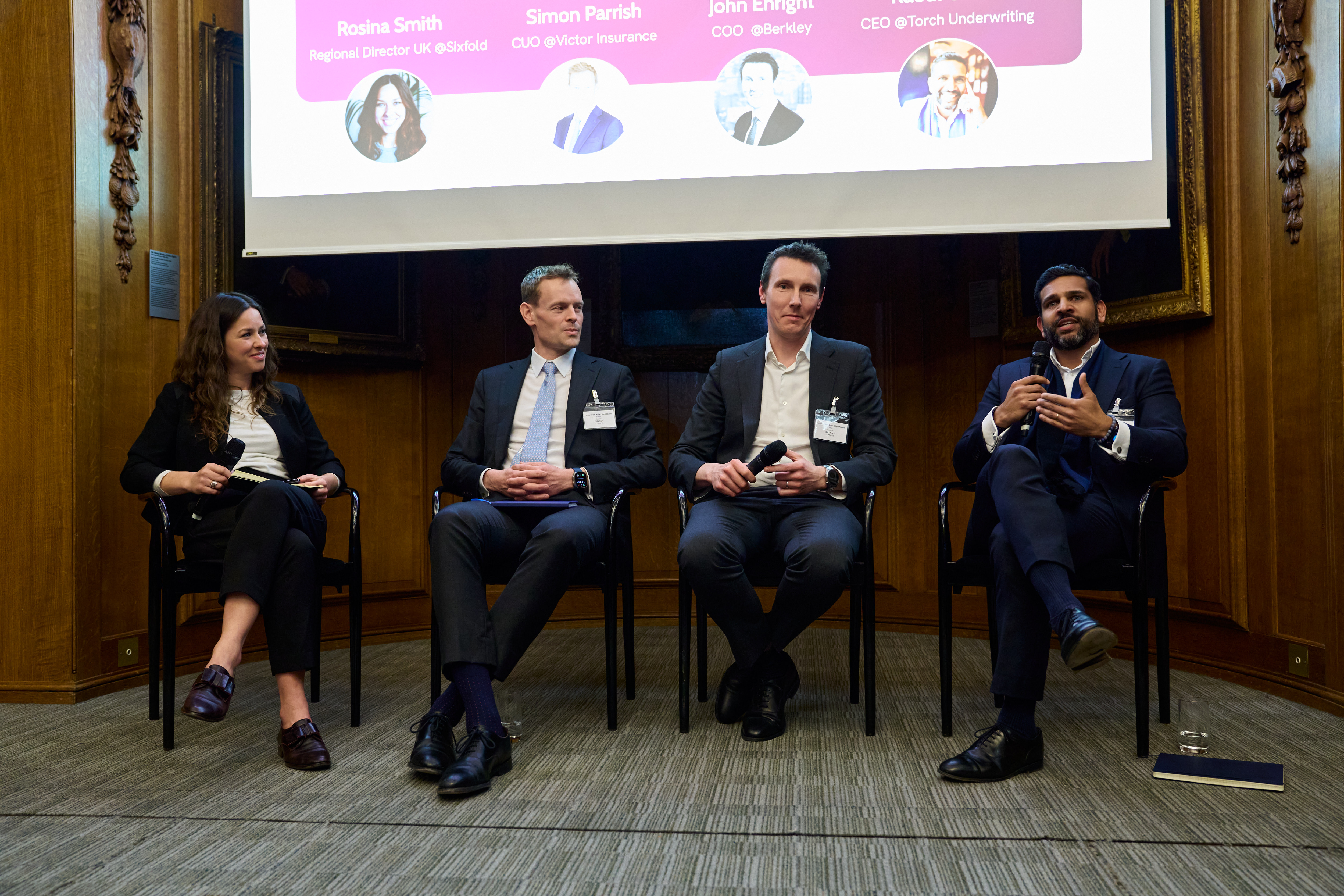
When it came to impact of AI, the conversation went beyond speed. Things like memorable engagement with brokers, pricing power through stronger relationships, more personal service, net promoter score, and the ability to think outside the box all came up. Better service and better products as well.
On hiring the future workforce, Raoul mentioned looking for curiosity and passion. Where the role used to be heavily focused on data wrangling, today it is much more about judgment, adaptability, creativity, and critical thinking. John highlighted integrity, trust, relationship skills, and the ability to work with a new toolkit. Simon mentioned market connections, strong underwriting fundamentals, and openness to new technology.
“The mechanics of how we work are changing, but this has happened hundreds of times throughout history.”
─ Raoul Carlos, Founder & CEO @Torch Underwriting
When asked what the underwriting role of the future might be called, the panel largely agreed it is still underwriting. Portfolio underwriting was mentioned, as well as next generation underwriter, but the core remains the same. From the audience, there were also questions around how to enter the industry. It is not just about academics. Apprenticeships matter. Continuous learning matters. And building teams with different perspectives and backgrounds still really matters.
On dealing with skepticism internally around AI, it was acknowledged that change can be uncomfortable. The advice was to make it part of the conversation, share examples, and host workshops. For insurance executives looking to learn more about AI, the message was to experiment and try it firsthand. Get into vibe coding, step outside of the comfort zone, and understand the opportunities by actually using the tools.
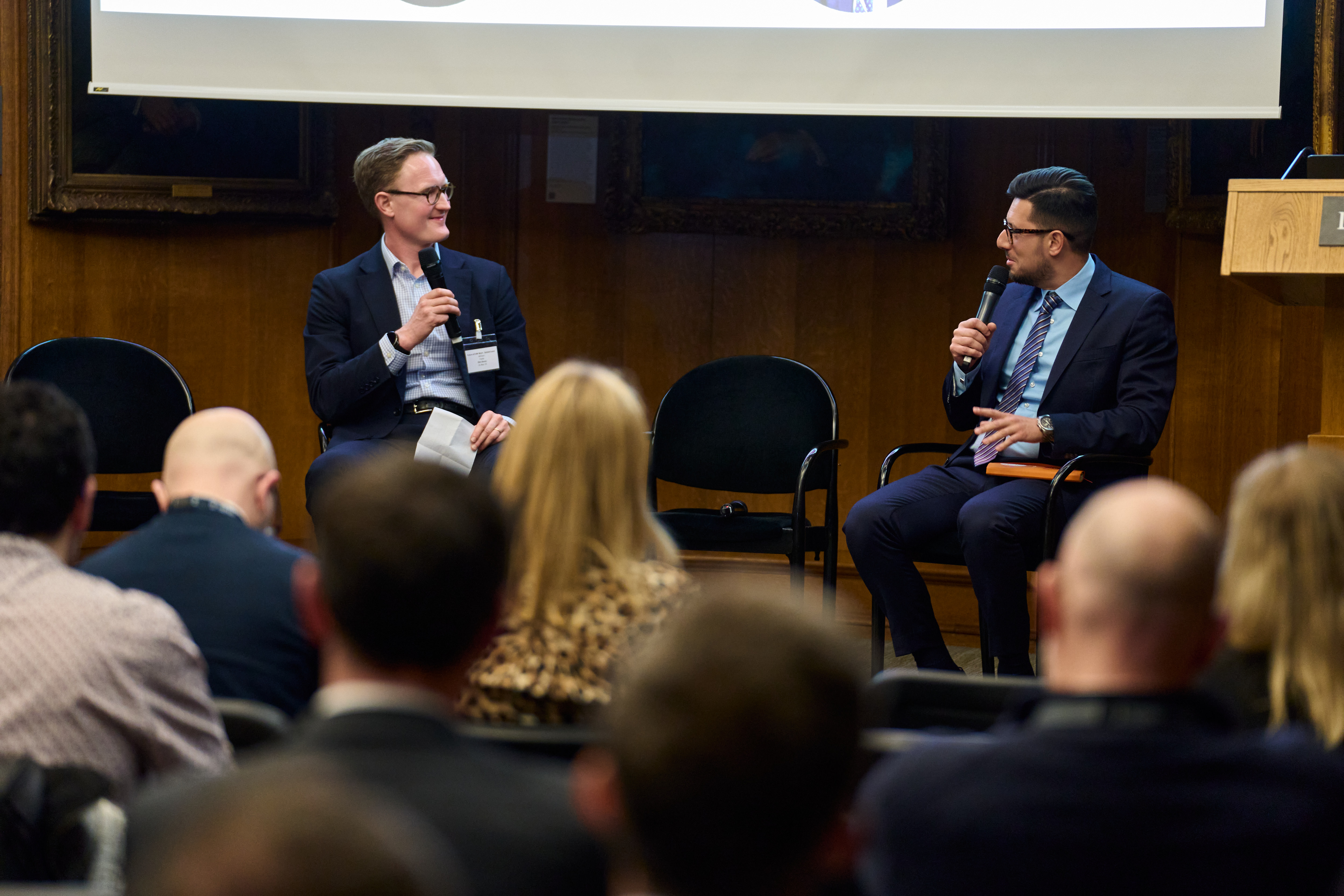
Lastly, Gianfilippo Giannini, Global Technical Coordinator Cyber Risk at Generali GC&C, took the stage for a Q&A and shared why they started looking for an AI vendor in the first place. They were operating in a soft market and needed to handle more submissions with the same headcount.
He also highlighted the importance of bringing underwriters in from the very beginning. The decision to choose Sixfold came down to security, privacy, a strong responsible AI framework, and a future proof roadmap, but also that the solution was clearly built for underwriting.
“Sixfold spoke the same language as us.”
─ Gianfilippo Giannini, Global Technical Coordinator Cyber Risk @Generali GC&C
There was some early skepticism from users, but once underwriters saw how it supported their day to day work, feedback quickly became very positive. At one point, underwriters who were not part of the pilot started asking when they could start using Sixfold as well.
Looking ahead, the focus for Generali GC&C when it comes to AI in underwriting is on data driven underwriting, with better visibility into portfolio trends and broker success rates.
Scaling AI in Underwriting: Lessons from Skyward & Zurich
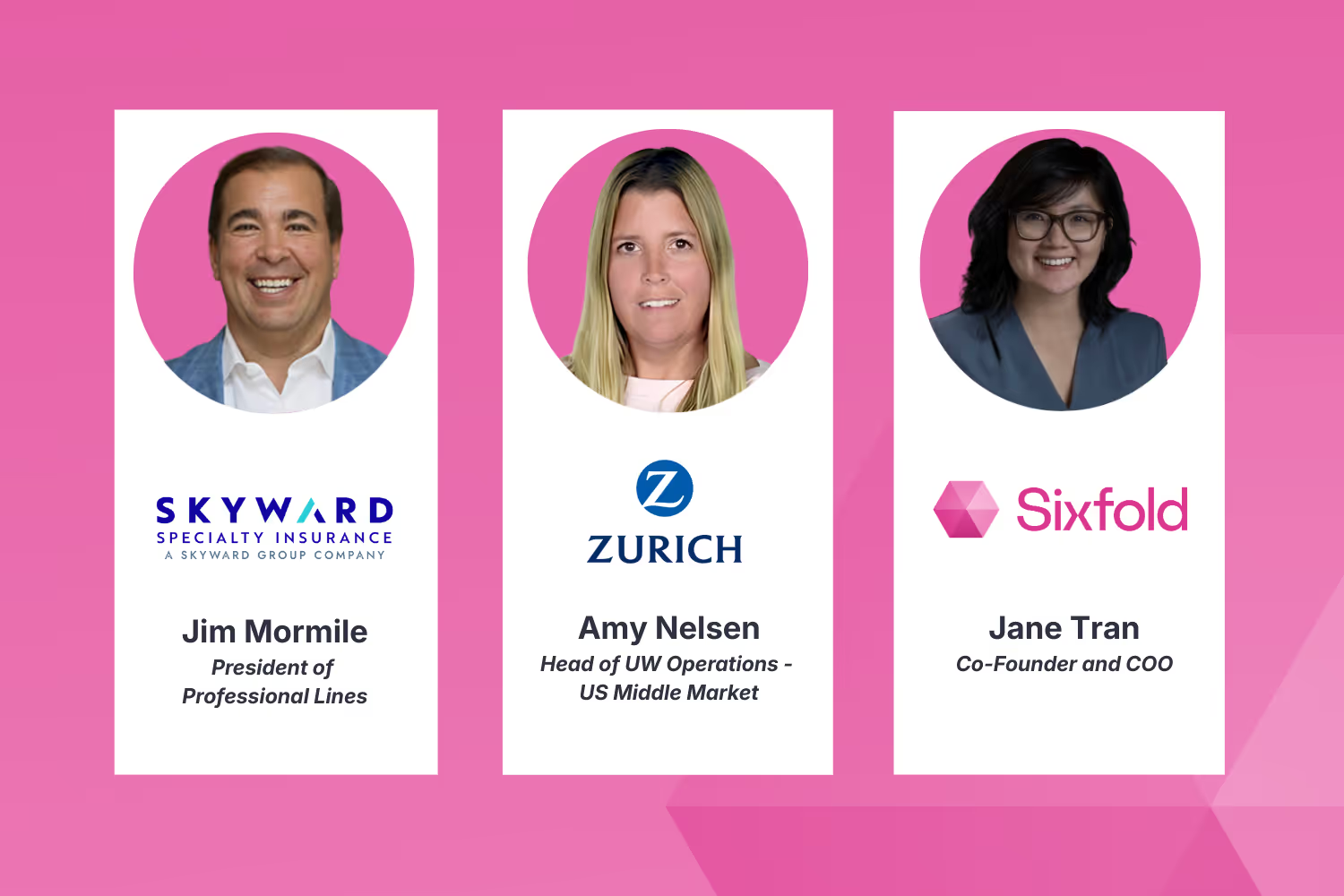
Most insurers have run an AI pilot. Far fewer have successfully scaled it. At a Sixfold webinar, Amy Nelsen at Zurich North America and Jim Mormile at Skyward Specialty shared what that journey actually looks like.
Most insurers have run an AI pilot. Far fewer have scaled one. At a recent Sixfold webinar, two carriers shared what it actually took to get there, and what production at scale really looks like.
Amy Nelsen, Head of UW Operations for US Middle Market at Zurich North America, and Jim Mormile, President of Professional Lines at Skyward Specialty, spoke about their experience rolling out Sixfold across their organizations.
Skyward is now live across more than 10 product lines with nearly 100 underwriters. Zurich has deployed across 30 US offices, with more than 200 underwriters using Sixfold in their daily workflow.
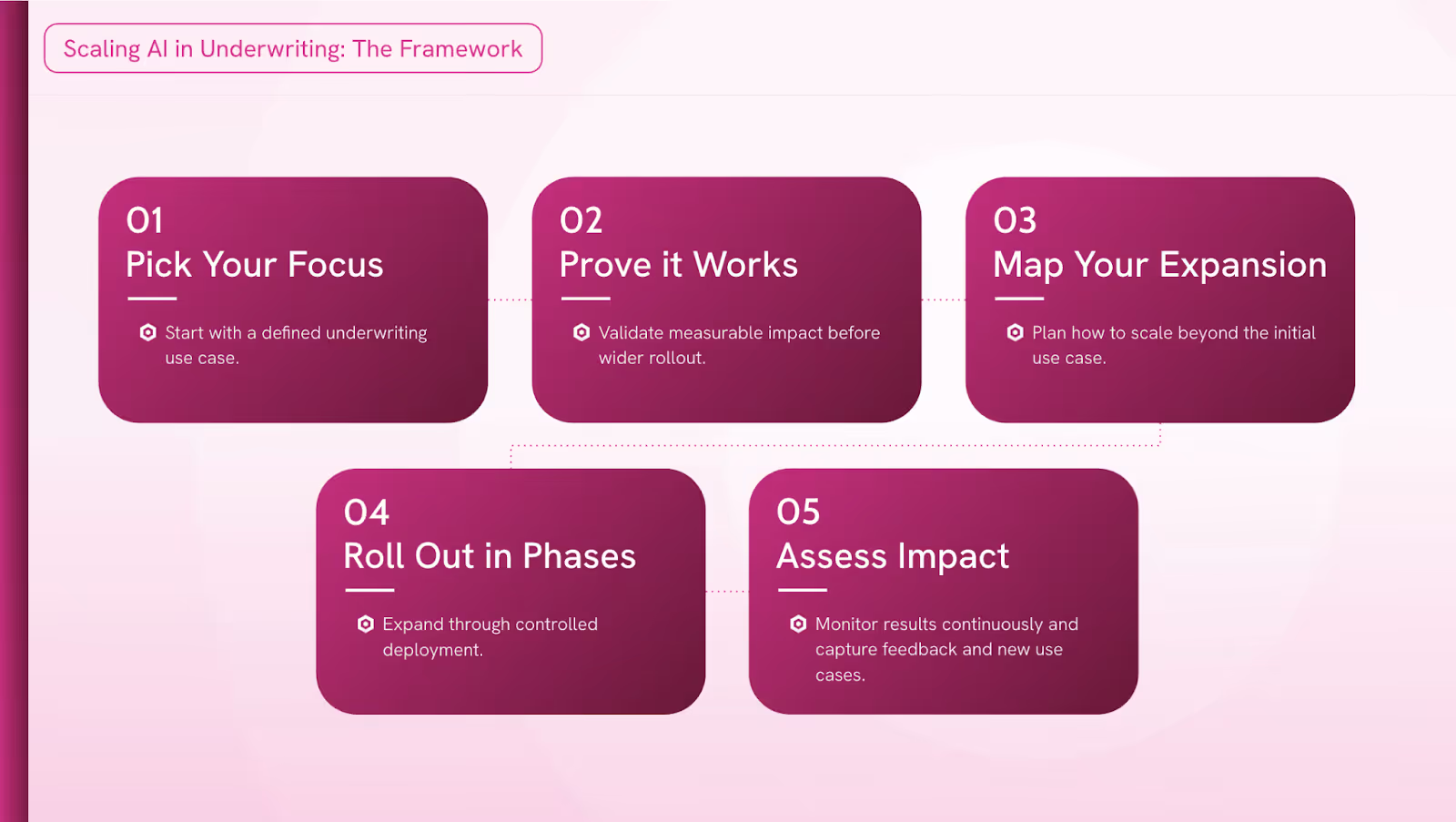
We walked through our five-step scaling framework with both of them to hear, in their own words, how each stage played out in practice.
Step 1: Pick Your Focus
The biggest mistake teams make is starting with AI and working backwards to find a problem. Both Amy and Jim were deliberate about doing the opposite, finding a genuine pain point first and then asking whether AI could solve it.
For Skyward, the problem was the triage wall. Underwriters were spending hours manually working through submissions just to determine basic appetite fit.
For Zurich it was starting with a use case which underwriters didn’t like doing: documentation.
"We had a healthcare risk where the underwriter got about a 75-page submission. It wasn't until page 56 to 59 that they realized the submission should not be covered since it was out of appetite."
─Jim Mormile @Skyward Specialty
Step 2: Prove It Works
Before scaling, you need a few signals that it's actually working, but that doesn't always come from a dashboard. Both Jim and Amy found that meaningful early indicators were user feedback.
For Jim, it was a veteran underwriter pulling him aside unprompted.
"The anecdotal evidence that really made us realize it was working: it was a veteran underwriter that came up to me and said, '[Sixfold] actually changed my day. It sped up my work progress and workflow'"
─Jim Mormile @Skyward Specialty
The follow-up signal was equally telling “underwriters stopped asking whether they should use Sixfold and started asking when it was coming to their line of business.” That's when Skyward knew it was time to expand.
Step 3: Map Your Expansion
Scaling AI isn't a single rollout but it's a series of decisions about sequencing, readiness, and change management. Both organizations took a structured approach, but in different ways.
Skyward scored each of their 16 lines of business across criteria like guideline robustness, process standardization, underwriting complexity, and, critically, how tech-forward the underwriting team was. They then hand-picked early adopters rather than opening the floodgates.
Zurich took a geographic approach, piloting across four offices before expanding countrywide, and intentionally included underwriters at different levels of tech comfort so they could anticipate resistance before it became a problem at scale.
Both teams also addressed job security fears head-on.
"It's less about the underwriting role becoming irrelevant, and more about if you handle a $10M book of business versus a $20M book of business."
─Amy Nelsen @Zurich North America
Jim's approach was to be explicit about what AI wouldn't do: no automated decision-making, no replacing the underwriter's final judgment. The framing was always about giving underwriters better information, not replacing their expertise.
Step 4: Roll Out in Phases
Both teams learned that trying to do too much too fast creates fatigue, and fatigue kills adoption. Skyward actually hit pause on one line of business after underwriters started showing signs of frustration. Rather than pushing through, leadership made the call to step back.
A few months later, that team came back ready to re-engage, pulled in by the FOMO of watching other lines of business benefit.
On the flip side, Skyward's phased approach led to real efficiency gains in deployment speed. Their first two lines of business took 12 to 14 weeks from introduction to production. By the time they were rolling out subsequent lines, they'd cut that down to eight weeks.
Amy's experience at Zurich echoed the same takeaway on speed:
"The most amazing part is how fast you can get from just a concept to deployment with Sixfold."
─Amy Nelsen @Zurich North America
Step 5: Assess Impact
Once AI is live in production, measuring success means looking at two things in parallel: business outcomes and output quality. Neither alone tells the full story.
For Jim at Skyward, that meant tracking time to quote and number of quotes out the door, but also running a monthly accuracy review and a sentiment score across underwriting teams.
"We constantly look at both ends of the spectrum: the ROI metrics, and whether the accuracy is there to give our underwriters the information they need to make better decisions."
─Jim Mormile @Skyward Specialty
Amy's approach at Zurich was similar, and revealing in its simplicity. Sixfold's success isn't measured separately from the business; it's measured through the business. When AI becomes embedded enough that you stop evaluating it as a standalone tool and start measuring it through your core business metrics, that's when you know it's really working.
"We're measuring our business outcomes like how many quotes underwriters are getting out the door and how much business have they bound. We also meet with Sixfold every month to look at quality metrics."
─Amy Nelsen @Zurich North America
The Final Wisdom
Scaling AI in underwriting isn't primarily a technology challenge, it's a people and process challenge. Both Amy and Jim closed with the same underlying message: be prepared for that thing change quickly in the world of AI, don't be afraid to fail, and don't stay stuck in proof-of-concept mode forever.
The insurers that will succed at scaling AI are the ones that move deliberately, learn fast, and bring their underwriters along for the ride from day one.
Watch the video recording of the entire webinar here.

Sixfold Raises $30M Series B
Sixfold has raised a $30M Series B to accelerate the next phase of growth in building the AI Underwriter. The round was led by Brewer Lane, with strategic investment from Guidewire and continued support from Bessemer Venture Partners and Salesforce Ventures.
In 2023, Brian, Jane, and I set out to build AI for underwriting. Not as another helper tool, but as the foundation for how underwriting should actually work going forward.
At the time, a few people thought we were crazy. But we believed underwriting was ready. And we believed underwriters deserved better.
That idea has now become real.
Today, I’m excited to share that Sixfold just raised a $30M Series B, led by Brewer Lane, with strategic investment from Guidewire, and continued support from Bessemer Venture Partners and Salesforce Ventures.
From Idea → The AI Underwriting Brain
Fast forward, we’ve built what we originally set out to build:
An underwriting AI brain that global carriers rely on every day.
Sixfold is already trusted by insurers like Zurich North America, Skyward Specialty, Guardian, Generali GC&C, AXIS, and Mosaic.
We’ve processed over 1 million submissions, across 40+ lines of business, supporting insurers representing $265B in gross written premium.
Sixfold is live across North America, the UK, Europe, Latin America, and Australia, underwriting risks across Property & Casualty and Life & Health. Production underwriting at global scale.
AI underwriting isn’t coming someday. It’s here, and Sixfold is leading it.
Underwriters Run the Book, Not the Tasks

We’ve already started to see the shift. Underwriters are no longer spending their days processing information. Instead, they’re making decisions. AI agents execute the work end-to-end. Humans focus on judgment, portfolio performance, and market opportunities.
Or put more simply:
Underwriting operations run on Sixfold. People run the strategy.
That’s the AI Underwriter.
Why Customers Love Sixfold
One of the biggest reasons Sixfold has scaled so quickly is that we don’t ask insurers to rip and replace everything.
Sixfold integrates directly into the tools underwriters already live in. Their workbenches, policy admin systems, existing workflows, and, of course, email inboxes.
Near-zero time to value isn’t a slogan. It’s how we’ve earned trust across the industry.
This Isn’t Theory — It’s Happening Now
What makes this moment exciting is that it’s no longer hypothetical.
Customers are already seeing major impact:
- Skyward deployed Sixfold across 11 underwriting teams and cut quote response time by 35%
- Zurich rolled Sixfold out to 200+ underwriters, saving up to 2 hours per submission
And the real win is what happens next:
- Underwriters are happier because they get time back
- Carriers respond faster with better quotes and better coverage
- Agents and brokers prefer working with those carriers
- Teams win more business and select risk more intelligently
- Competitive advantage starts showing up in combined ratio
Sixfold becomes the underwriting tool you can’t live without.
That’s what “AI transformation” looks like when it’s real.
Why Series B Now
.avif)
We’ve proven autonomous AI works in real underwriting environments. Now it’s time to scale.
This funding lets us go faster on what matters most:
- More autonomous underwriting agents
- Deeper integrations into carrier workflows
- Portfolio-level visibility
- Global expansion across markets where demand is already there
Underwriting remains the most complex and important function in insurance.
We’re rebuilding it with AI at the core and underwriters in control.
Bring on even more #Funderwriting!
Think post was originally posted on LinkedIn
.png)
AI Adoption Guide for Underwriting Teams
Over the past few years, we've worked with more than 50 underwriting teams to bring AI into their day-to-day operations. So we've put together a 5-stage guide that covers what successful AI adoption actually looks like, from picking the right starting point to building trust and scaling across your team.
Over the past few years at Sixfold, we've helped more than 50 underwriting teams bring AI into their day-to-day work. From global carriers to innovative MGAs, teams ranging from five to 200 people across P&C, Life & Health, and specialty lines.
Different customers with different needs, but one common pattern: the teams that succeed with AI aren't the ones waiting for a perfect solution. They're the ones who start. They take the project out of the product roadmap and bring AI into how their team actually works, into the culture, the habits, the daily routine.
The goal is to take manual work off underwriters' plates so they have time to focus on complex decisions, bind more premium, and strengthen broker relationships. The secret is to simply start.
From our experience working with underwriters on a daily basis, one thing is clear: successful adoption doesn't come from trying to solve everything at once. It starts with one clear, impactful pain point.
Achieveing a successful start
- Pick a pain point that underwriters already feel every day. Something that eats up hours, like digging through pages of documents to find one relevant detail about a risk. When underwriters see real value, they'll use it and share the wins with their peers.
- Get leadership buy-in from leaders who understand why it matters, not leaders who add AI just to check a box. Leaders who actively support underwriters as they try something new make the difference.

And just as important: underwriters need to see what's in it for them. Concrete changes to their day-to-day work, not abstract efficiency gains.
“We focused on a use case underwriters actually asked for. And then accuracy became everything. If they can't trust the output, it doesn't matter how cool the technology is.”
─ Amy Nelsen, Head of UW Operations, Middle Market at Zurich North America
That's just the first step. We've put together a 5-stage guide that covers what comes next, from building trust, making it effortless to use, to spreading adoption across the team.
Download the guide here
FEATURED REPORTS
Guides and Reports
A closer look at AI adoption, governance, and the future of underwriting.