Scaling AI in Underwriting: Lessons from Skyward & Zurich
Most insurers have run an AI pilot. Far fewer have scaled one. At a recent Sixfold webinar, two carriers shared what it actually took to get there, and what production at scale really looks like.
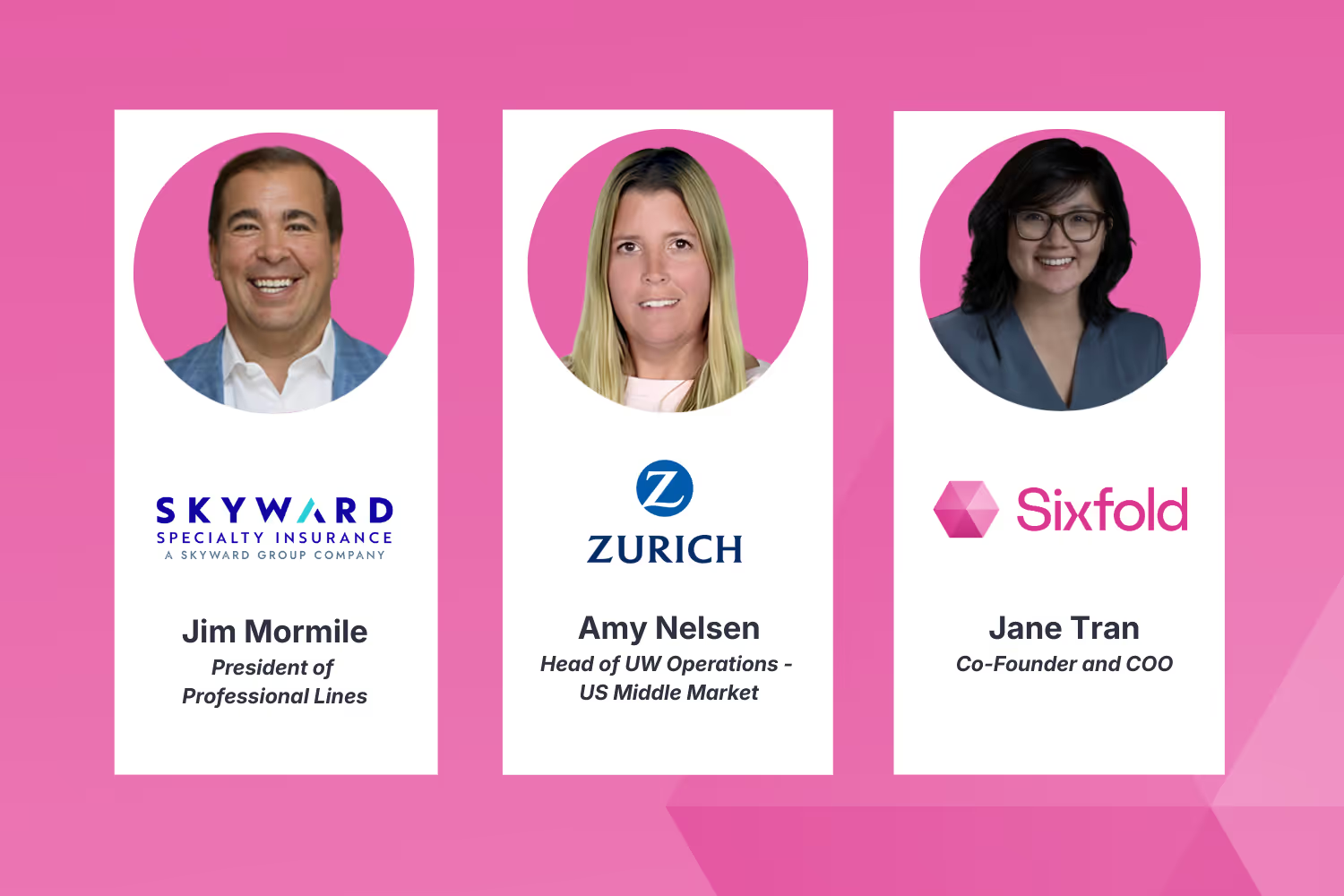
Amy Nelsen, Head of UW Operations for US Middle Market at Zurich North America, and Jim Mormile, President of Professional Lines at Skyward Specialty, spoke about their experience rolling out Sixfold across their organizations.
Skyward is now live across more than 10 product lines with nearly 100 underwriters. Zurich has deployed across 30 US offices, with more than 200 underwriters using Sixfold in their daily workflow.
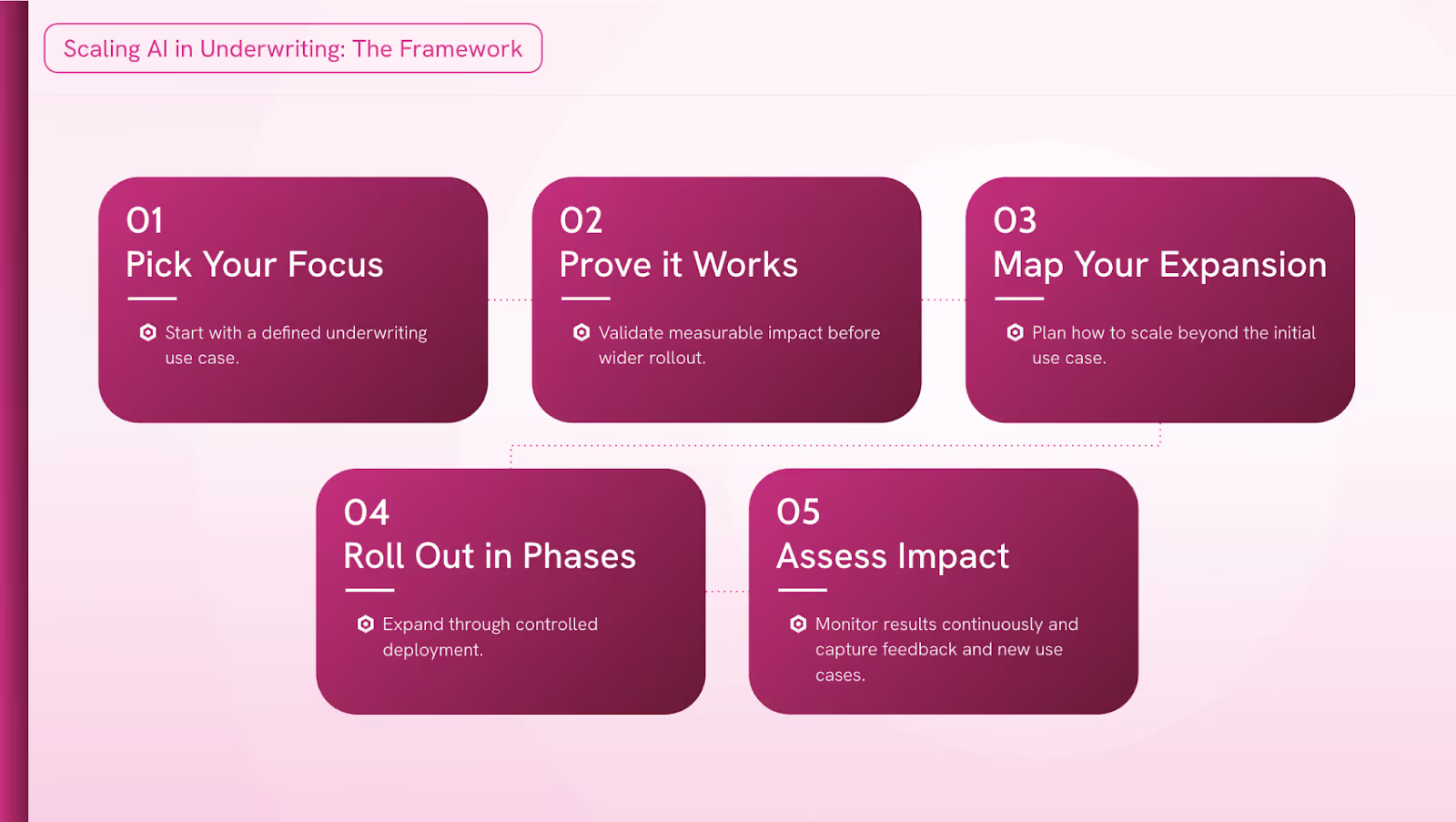
We walked through our five-step scaling framework with both of them to hear, in their own words, how each stage played out in practice.
Step 1: Pick Your Focus
The biggest mistake teams make is starting with AI and working backwards to find a problem. Both Amy and Jim were deliberate about doing the opposite, finding a genuine pain point first and then asking whether AI could solve it.
For Skyward, the problem was the triage wall. Underwriters were spending hours manually working through submissions just to determine basic appetite fit.
For Zurich it was starting with a use case which underwriters didn’t like doing: documentation.
"We had a healthcare risk where the underwriter got about a 75-page submission. It wasn't until page 56 to 59 that they realized the submission should not be covered since it was out of appetite."
─Jim Mormile @Skyward Specialty
Step 2: Prove It Works
Before scaling, you need a few signals that it's actually working, but that doesn't always come from a dashboard. Both Jim and Amy found that meaningful early indicators were user feedback.
For Jim, it was a veteran underwriter pulling him aside unprompted.
"The anecdotal evidence that really made us realize it was working: it was a veteran underwriter that came up to me and said, '[Sixfold] actually changed my day. It sped up my work progress and workflow'"
─Jim Mormile @Skyward Specialty
The follow-up signal was equally telling “underwriters stopped asking whether they should use Sixfold and started asking when it was coming to their line of business.” That's when Skyward knew it was time to expand.
Step 3: Map Your Expansion
Scaling AI isn't a single rollout but it's a series of decisions about sequencing, readiness, and change management. Both organizations took a structured approach, but in different ways.
Skyward scored each of their 16 lines of business across criteria like guideline robustness, process standardization, underwriting complexity, and, critically, how tech-forward the underwriting team was. They then hand-picked early adopters rather than opening the floodgates.
Zurich took a geographic approach, piloting across four offices before expanding countrywide, and intentionally included underwriters at different levels of tech comfort so they could anticipate resistance before it became a problem at scale.
Both teams also addressed job security fears head-on.
"It's less about the underwriting role becoming irrelevant, and more about if you handle a $10M book of business versus a $20M book of business."
─Amy Nelsen @Zurich North America
Jim's approach was to be explicit about what AI wouldn't do: no automated decision-making, no replacing the underwriter's final judgment. The framing was always about giving underwriters better information, not replacing their expertise.
Step 4: Roll Out in Phases
Both teams learned that trying to do too much too fast creates fatigue, and fatigue kills adoption. Skyward actually hit pause on one line of business after underwriters started showing signs of frustration. Rather than pushing through, leadership made the call to step back.
A few months later, that team came back ready to re-engage, pulled in by the FOMO of watching other lines of business benefit.
On the flip side, Skyward's phased approach led to real efficiency gains in deployment speed. Their first two lines of business took 12 to 14 weeks from introduction to production. By the time they were rolling out subsequent lines, they'd cut that down to eight weeks.
Amy's experience at Zurich echoed the same takeaway on speed:
"The most amazing part is how fast you can get from just a concept to deployment with Sixfold."
─Amy Nelsen @Zurich North America
Step 5: Assess Impact
Once AI is live in production, measuring success means looking at two things in parallel: business outcomes and output quality. Neither alone tells the full story.
For Jim at Skyward, that meant tracking time to quote and number of quotes out the door, but also running a monthly accuracy review and a sentiment score across underwriting teams.
"We constantly look at both ends of the spectrum: the ROI metrics, and whether the accuracy is there to give our underwriters the information they need to make better decisions."
─Jim Mormile @Skyward Specialty
Amy's approach at Zurich was similar, and revealing in its simplicity. Sixfold's success isn't measured separately from the business; it's measured through the business. When AI becomes embedded enough that you stop evaluating it as a standalone tool and start measuring it through your core business metrics, that's when you know it's really working.
"We're measuring our business outcomes like how many quotes underwriters are getting out the door and how much business have they bound. We also meet with Sixfold every month to look at quality metrics."
─Amy Nelsen @Zurich North America
The Final Wisdom
Scaling AI in underwriting isn't primarily a technology challenge, it's a people and process challenge. Both Amy and Jim closed with the same underlying message: be prepared for that thing change quickly in the world of AI, don't be afraid to fail, and don't stay stuck in proof-of-concept mode forever.
The insurers that will succed at scaling AI are the ones that move deliberately, learn fast, and bring their underwriters along for the ride from day one.
Watch the video recording of the entire webinar here.