Introducing Distribution Intelligence
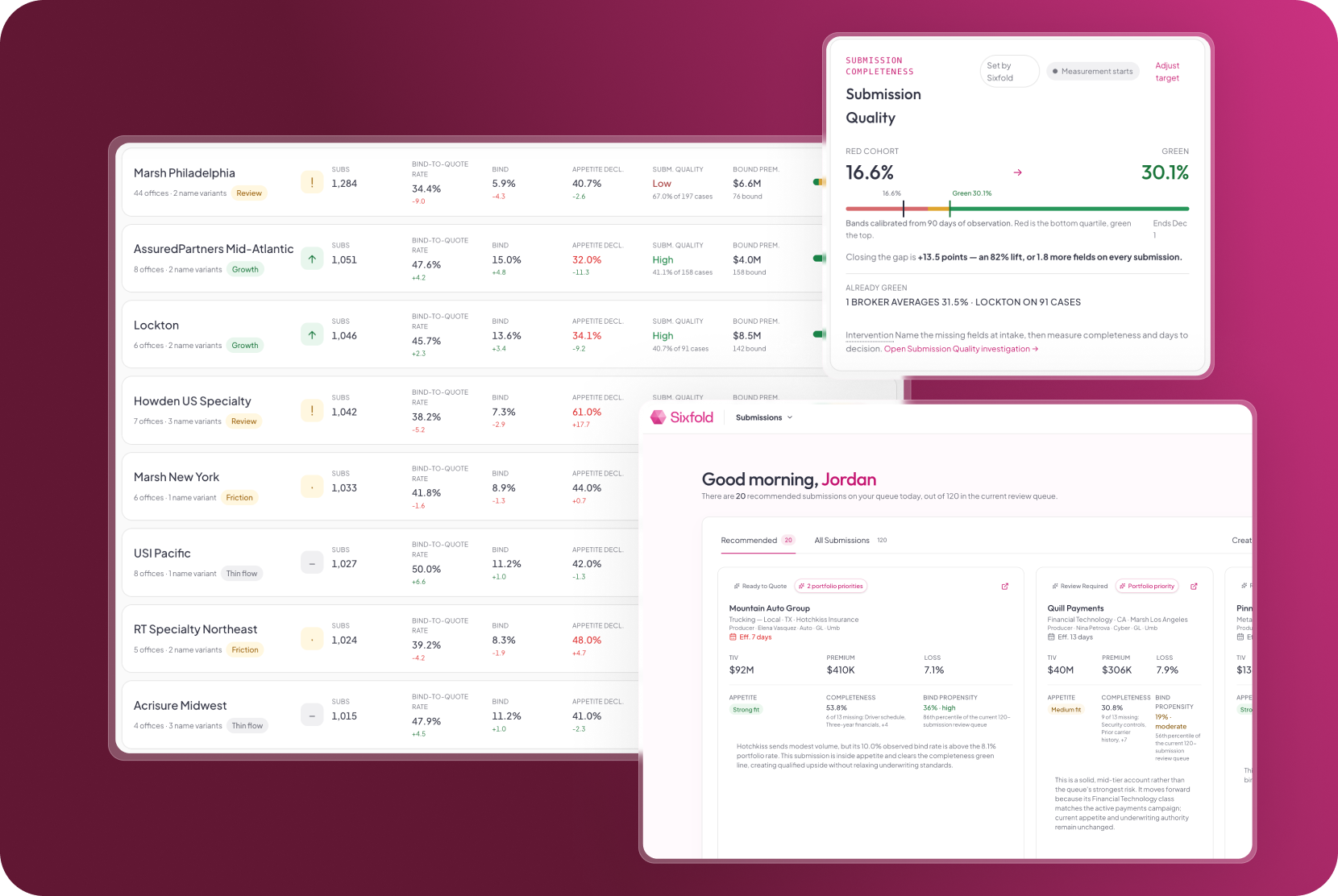
Sixfold is launching Distribution Intelligence, giving insurers the data and recommendations they need to proactively manage their distribution.
Distribution Intelligence evaluates every broker on submission volume, quality, appetite fit, hit ratio, and more. It uses that data to identify broker potential against portfolio growth targets, carrying that context to the underwriter's desk through Sixfold’s AI Underwriter.
It starts with data Sixfold already has
Every submission run through Sixfold leaves a trail: the risk signals pulled out of it, what was missing from the submission, how it scored against appetite, and what the final decision and outcome was. Distribution Intelligence starts by connecting all of those data points back to each individual broker.
Targets give the system direction
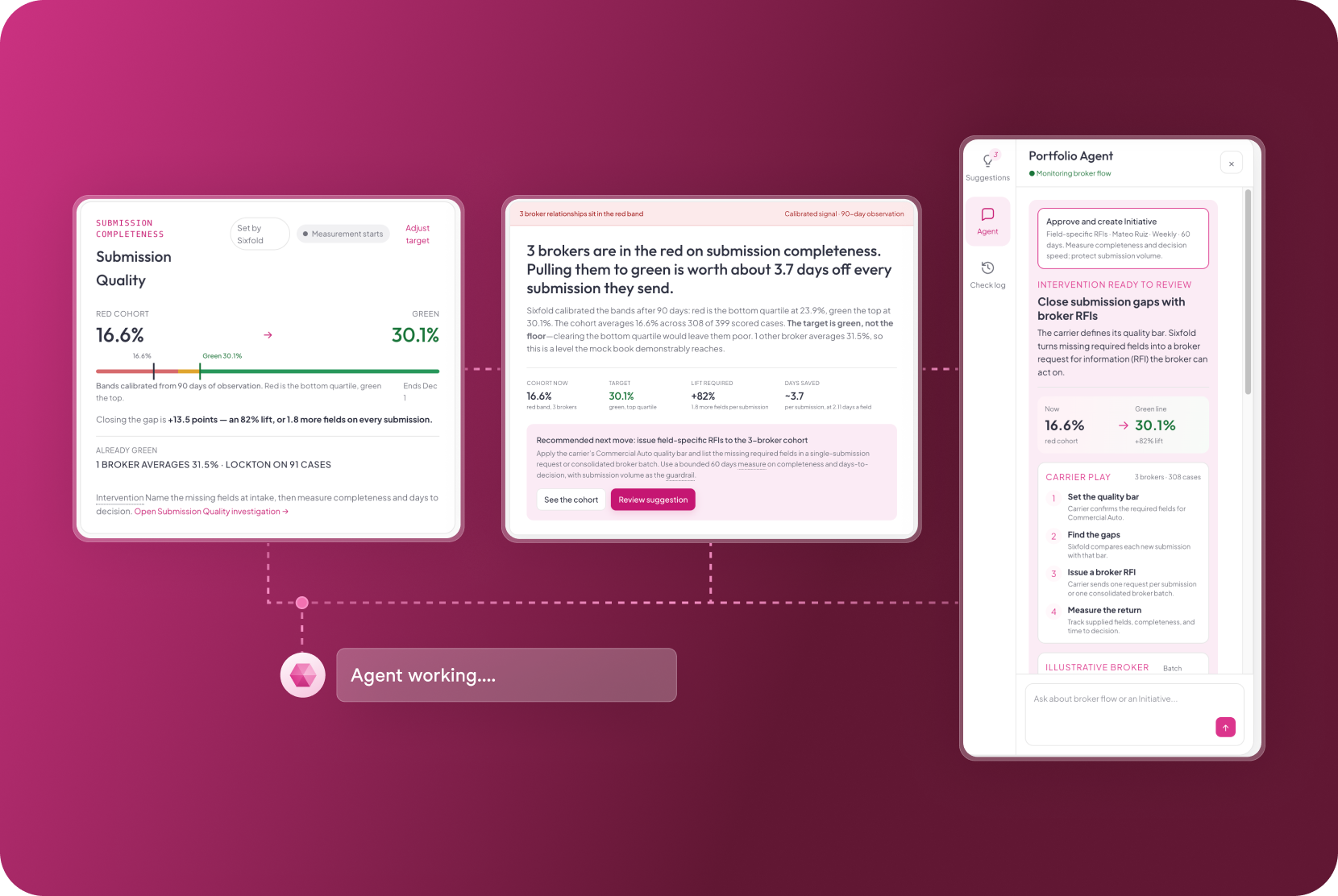
Underwriting leaders set targets for the outcomes they care about, giving the agentic system guidance specific to each underwriting team and their business. Sixfold also proactively recommends targets, drawn from ongoing monitoring of submissions coming in and their outcomes.
That same agentic foundation is what gives targets the flexibility to suit the needs and desired outcomes of each team, from granular to strategic. Underwriting managers can set targets around submission completeness, hit ratio, segment growth, renewal rates, and more.
Say an insurer wants to grow its manufacturing book. Growing that segment starts with identifying the brokers who can actually deliver it. Set a bound submission target for manufacturing, and Distribution Intelligence identifies which brokers have the potential to get you threre, and what your team needs to do to win that business.
Recommendations the team can act on
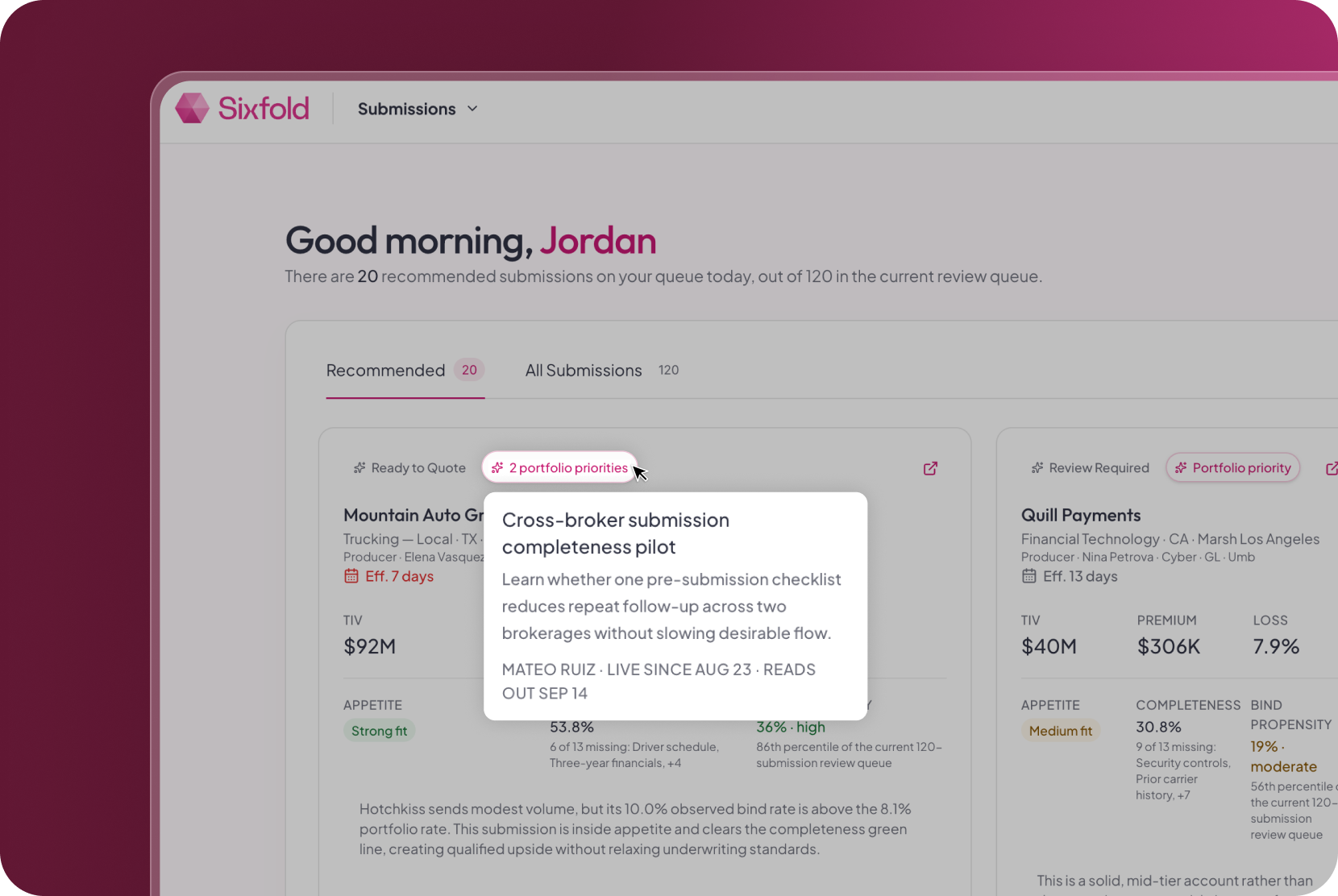
Once targets are set, initiatives kick in, which are the actions Sixfold runs or recommends to underwriters to achieve desired outcomes. These feed directly into Sixfold’s AI Underwriter, the agent underwriters work with day-to-day throughout the submission lifecycle.
Take that manufacturing target: Sixfold might recommend leaning into a broker with strong production in manufacturing, whether that means quoting more of their in-appetite submissions, recommending referral on a case that fits the goal but exceeds the underwriter's authority, or putting their next manufacturing submission ahead of others competing for the underwriter's time.
Every recommendation comes with clear rationale, explaining the targets and initiatives behind it.
The Portfolio Intelligence Suite
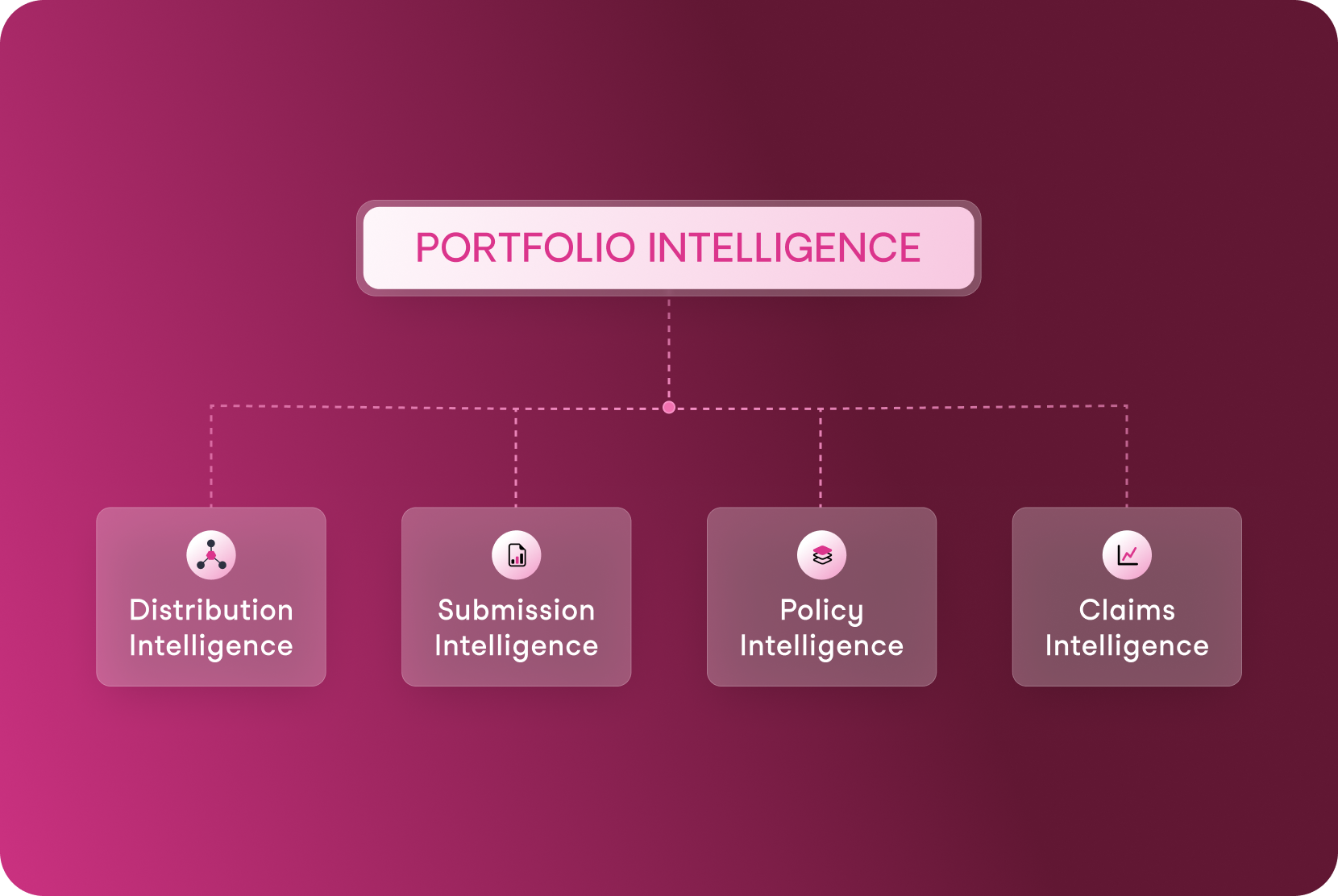
Distribution Intelligence is the first capability in Sixfold's Portfolio Intelligence Suite, which turns the signals hidden in a carrier's broker, submission, policy, and claims data into a compounding view of their book. Each layer is opened up by the next set of data that connects. The more that connects, the more context the entire working system, human + agent, has on each risk, and the more precisely underwriting can be steered toward each carrier's growth goals.
Interested in learning more? Get in touch