Sixfold Content
Life & Health
Trust by Design: Behind the AI Underwriter for Life & Health
Learn how trust, transparency, and fairness were built into the AI Underwriter for Life & Health, in a conversation with the team behind it.

.png)


Explore all Resources
Stay informed, gain insights, and elevate your understanding of AI's role in the insurance industry with our comprehensive collection of articles, guides, and more.
Just Launched: Instantly Spot Gaps in Medical Reporting
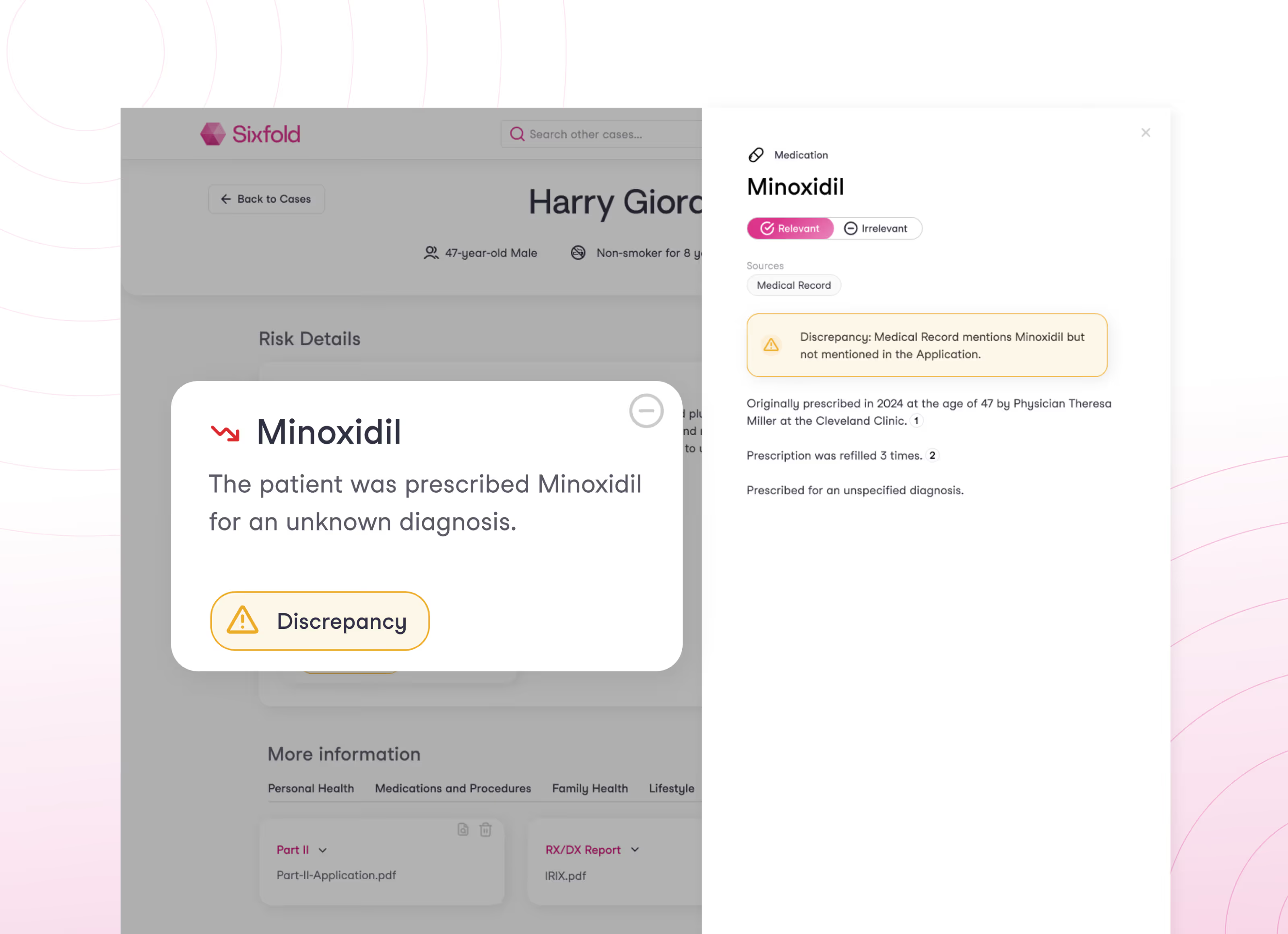
Sixfold’s AI for life and disability insurance is now able to automatically flag mismatches between what applicants report and what’s found in their medical records, giving underwriters a faster, more standardized way to catch inconsistencies before they become costly.
In life and disability underwriting, one of the most time-consuming and error-prone steps is verifying an applicant’s self-reported information.
Why? Because applications are long and detailed, and even when applicants are trying to be honest, omissions, intentional or not, are common. This is a growing concern across the industry, a recent Munich Re’s survey identified applicant misrepresentation as the most rapidly increasing form of fraud.
Sixfold’s Discrepancy Scan capability was built to address exactly this issue. Sixfold’s AI is now able to automatically flag mismatches between what applicants report and what’s found in their medical records, giving underwriters a faster, more standardized way to catch inconsistencies before they become costly.
When risk is hiding in the records
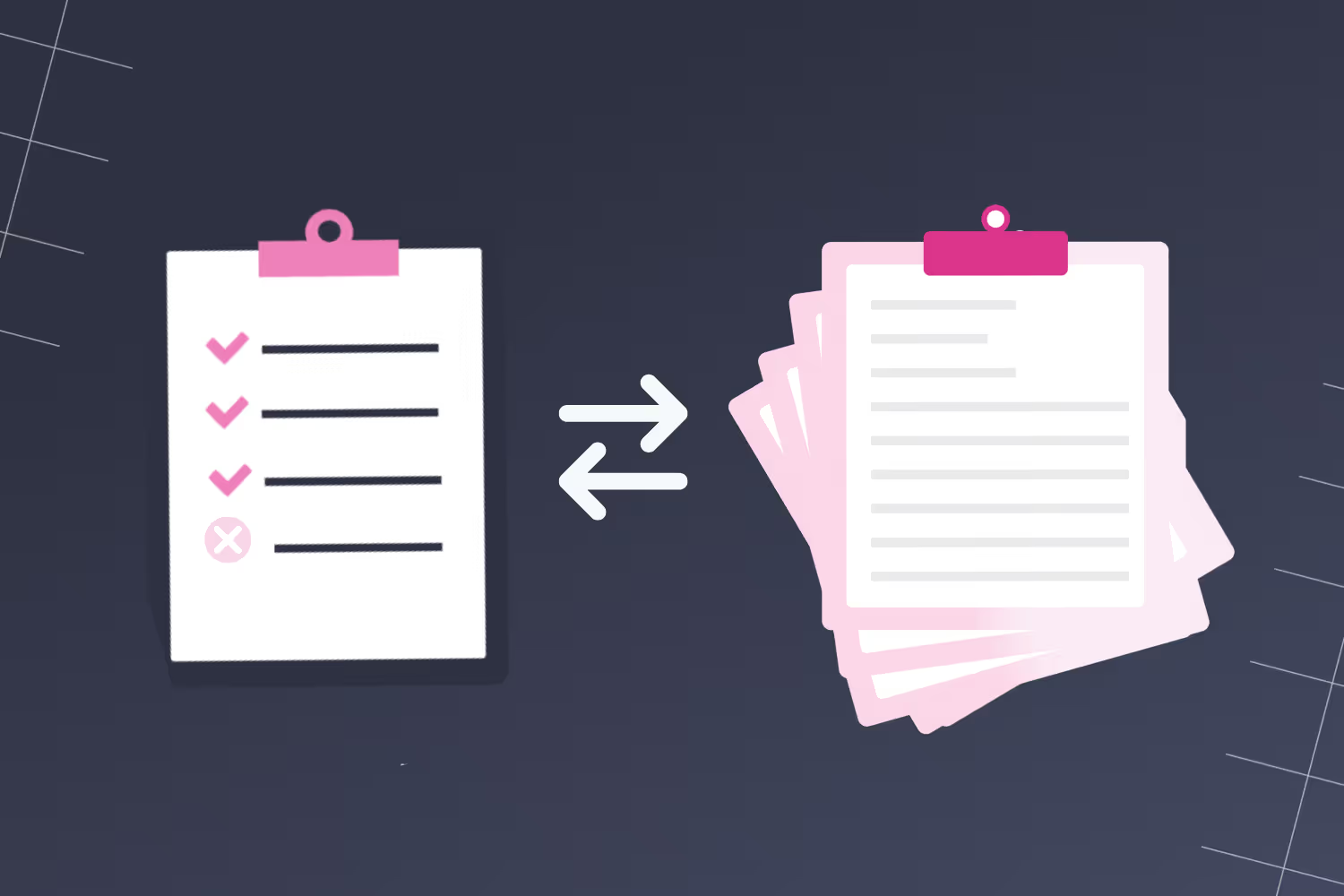
When someone applies for individual life or disability coverage, they complete a health questionnaire, like Part II, eMed, or a Med Supplement, disclosing conditions, medications, and history. From there, the underwriter kicks off verification: ordering APS reports, Rx histories, labs, and other third-party records.
As these often hundreds of pages of documents arrive, the underwriter is essentially playing detective — comparing what the applicant said to what the medical records reveal. Did the applicant disclose all relevant conditions? Are they taking medications they didn’t mention? Is there a difference in diagnoses or treatment history?
Underwriters dedicate significant time to identifying discrepancies because they are critical. A person's prescription history can reveal underlying health issues, sometimes even before a formal diagnosis is made. For example, a prescription for a weight-loss medication might indicate an associated morbidity.
Any inconsistency could signal fraud or simply an oversight. Either way, it matters.
See below for a quick product walkthrough with Noah Grosshandler, Product Manager at Sixfold.
The feature is currently focused on medications, but that’s just the beginning. We're planning to expand this capability to detect discrepancies across pre-existing conditions, procedures, family history, and lifestyle factors—always guided by what’s material to each insurer.
Minutes vs. hours of detective work
Sixfold’s new capability eliminates a critical bottleneck in underwriting. The traditional approach of manually reviewing hundreds of pages to spot inconsistencies is both time-intensive and susceptible to oversight.
The Discrepancy Scan changes that completely, surfacing critical discrepancies automatically instead. The result is a more efficient process where underwriters can confidently assess risk based on complete information, without the administrative burden of document comparison.
“Sixfold goes beyond summarizing medical histories, we spotlight the contradictions that can change a morbidity assessment. By drawing connections across medical records, we emphasize the most crucial facts for investigation.
This approach transforms hours of detective work into minutes, providing underwriters with confidence and efficiency in their decision-making processes.”
— Lana Jovanovic, Head of Product @ Sixfold
Get the full story upfront
Accuracy is everything in life and disability underwriting. With Sixfold’s automatic discrepancy detection, underwriters are able to get to a more accurate underwriting decision by:
- Catching omissions and inconsistencies at the beginning of the review cycle
- Reducing misclassification of risk due to overlooked or conflicting information
- Detecting potential fraud patterns before they result in costly claims
- Maintaining consistency and transparency when cases move between underwriters
How the feature works
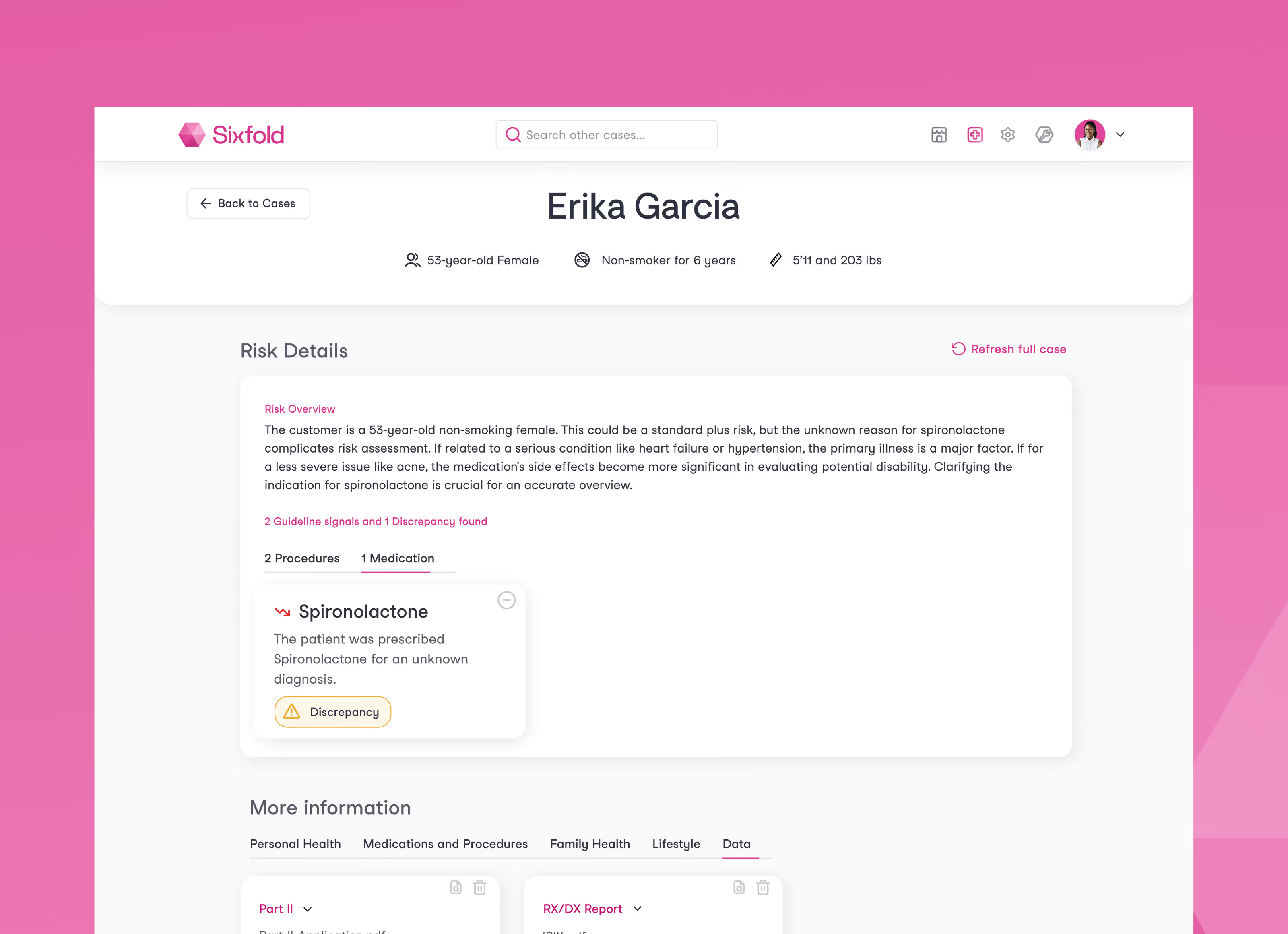
The Discrepancy Scan automatically compares the self-reported application data against the supporting medical documents and flags any mismatches related to material facts.
Prescriptions are often a leading indicator of an underlying diagnosis, one that could directly impact insurability or rating decisions. But not every medication matters the same way, and what’s considered “material” varies from carrier to carrier.
By securely ingesting each carrier’s unique underwriting guidelines, Sixfold identifies which medications are truly relevant in each context, connecting the dots between prescriptions, diagnoses, and underwriting impact.
Here’s how the feature works in practice:
1. Medical Document Review
Sixfold’s AI reviews both the submitted application and any supporting documents uploaded (APS, MIB, Rx histories, etc.) for medical data relevant for risk assessment.
2. Discrepancy Detection
Sixfold then compares the findings in the medical documentation to what the applicant reported. If a medication appears in the documents but not in the application, it’s flagged as a discrepancy.
3. Discrepancy Alert
Within the underwriter's dashboard, discrepancies appear clearly labeled with clear icons. Clicking into a card brings up the relevant context e.g., “Blood thinner mentioned in the medical report, not disclosed by the applicant.”
4. Clear Next Steps
Underwriters can use this insight to request clarification from the applicant or additional documentation from providers.
5. Always-Current Monitoring
Because documents arrive asynchronously, the system continually updates as new files are uploaded. Discrepancies are flagged dynamically based on the most current information.
Learn More
Insurtech Insights takes a closer look at the Discrepancy Scan
Interested in a hands-on demo? Reach out for a Sixfold walkthrough
Sixfold’s Take on AI Agents
Not sure what an AI agent is? You’re not the only one. We chatted with Sixfold CTO Brian Moseley to explain what agentic AI actually is, why it’s suddenly everywhere, why it matters for underwriting, and how we’re using it at Sixfold.
Not sure what an AI agent is? You’re in good company. We sat down with Sixfold CTO Brian Moseley to unpack:
- What “agentic AI” really means
- Why it’s suddenly everywhere
- Why it matters for insurance underwriting
- How we’re putting this technology to work at Sixfold
The Definition Dilemma
What exactly are agents in the context of AI?
That’s harder to answer than it should be.
The industry hasn’t coalesced around a standard definition. According to swyx, a software engineer might say that an agent is “LLM calls in a for loop.” Pretty reductive. If you buy them a beer, they’ll probably start talking about tools, memory, and LLM-based control flow - fascinating but deeply technical concepts that don’t offer much pragmatic insight.
Basically, an agent can accomplish a complex task by choosing how to progress through a complex, evolving process without ongoing human input.
For my money, Addy Osmani offers the most useful working definition. He says that “AI agents [...] are autonomous systems designed to perceive their environment, make decisions, and take actions to achieve specific goals, all while maintaining context and adapting their approach based on results.” Basically, an agent can accomplish a complex task by choosing how to progress through a complex, evolving process without ongoing human input. Contrast this with the typical chatbot interaction, where a human submits a sequence of one-shot requests.
How do you define the difference between a workflow and an agent?
The key difference is that a workflow is consistent and predictable. Given the same set of inputs, it will proceed the same way every time. A workflow can be dynamic, with conditional or looping steps, but it is inherently deterministic.
An agent’s process is driven by probabilities. Even if given the same inputs twice in a row, an agent may choose a different plan of attack each time and will almost certainly generate different outputs on every run.
An agent’s process is driven by probabilities. Even if given the same inputs twice in a row, an agent may choose a different plan of attack each time and will almost certainly generate different outputs on every run. You can reason about what is likely to happen, but there are no guarantees. You have to be comfortable with a range of outputs and have some tolerance for error.
The flexibility is exactly what makes agents so powerful, and why they’re now at the center of so many AI conversations.
Why Everyone’s Talking About Them
Why do you think agents have become such a hot topic?
Businesses are always looking for ways to do more with their resources. First, we automate repetitive tasks that are consistent and predictable from one execution to another. But once those possibilities have been exhausted, the next leap is enabling software to handle more complex, reasoning-based work.
If this is successful, we can offload even more, not just the rote work that is often done on autopilot, but also the tasks that require real thinking.
If this is successful, we can offload even more, not just the rote work that is often done on autopilot, but also the tasks that require real thinking. That’s the promise.
But it gets even better. We can envision a world where, as the cost of intelligence is driven down, every worker becomes a manager of a team of agents, setting goals, reviewing work, testing many ideas simultaneously, and picking the best with high confidence. This goes beyond improving productivity — it’s evolution.
Where Agents Fit Into Underwriting
Where do you see agents making an impact in underwriting?
The underwriting process itself is relatively structured and rules-based. But within that structure, underwriters deal in nuance, like recognizing when a 10-story building without sprinklers is still acceptable due to fire-resistive construction and strong safety measures, or approving a contractor engaged in high-risk work because of rigorous safety protocols and certified staff. They have to understand a risk so completely that they can craft a very thoughtful quote and risk management solution for the customer.
The underwriting workflow itself might remain orchestrated traditionally, but each step, the "needle-in-the-haystack" moments, could be powered by intelligent agents making context-based decisions.
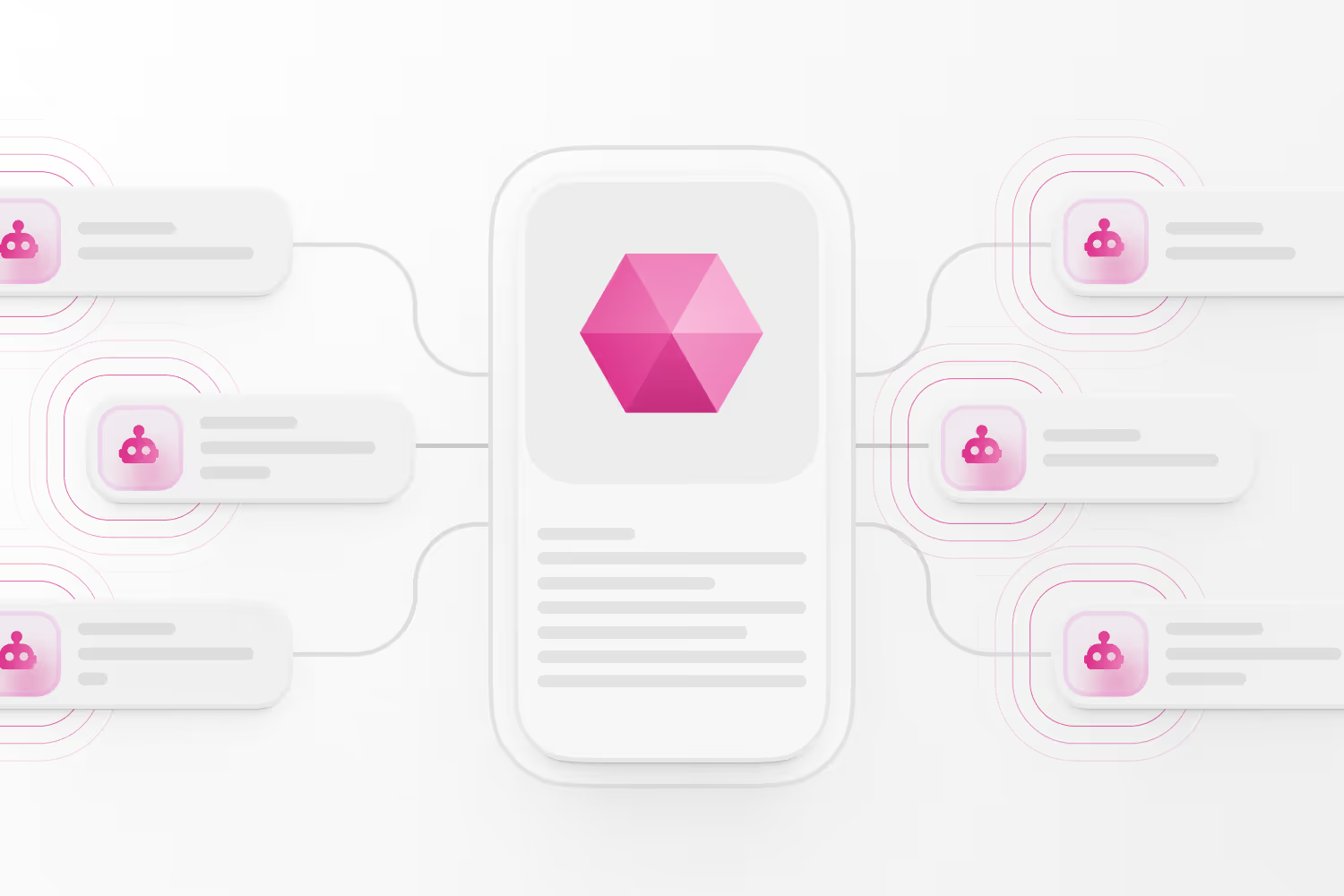
That’s where agents come in. The underwriting workflow itself might remain orchestrated traditionally, but each step, the "needle-in-the-haystack" moments, could be powered by intelligent agents making context-based decisions. And instead of one underwriter doing all the work, an entire network of specialized agents can be turned loose on the risk to each solve a specific, context-rich problem, then synthesize the findings.
Agents at Sixfold
How are we using agents across Sixfold today?
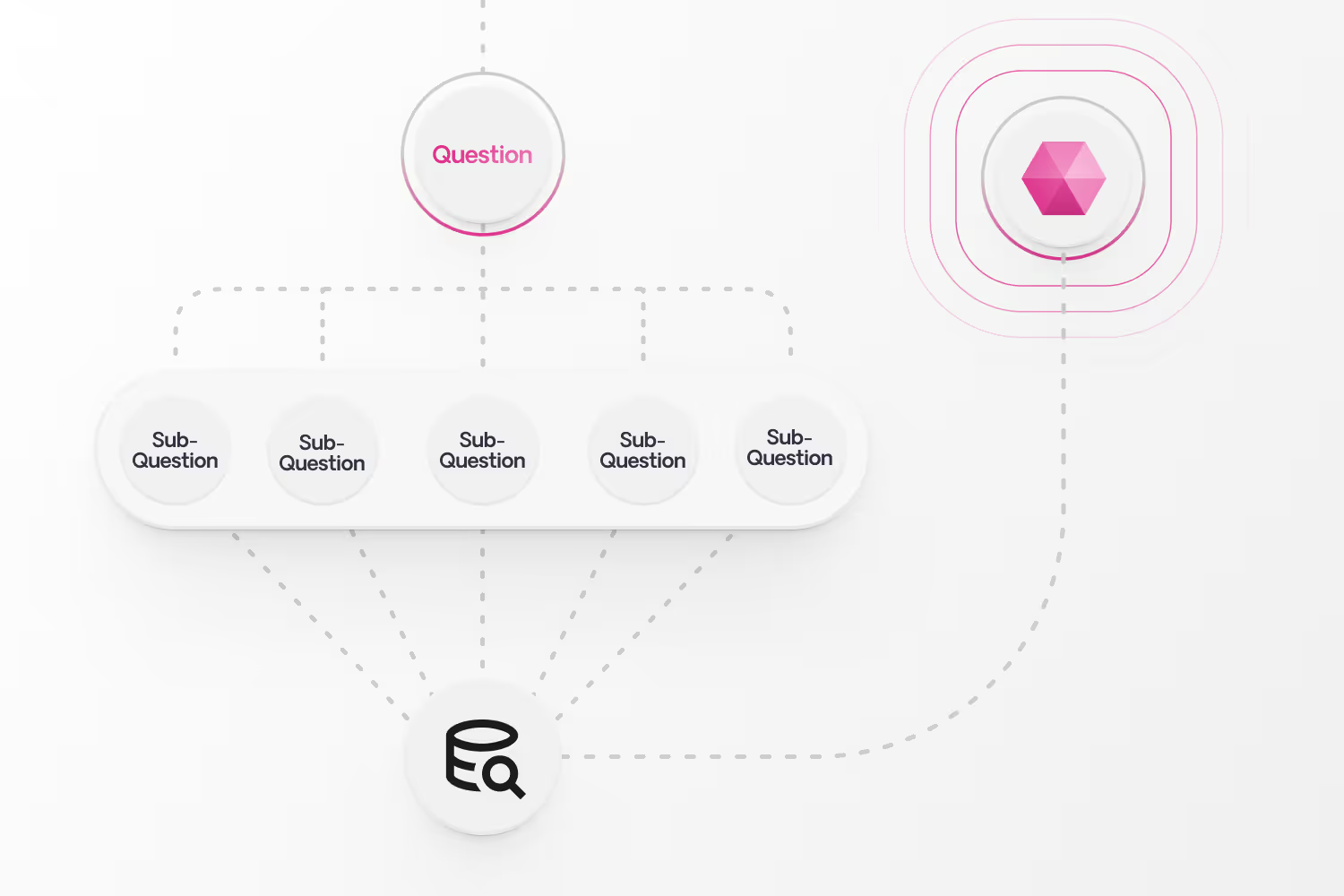
The most obvious starting point is our Q&A feature. It starts with pre-set underwriting questions, scanning applicant data to find the answers, and summarizing them for the underwriter. While the feature began life as a simple one-shot LLM interaction, it has evolved over time. Now, if the input is complex, the system breaks it down into simpler sub-questions, answers each separately, and then summarizes those outputs into a final response.
Next up is our Research Assistant, an agent that performs targeted web searches depending on the context of the business. For a given question, it decides how to search, what sources to consult, and how to rank results. We anticipate the research assistant will boost our ability to answer 30% more critical questions, giving underwriters a more complete understanding of risk before quoting.
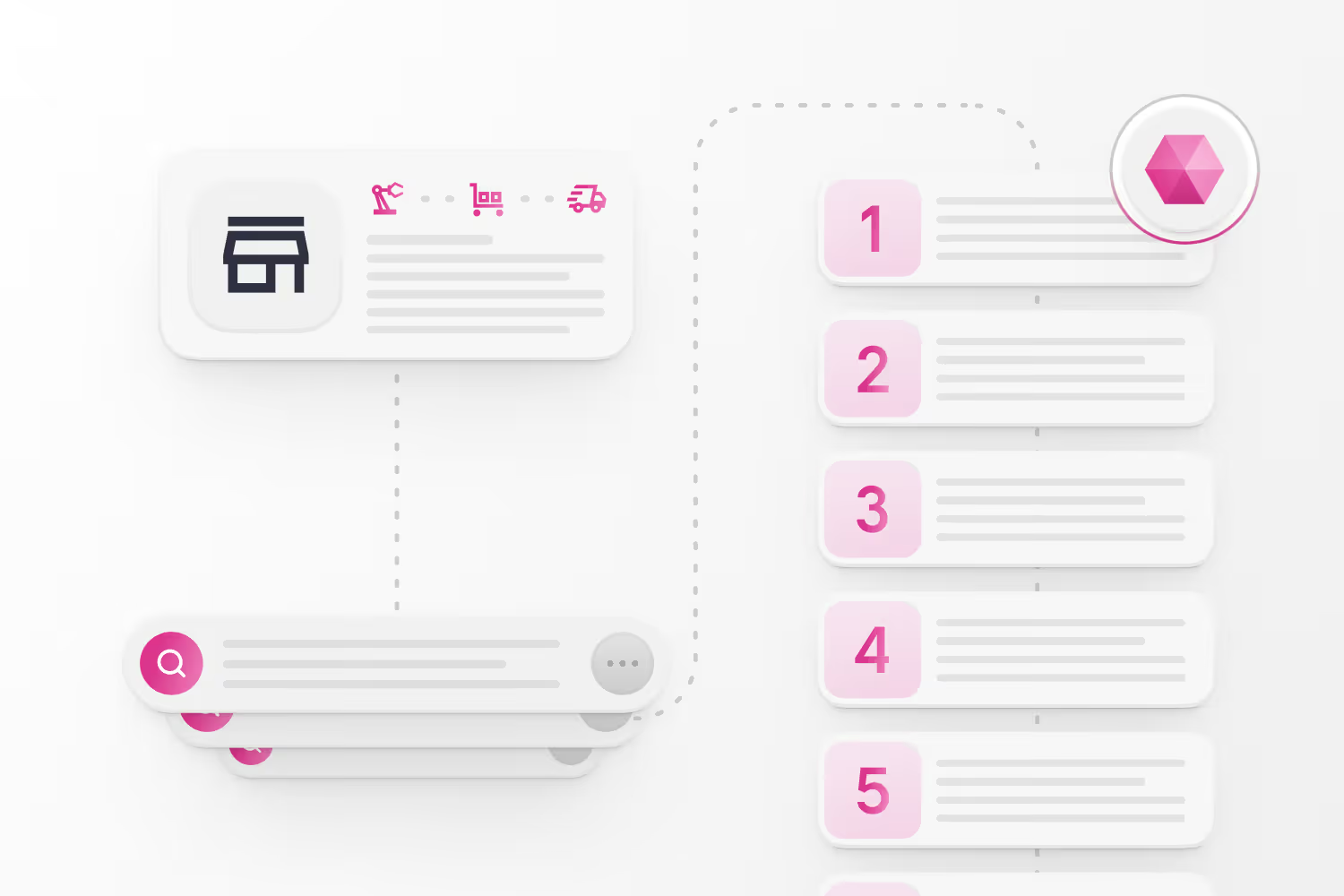
We’re researching ever-more advanced techniques for document extraction. We’re experimenting with agentic approaches to classifying documents and routing to customized pipelines that can better extract information from complex structured documents like loss runs—use cases where traditional methods often fall short.
The Future of Agents
Are there limitations to agents today?
Technically, we’re still in the early days. As discussed earlier, we can’t even agree on a shared definition yet. And the methods by which agents interact with their environment (MCP) and each other (A2A) are evolving quickly.
But there are plenty of tools that help engineers build and deploy agents, singly or in swarms, and the landscape is rich and competitive. Amazing engineers like Simon Willison are doing yeoman’s work to help us understand the new models, tools, and techniques that pop up every day. It’s a great time to be a builder!
I think the bigger challenge is societal. What does the world look like when every person has a thousand agents at their fingertips? How will we experience the changes that advance us to that point? What will work - and leisure - look like?
Are there historical tech shifts you’d compare this to, like the internet or the iPhone?
Those were 10x changes, but what we’ve seen and will see in the five years after ChatGPT feels like 100x or even 1,000x. I don’t think anything else in modern history really compares.
There’s a lot of agentic hype right now, and some of it feels over the top, like the idea that AI will be writing most code in just a few months. You have to take some of this stuff with more than one grain of salt.
At the end of the day, it has to make sense for underwriters. We’re all about using the best tool for the job, regardless of what everybody happens to be talking about at the moment.
But overall, this feels different. Even if I’m naturally skeptical about the flavor of the day,I think there’s something real and lasting here, and we are leaning heavily into it at Sixfold. On top of what I mentioned earlier, we’re working through several new concepts that could make it into our roadmap.
That said, we’re not doing agents for the sake of it. At the end of the day, it has to make sense for underwriters. We’re all about using the best tool for the job, regardless of what everybody happens to be talking about at the moment.
References
latent.space/p/agent
docs.google.com/presentation/d/1SWoBIvTQu__uNEvSawmNcROiUx-n86O_fP0arZcTGb8/edit#slide=id.g2d9839ccb1c_0_0
addyo.substack.com/p/what-are-ai-agents-why-do-they-matter
huyenchip.com/2025/01/07/agents.html
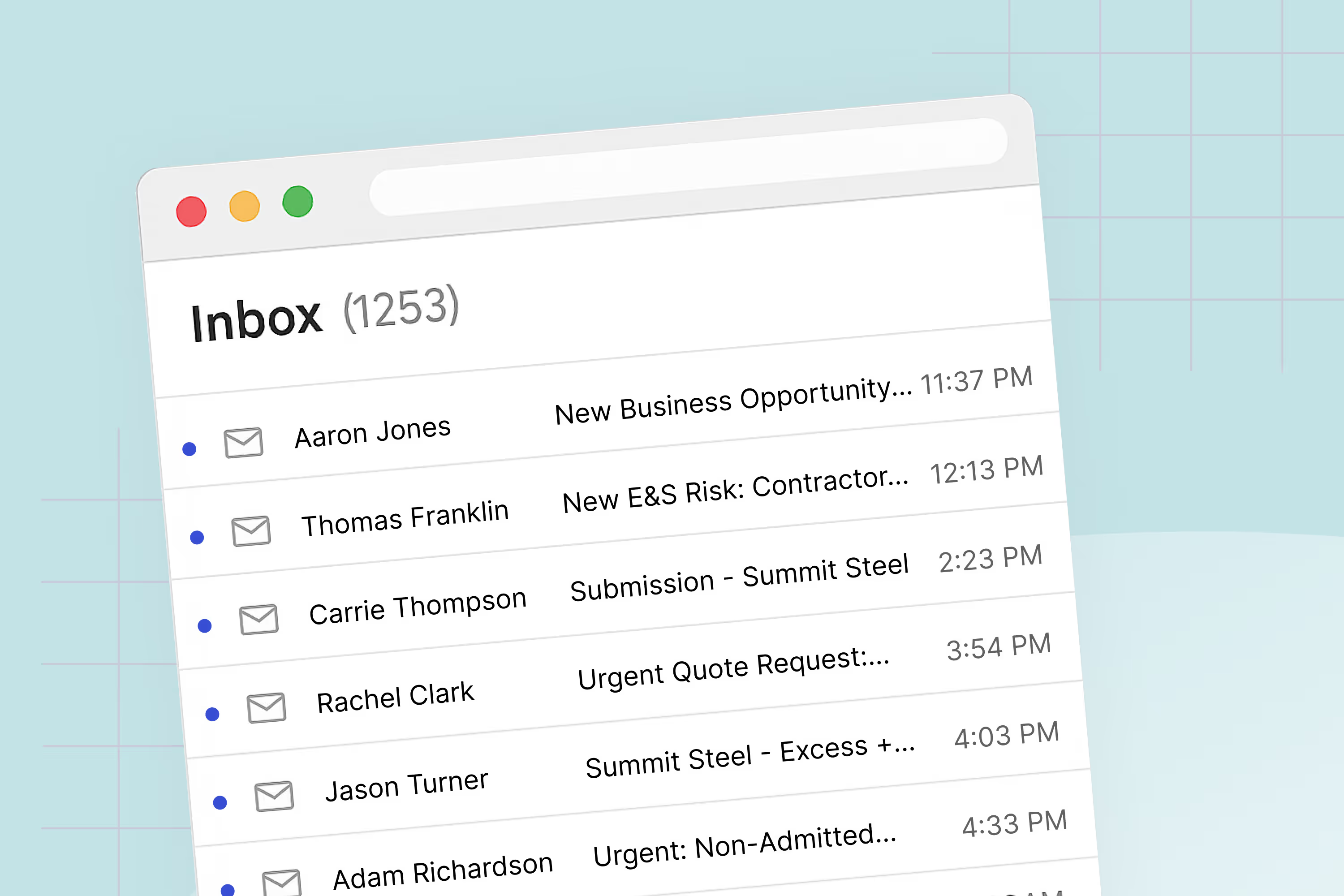
If You’re Not Fast, You’re Late in E&S
E&S insurance demand has surged over the past few years, and for underwriters, that means more cases to sort through every day. The solution? Quickly identifying the your relevant risks.
Excess & Surplus insurance demand has surged over the past few years, and for underwriters, that means more cases to sort through every day. We’ve heard from professionals across the segment about how high the case volume has gotten and how challenging it is to keep up.
So what’s driving this? We’re talking about one of the fastest-growing lines in insurance, with a 21% compound annual growth rate over the past five years, according to Insurance Journal. The growth comes from the segment’s ability to handle uncertainty like economic shifts or environmental changes, which have gotten more complex in recent years.
We’re talking about one of the fastest-growing lines in insurance, with a 21% compound annual growth rate over the past five years
One example is a cannabis business trying to get insurance. That kind of risk wouldn’t even be considered a few years ago. Since E&S takes on the risks standard carriers won’t, it’s absorbing more business, especially as admitted carriers get more cautious with the economic changes. At the same time, wholesale brokers—experts in hard-to-place risks—are sending more business than ever to E&S carriers.
The market's growth has also led to increased participation from both newly-capitalized and re-capitalized insurers, as well as managing general agents entering the distribution side. This influx has intensified competition, resulting in a decline in market share for 14 of the top 25 E&S players in 2021, according to Risk & Insurance.

The Hidden Bottlenecks in Quoting
As the market surges, underwriters are buried in rising case volumes and more complex risks. With more players, competition, and pressure from wholesale brokers, getting quotes back quickly isn’t just nice to have–it’s critical for winning and retaining business. But what is currently causing delays in the quoting process?
As the market surges, underwriters are buried in rising case volumes and more complex risks
1. Many submissions, no easy way to filter them
E&S carriers receive all the non-admitted risks that standard insurers decline, often from a wide range of wholesale brokers. That volume adds up fast. The immediate impact? Underwriters have a hard time identifying the winnable opportunities and spend time working on cases that are out of their appetite.
2. Quoting process is mostly manual
A big part of the quoting process is manual. There’s a lot of data entry, systems that don’t help with prioritization, and information in all kinds of formats.
Because of that, E&S underwriters are still spending a lot of valuable time on manual tasks. In some cases, quoting can take up to 30 days. Think about incorrect routing between departments, incomplete information from brokers, and offshore teams handling SIC/NAICS code classification.
All of that slows everything down. And brokers? They’re expecting fast answers.
And brokers? They’re expecting fast answers.
3. Complex risks with tight deadlines
E&S risks are complex, and they take time to quote. But with the amount of submissions coming in, there’s just not enough time in the day to go through them all manually.
Underwriters need fast access to the key information that actually matters. That’s the only way to speed up quoting or quickly say no to risks that don’t fit.
The Result
All of this leads to premiums not being looked at, slower response times to brokers, and losing good deals to the competition. In a segment where demand is high and it’s nearly impossible to assess every risk, it’s key to spot high-quality submissions earlier in the process so carriers and underwriters aren’t stuck spending time on risks that won’t bind.
And when that happens, it’s not just GWP left on the table—it’s lost time and momentum.
Just think about the amount of premium carriers could capture by identifying the right opportunities from the start. Especially in a market that reached $130 billion in direct premiums in 2024 according to Insurance Insider US.
Imagine recieveing 50 submissions and already knowing which ones to prioritize, which ones fit your guidelines, what’s worth pricing creatively, and what’s a fast no
So, how can underwriters identify the right risks?
It all starts with quickly understanding whether a submission matches your appetite through an efficient triaging process. Imagine receiving 50 submissions and already knowing which ones to prioritize, which ones fit your guidelines, what’s worth pricing creatively, and what’s a fast no.
It’s not about writing any piece of business, it’s about writing the right ones for your business. With proper triaging, underwriters can move faster, get back to brokers quicker, and focus on what matters.
So, how do you actually get to the right risks faster? That’s where Sixfold comes in.
AI that Instantly Identifies Your Top Risks
Sixfold’s triage solution speeds up decision-making with instant, appetite-aligned scoring. Here’s how it works:
1. Showcasing the cases you want to quote

Sixfold ingests each insurer’s underwriting guidelines to learn the company’s unique risk appetite. Then, based on SOVs, applications, loss runs, and additional data, Sixfold’s AI runs the risk assessment, using both the documents uploaded and relevant company info it pulls from the web. It looks at the data points that matter for the insurer, such as for example construction year, occupancy, loss history, and more. From there, it generates a risk score for the submission from 0 to 5.
- 0 means it doesn’t fit your risk appetite at all
- 5 means it’s a highly qualified risk for you
Solving the front door issue by filtering risks immediately means underwriters can respond faster, whether it’s a quote or a decline
The impact? Underwriters know right away which incoming applications are worth their time. Wholesale brokers are strategic partners for E&S carriers. But when underwriters get too busy, they are sometimes left waiting for a reply. Solving the front door issue by filtering risks immediately means underwriters can respond faster, whether it’s a quote or a decline.
2. Classifying businesses with > 90% Accuracy
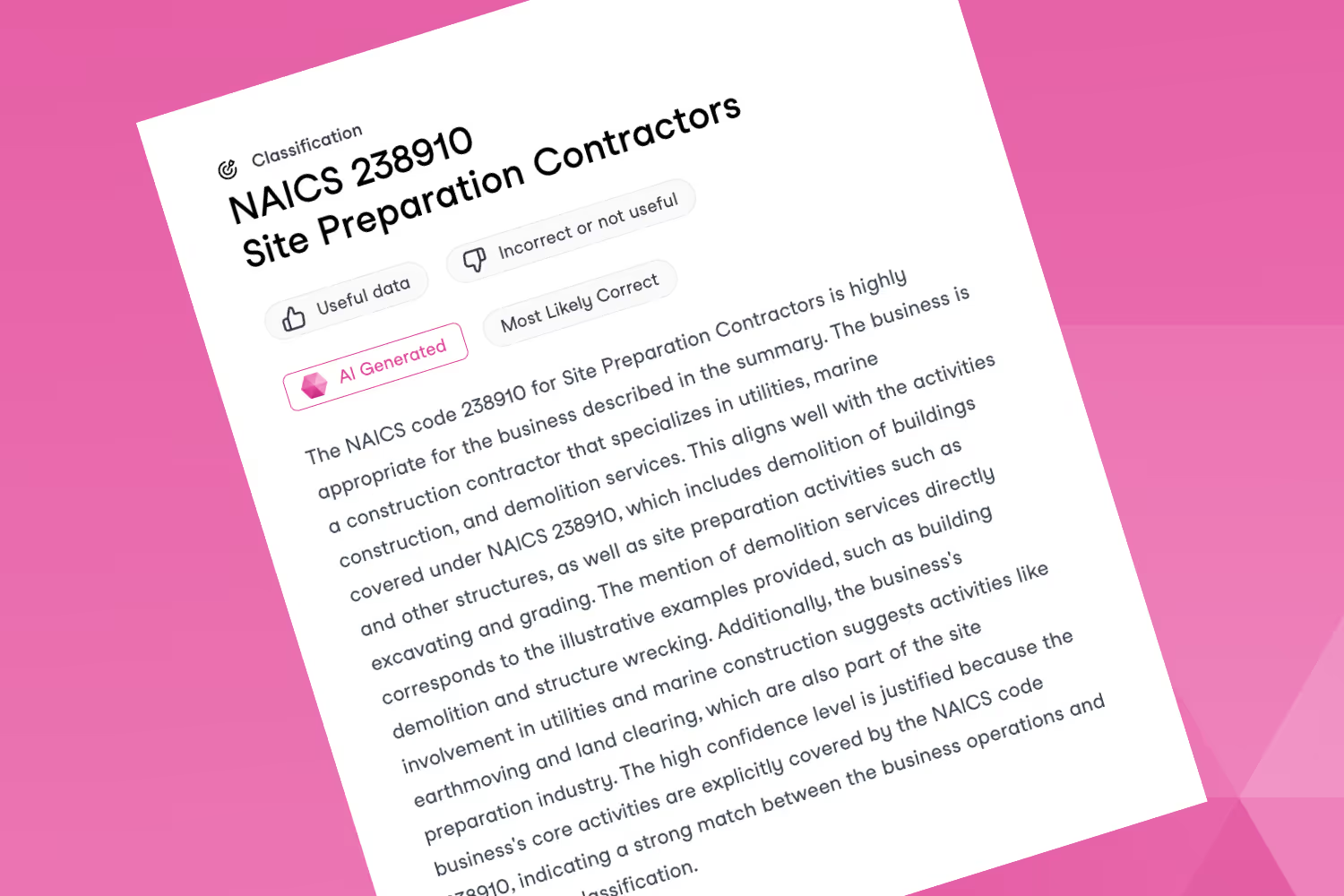
In E&S, sometimes a small difference in business activity can immediately make a risk fall out of the risk appetite. That’s why accurate NAICS and SIC code classification is key.
Sixfold automatically matches each submission to the correct business classification code, even for highly nuanced and complex industries, so no more time is wasted trying to figure out what type of business the company is. This supports better routing and faster underwriting decisions.
3. Presenting contextual risk factors

Sixfold surfaces the risk signals that matter most, whether they disqualify a submission, negatively impact it, or strengthen it. Everything is aligned with the insurer’s appetite and focused on the factors that drive the overall decision. Underwriters get precisely what they need to make confident calls.
Underwriters get precisely what they need to make confident calls.
See It in Action
The volume of submissions in E&S isn’t slowing down. But with the right triage process, underwriters can focus on decision-making, quote the right risks faster, and bring in more premiums.
The carriers winning today aren’t working harder; they’re triaging smarter.
Join our E&S product demo on May 21 with Alex Bontz, Customer Success Operations & Growth Lead. He’ll walk through how Sixfold quickly triages complex submissions and delivers the key risk insights underwriters need to take action.
Looking to catch up in person? Come find us at the E&S Reuters Conference on May 28. We will be there to connect with insurers looking for ways to improve their underwriting process with purpose-built AI.
.avif)
Get to Know AJ, Our New VP of Engineering
We sat down with AJ to hear about his journey from iOS developer to engineering leader, what he looks for when building high-performing teams, and how he balances speed and quality in a fast-moving AI environment. Plus, his go-to productivity trick (hint: it involves a punchy bassline).
What’s been your journey in engineering so far, and what led you to Sixfold?
So, I started my engineering journey as an iOS engineer, building small mobile apps for a web agency. I then moved into full-stack engineering before working at a small startup in the healthcare space.
Most recently, I had the opportunity to lead a team running a cross-functional enterprise program at American Express that involved the coordination of about 100 people. That’s where I worked closely with our now-CTO, Brian Moseley—we worked really well together. Brian asked me to join Sixfold to help scale out the engineering operations and I couldn’t be more excited!
When hiring, what’s one quality or signal you always pay close attention to?
You know, there are a few core qualities I look for when building an engineering team, but one that’s especially important in our environment? Curiosity.
In the rapidly evolving world of neural network technologies, we need folks who are innately curious to learn new things, explore the unknown, and help us push the boundaries of what’s possible.
How do you approach balancing speed with quality when building and shipping products?
There’s a great phrase from the Navy Seals: “Slow is smooth and smooth is fast.” I think this concept doesn’t get enough credit in software engineering. By making investments in our SDLC (Software Development Life Cycle), we will unlock the faster delivery of high-quality software.
I don’t think sacrificing things like automated testing is a great strategy – it will eventually slow your team down, and your product will deteriorate over time. Many companies make this mistake. I believe that by continually producing a steady stream of high-quality features, our customer confidence will remain high and our speed to market will be higher than our competitors – that’s the way to go.
I believe that by continually producing a steady stream of high-quality features, our customer confidence will remain high and our speed to market will be higher than our competitors – that’s the way to go.
Are there any tools, workflows, or engineering practices you consider non-negotiable?
I’m a firm believer in a true CI/CD process (Continuous Integration and Continuous Delivery). Automated testing, continuous delivery, trunk-based development. I heavily encourage pair programming and TDD (Test-Driven Development), but I don’t require them. Like many tools, they have a place and a time where they are most appropriate, but I expect my team to build confidence in their tools to know when to deploy different strategies.
How are you currently using AI in your day-to-day work—or where do you see it having the biggest impact?
Since I’m currently in my first 30 days at Sixfold, the ability of AI tools to help me summarize documents has been huge. They’re great research assistants and help me answer questions without needing to break someone else out of their focus time.
What’s your favorite productivity trick that has nothing to do with code?
If I need to quickly dial in on a task, I’ll put on a pair of headphones and start up a playlist that consists of nothing but punchy bass-line music with no lyrics. The steady beat puts my brain into a predictable rhythm and the world melts away. I’ll even do this if I’m alone in my home office!
If I need to quickly dial in on a task, I’ll put on a pair of headphones and start up a playlist that consists of nothing but punchy bass-line music with no lyrics. The steady beat puts my brain into a predictable rhythm and the world melts away.
From your perspective, what makes Sixfold stand out—and what excites you most about what we’re building?
Sixfold has cracked the code on how to drive high levels of accuracy on top of the aggregating power of LLMs. We’re taking arguably the hardest problem in the LLM space, building trust, and making it a first-class citizen. It guides everything we do, and it’s exciting to be at the forefront of building high-trust LLM-based systems. I firmly believe this will unlock a number of huge markets that cannot rely on systems that are only right 60% of the time.
Sixfold has cracked the code on how to drive high levels of accuracy on top of the aggregating power of LLMs.
Meet the First AI Accuracy Validator Built for Insurance Underwriting
This application provides customers with a transparent and comprehensive way to evaluate Sixfold’s accuracy, reinforcing our commitment to bring reliable and trustworthy risk assessments to underwriters.
Today, we’re excited to introduce the first-ever AI Accuracy Validator built for insurance underwriting.
This application provides our commerical insurance customers with a transparent and comprehensive way to evaluate Sixfold’s accuracy—reinforcing our commitment to bring reliable and trustworthy risk assessments to underwriters.
Why did we build this?
For an AI solution to truly add value in underwriting, it needs to be both efficient and accurate. Many claim to be both—but is there proof?
For an AI solution to truly add value in underwriting, it needs to be both efficient and accurate. Many claim to be both—but is there proof?
Measuring efficiency can be fairly straightforward—reducing manual work, processing submissions faster, and automating repetitive tasks all provide clear benchmarks. But accuracy? That’s a completely different challenge.
How does it work?
The Accuracy Validator compares Sixfold’s AI-generated insights to the ideal version—what an experienced underwriter at the carrier would expect. It checks for accuracy, scores the results, and provides feedback to improve alignment with human analysis.
Here is a video overview from Lana, Head of Product at Sixfold, on how the validator works:
AI that speaks Underwriter
For AI solutions built for underwriters, accuracy isn’t about finding a single “correct” answer—it’s about reasoning like an underwriter. Take a risk summary as an example, an AI-constructed risk summary shouldn’t just condense information; it should highlight the key risk factors that matter to each carrier.
But what happens if an AI summary leaves out a key risk detail? How do you measure how off it is? What do you compare it to? And when a model is updated, how do you know it’s actually improving accuracy—not just changing the output?
So we started searching for an evaluation tool that could help us answer these questions — but nothing existed.
These were the questions we asked ourselves. So we started searching for an evaluation tool that could help us answer these questions — but nothing existed. It wasn’t just that we couldn’t find the right tool—we realized the industry wasn’t even thinking about accuracy in an insurance-underwriting-specific way.
So, we built it. With this capability in place, we can continuously improve Sixfold’s output, ensuring underwriters receive factually correct, reliable, and actionable insights for every risk assessment.
Benefit #1 - Track progress over time
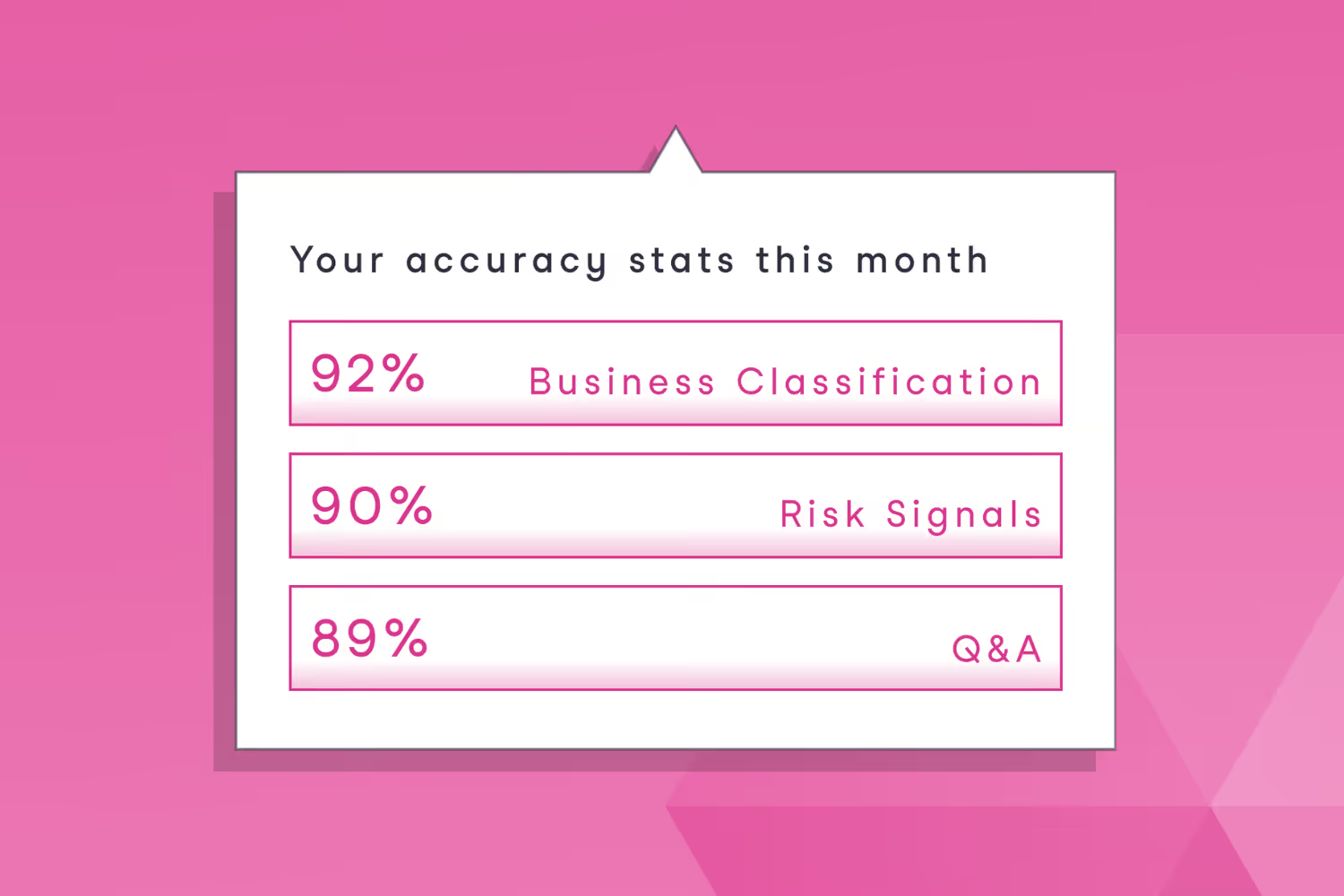
Evaluating AI accuracy isn’t just a one-time task—it’s about ensuring consistency and continuous improvement. With clear benchmark metrics, insurers can easily track progress and see how Sixfold’s AI aligns with their underwriting standards over time.
Accuracy benchmarks help insurers assess Sixfold’s performance during the pilot phase, ensuring it delivers value to the underwriting team before moving to full implementation.
Considering a Sixfold pilot? Accuracy benchmarks help insurers assess Sixfold’s performance during the pilot phase, ensuring it delivers value to the underwriting team before moving to full implementation. Want to keep tabs on accuracy? No problem. We offer on-demand reports to give our customers a real-time look at how well our AI is performing, whenever they need it.
Benefit #2 - Confident AI adoption
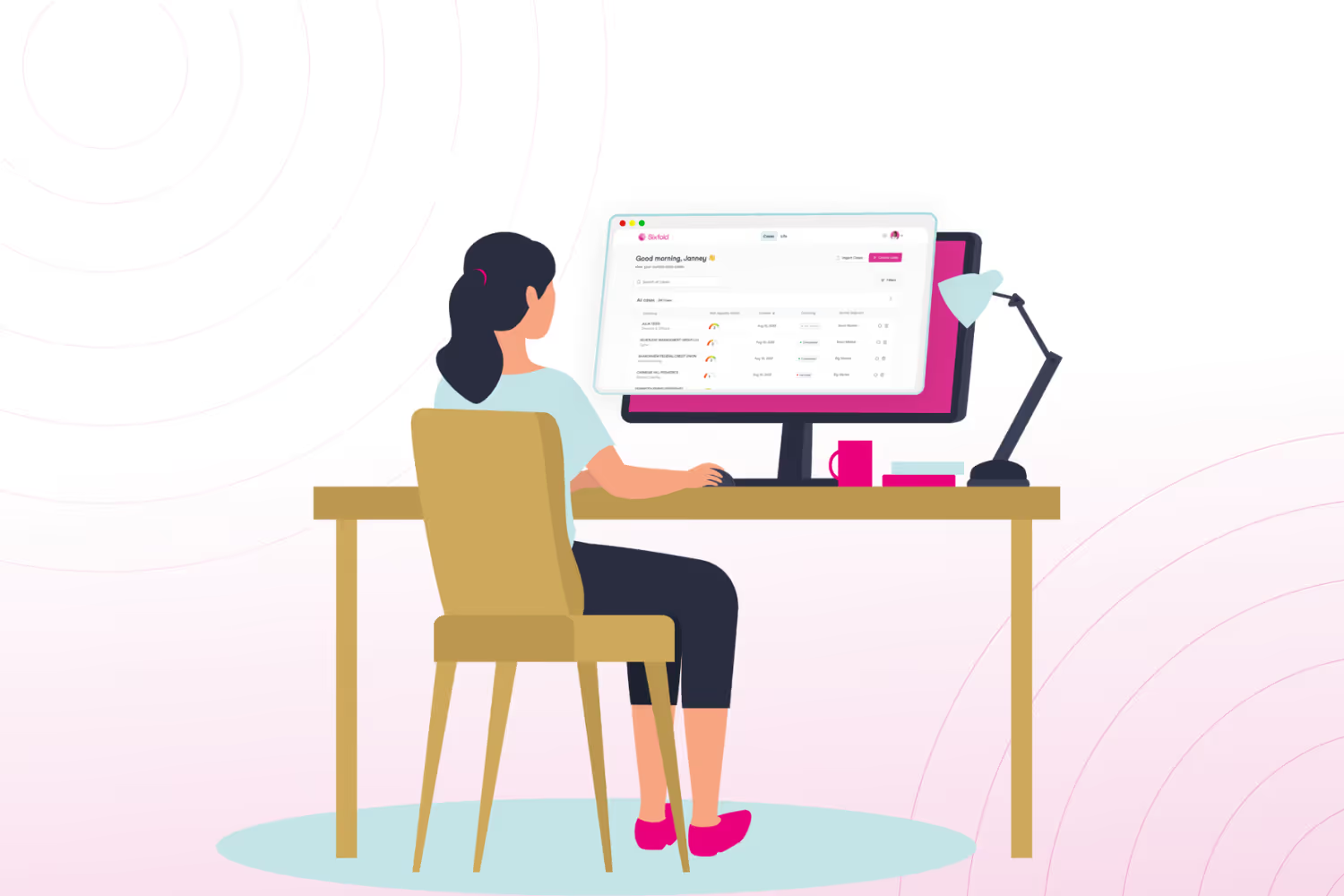
From day one, our goal has been to build an underwriting AI solution that users trust. If underwriters can’t trust Sixfold’s insights, why would they rely on them for critical decisions?
Even in low-stakes tasks, AI’s accuracy isn’t always guaranteed. Take general-purpose LLMs—they handle simple research tasks and tasks such as summarizing reports, but even then, you might find yourself second-guessing their output. They’re right sometimes—but how often? And can you tell when they’re not?
The result? More confident decisions, stronger justifications, and a clearer business case for when to quote—and when not to.
That kind of guesswork isn’t good enough for underwriting. The high-stakes decisions underwriters make every day demand high-stakes trust.
With transparent accuracy reporting, underwriters know exactly how reliable Sixfold’s insights are. The result? More confident decisions, stronger justifications, and a clearer business case for when to quote—and when not to.
Benefit #3 - Audit-ready records
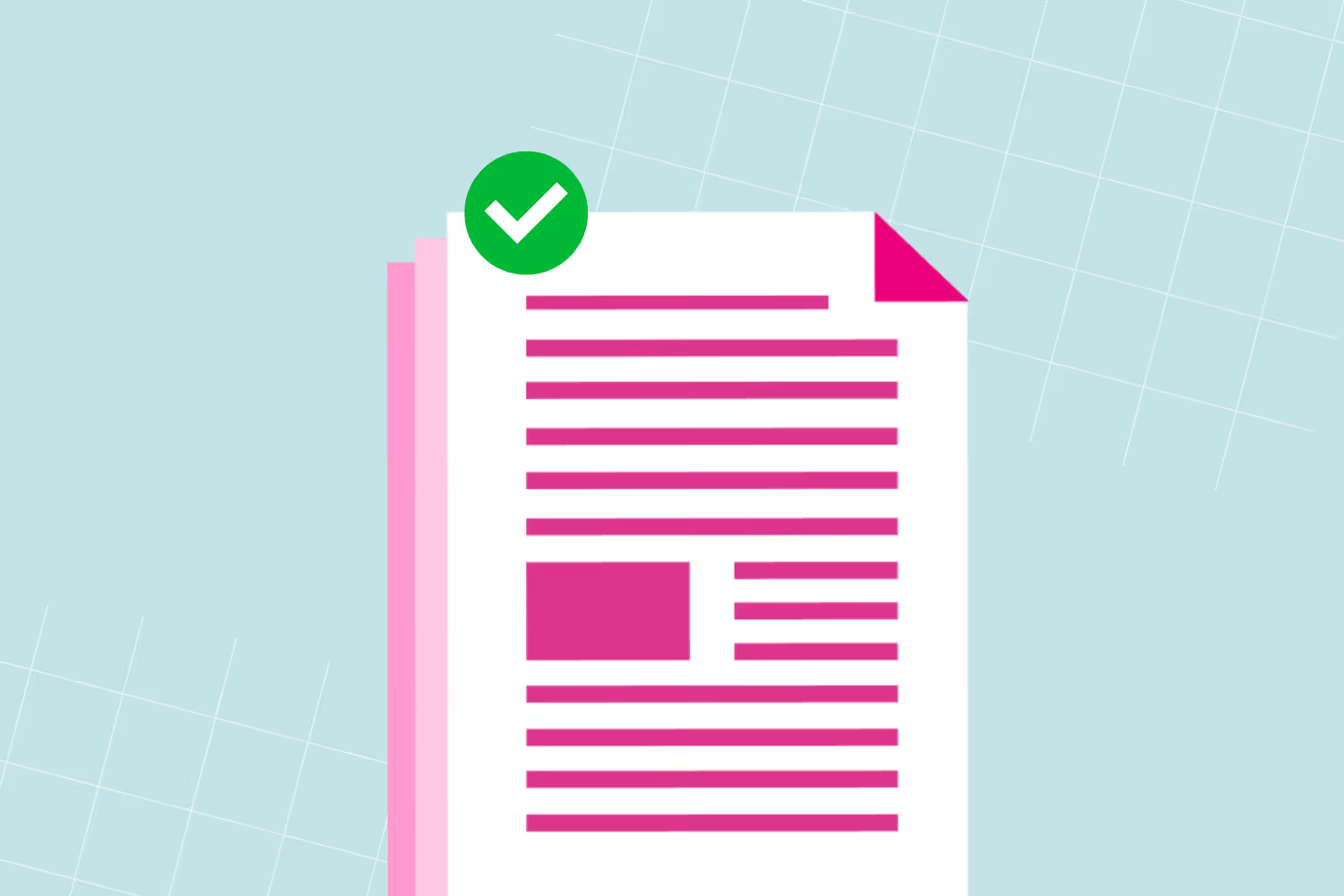
To support insurers’ audit and compliance needs, we conduct regular assessments using this application — both after code updates and at scheduled intervals—to prevent model drift and ensure reliability. This process helps identify inconsistencies and flag any deviations from expected results before they impact underwriting decisions.
The Accuracy Validator generates a transparent, audit-ready log for each assessment, allowing insurers to:
✅ Verify the reasoning behind AI-generated insights and decisions.
✅ Monitor model performance over time to proactively address potential drift.
✅ Demonstrate compliance with regulatory requirements by providing clear, documented AI processes
Feedback from customers
As we’ve started to introduce this capability to insurers, the response has been overwhelmingly positive. Some have even asked if they can use it to evaluate some of their other AI applications — a very clear proof of its value from day one. Others have asked to use the Accuracy Validator outside of AI applications to monitor overall underwriting accuracy.
Another key feedback we’ve received is that no other AI solution offers this level of structured performance measurement and tracking.
Another key feedback we’ve received is that no other AI solution offers this level of structured performance measurement and tracking. Sixfold is the first to give insurers a clear way to validate AI impact and track results over time in underwriting.
Curious to learn how you can get started with Sixfold? Check out the FAQ section to learn more about our pilot program, designed to help insurers fully assess the value of Sixfold before scaling up.
Reach out with any additional questions!
Now Live: One-Click Source Verification for Every Fact
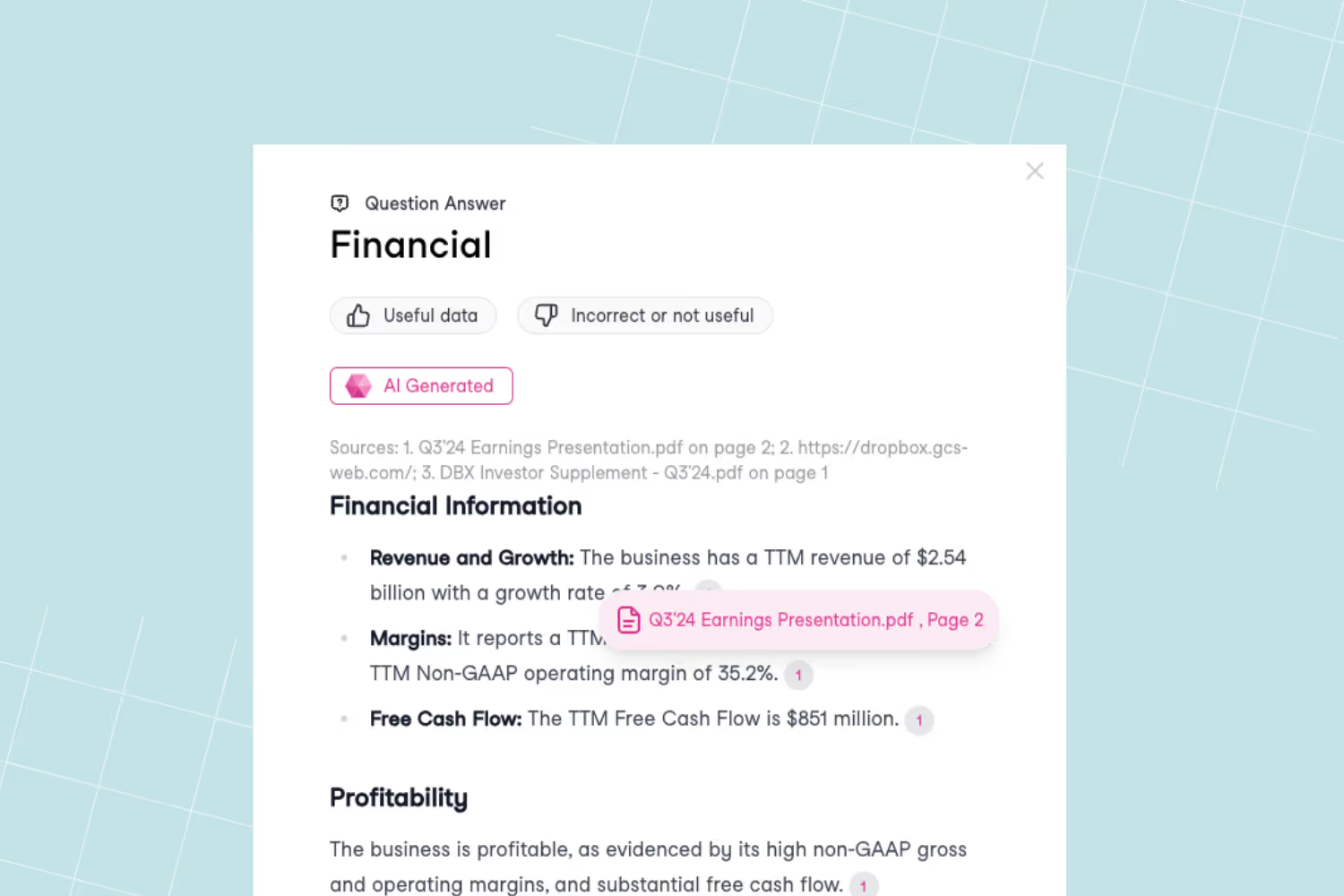
Sixfold’s in-line citation feature is all about building trust and confidence with underwriters by making it effortless to trace the source of Sixfold’s insights. And now, with our latest update we’re making this feature even better!
Sixfold’s in-line citation feature is all about building trust and confidence with underwriters by making it effortless to trace the source of Sixfold’s insights. And now, with our latest update we’re making this feature even better on our commercial platform!
So, what is new?
When reviewing an applicant’s case, you'll notice these improvements:
- Exact Source Page: No more searching through the entire document—now you’ll see the exact page where a fact was found.
- In-line Fact Attribution: Each fact provided by Sixfold will include a specific source citation.
- One-Click Verification: Click any citation, and it will instantly open the source page for you.
It’s now even easier and more intuitive to check exactly where Sixfold’s insights came from—whether a questionnaire, loss run statement, webpage, or any other source. This improves traceability and gives underwriters extra peace of mind. No need to read through a full report or scroll through multiple pages to validate Sixfold’s insights.
“This feature exemplifies our commitment to building trustworthy and explainable AI with elegant simplicity.”
- Drew Das, AI Software Engineer
Get in touch to get a full demo of Sixfold's platform.
FEATURED REPORTS
Guides and Reports
A closer look at AI adoption, governance, and the future of underwriting.