Sixfold Content
Product Updates
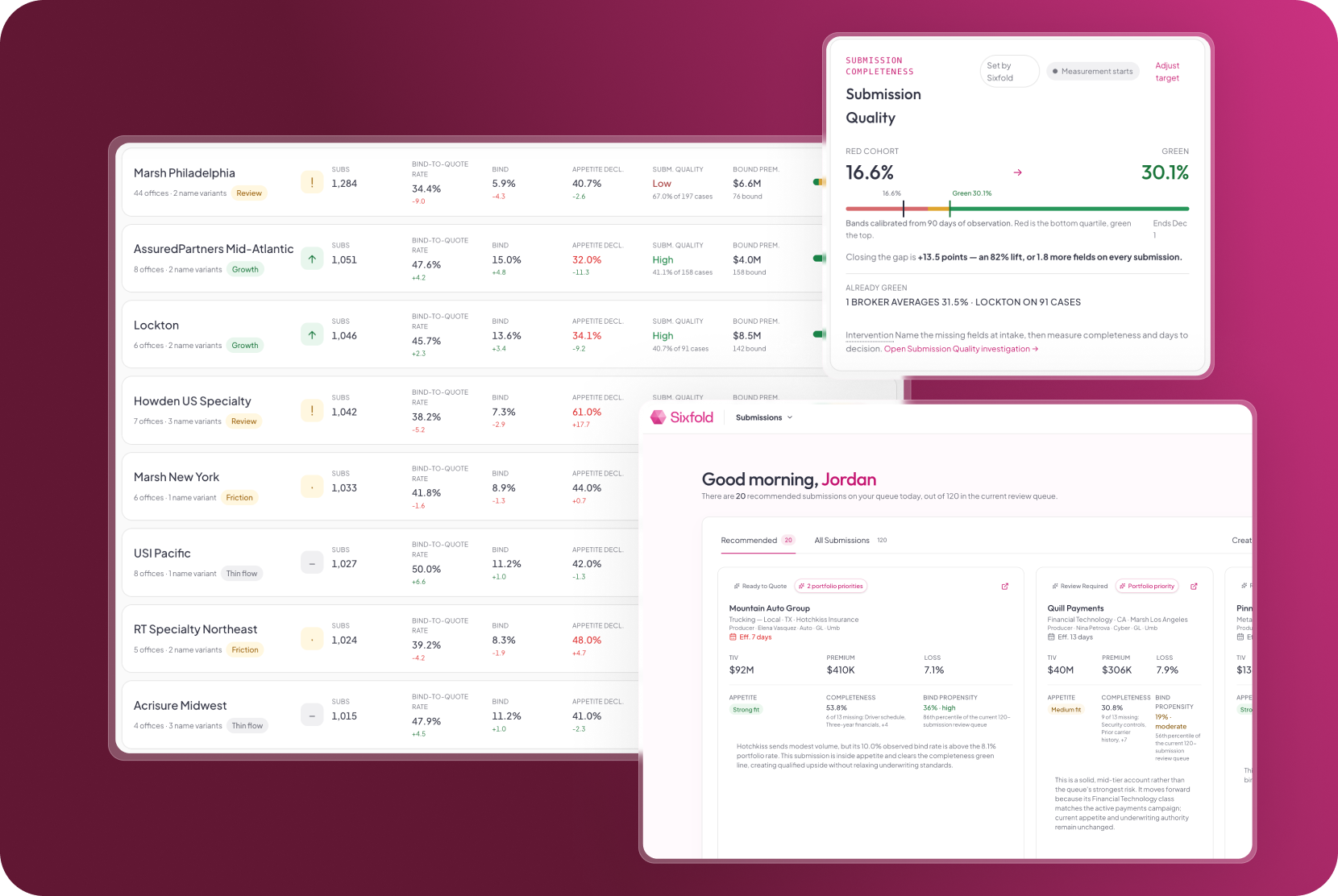
Introducing Distribution Intelligence
Sixfold is launching Distribution Intelligence, giving insurers the data and recommendations they need to proactively manage their distribution.



Stay informed, gain insights, and elevate your understanding of AI's role in the insurance industry with our comprehensive collection of articles, guides, and more.
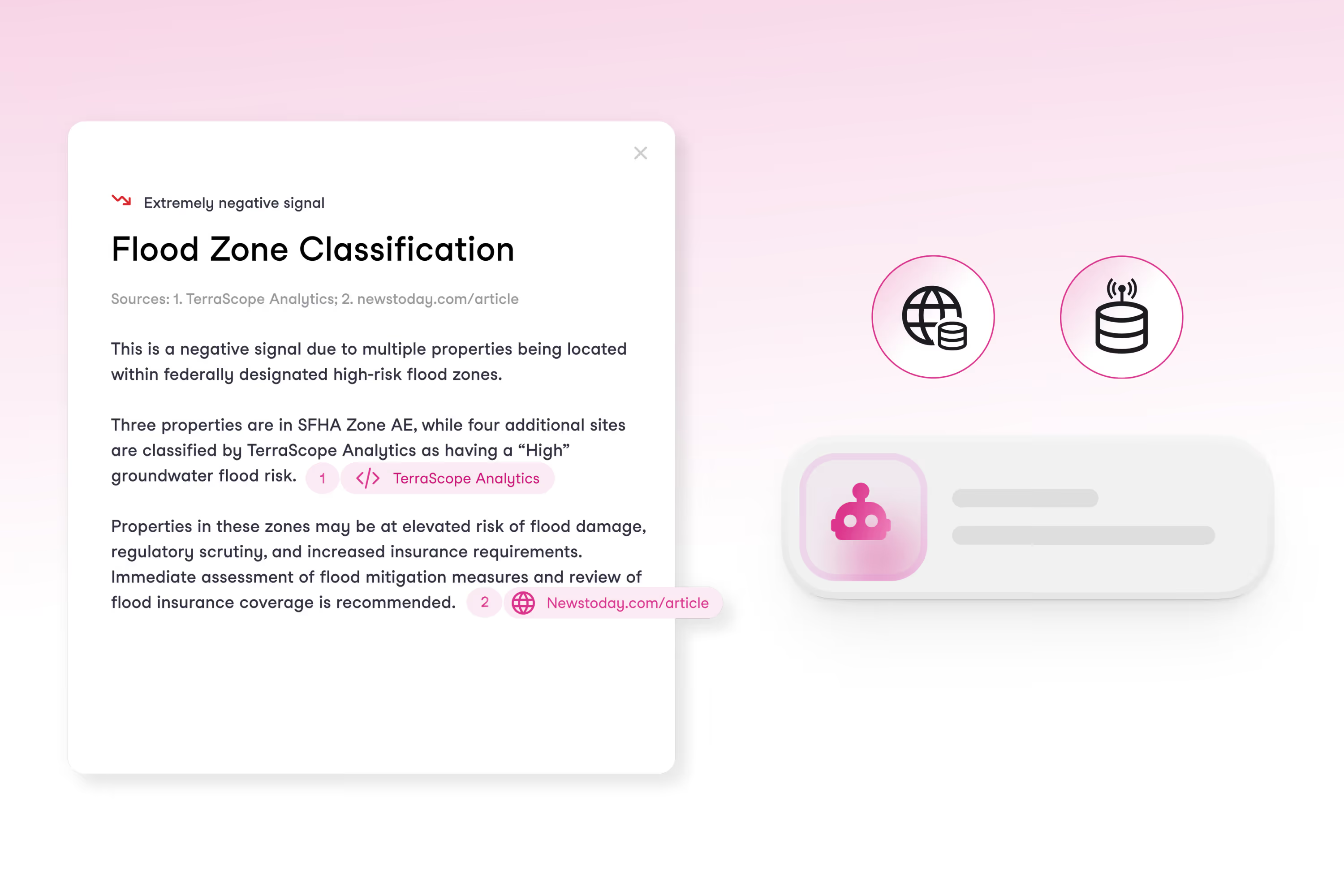
Research Agent: From Hours of Digging to Seconds of Insights
Meet Research Agent, underwriters’ new research partner. It spots the gaps in a submission, finds the missing details, and delivers the insights that matter most for the decision.
In commercial underwriting, submissions rarely contain everything underwriters need to properly assess risks. Critical information such as SEC filings, cyber incidents, litigation history, or executive misconduct aren't in the application, and finding that data falls on the underwriter.
The stakes are high: miss one key detail, and underwriters are suddenly pricing a completely different risk. The research to uncover this information means hours going through public sources such as news archives and databases.
All while brokers demand quotes fast in an increasingly competitive market.
Why We Built it
With Research Agent, underwriters have a research partner who finds the gaps in the submission, locates the missing pieces, and brings back the insights that matter for the decision. The agent does the external research work on the underwriter’s behalf.
By filling critical information gaps and applying research from the public web and connected third-party data sources into Sixfold’s overall risk assessment, underwriters are given a complete risk picture for more precise appraisal. Underwriters can view the exact origin of any piece of information, with clickable links that take them directly to the original source for verification or further detail.
The result? Quotes go out faster, underwriters make more consistent calls, and decisions get made without wondering what might have been missed.
“Research Agent has been one of our most anticipated features, especially for customers in specialty lines where extensive research is needed to get a complete picture of the risk. We expect the agent to save them at least two hours per case.”
- Alex Schmelkin, Founder & CEO at Sixfold
When Research Makes Or Breaks The Quote
Sixfold’s Research Agent is designed to support commercial lines of business where external data is essential in risk evaluation and quoting. Lines of business we’re seeing the highest demand for include:
- General Liability - Public web research to capture OSHA violations, litigation history, and negative press coverage.
- Cyber - 3rd party cyber threat intelligence plus broader public web research for cyber breach disclosures and corporate litigation involving cybersecurity lapses.
- E&S Property - Public and/or 3rd party data on location and climate based risks (flood, wildfire, crime, etc.), permit history, and company mentions in the news.
- Directors & Officers (D&O) - News on executive misconduct, class-action lawsuits, SEC filings, and shareholder news.
- Healthcare & Life Sciences - Public records of malpractice lawsuits, regulatory actions, patient safety concerns, and news coverage related to clinical trials or product safety.
While Competitors Prep, You Price
Research Agent delivers wins across the board, immediate time savings for underwriters and competitive advantages insurers.
“We’re seeing growing demand for research-heavy underwriting. With this launch, we accelerate the time to quote while elevating decision-making with richer context.”
- Lana Jovanovic, Head of Product at Sixfold
Focus on what matters: Those hours gained back per case? That's time underwriters can spend on what they do best: making smart risk decisions, strengthening broker relationships, and building customer connections instead of drowning in research tasks.
Speed wins deals: Reduced manual research burden means underwriters can respond faster to brokers, increase their quote volume, and capture more bound premiums. For carriers competing on both responsiveness and quality, this means winning more of the right business.
Same quality, every time: Every underwriter now has access to the same thorough research process. No more inconsistency based on who's handling the case or how much time they have to dig. Better decisions, whether it's one case or a thousand.
Improved portfolio performance: Sixfold’s comprehensive risk assessment, now with the added capability of public web research and connected third-party data, equips underwriters with a deeper understanding of each risk.
Contact Sixfold to see the Research Agent in action.
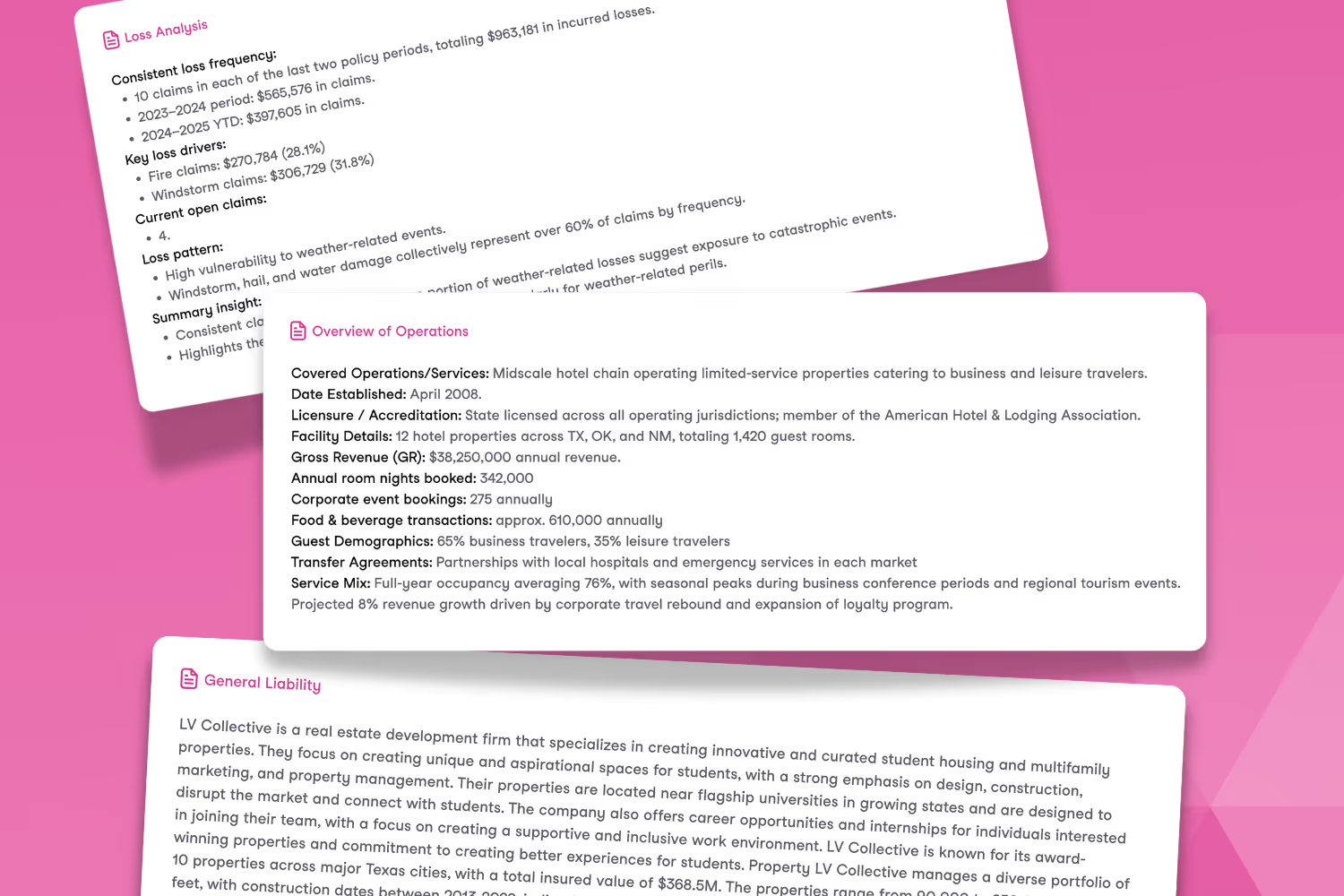
Meet Narrative: Your Shortcut to Risk Documentation
Sixfold’s latest launch introduces Narrative, a feature that helps underwriters document risk faster and more consistently. First rolled out with Zurich’s North America Middle Market team, Narrative is already helping standardize how risk is communicated across the organization.
No one became an underwriter because they love writing case documentation. But that’s where a huge amount of time goes today. Referral notes, peer review memos, audit documentation, written and rewritten, case after case.
- A single case can take an hour, often several hours, to document.
- Multiply that across a typical team handling hundreds of submissions each week. The result is thousands of hours spent each year on documentation alone.
- Underwriters are doing this work while balancing dozens of other tasks: reviewing new submissions, responding to brokers, preparing quotes, and managing existing accounts.
80% Automation, 20% Judgment
Sixfold’s Narrative feature automates and standardizes how risk is communicated across the organization. It automatically generates a risk narrative that matches each insurer’s appetite, tone and format, while giving underwriters the flexibility to apply their own judgment where it matters.
See below for a quick product walkthrough from Shirley Shen, Senior Product Manager @Sixfold:
The Narrative feature is built to:
1. Align with the insurer’s unique risk appetite
2. Surface key facts and risk insights that matter most
3. Adhere to required documentation standards and formats
“Think of all the documents underwriters have to create for administrative purposes. Anything that requires them to synthesize the risk overall. Sixfold is doing 80% of that now: bringing together all the facts. Then the underwriter just adds the last 20%, the judgment call.”
- Laurence Brouillette, Head of Customers and Partnerships @Sixfold
Proven with Zurich’s North America Team

The Narrative feature was developed and validated through the 2024 Zurich Innovation Championship (ZIC).
Over a 6-week sprint with Zurich’s North America Middle Market team, Sixfold:
- Partnered with 16 underwriters and was used in 80%+ of their live submissions
- Processed nearly 4,000 pages of submission and web data
- Achieved an average of 60 minutes time savings per submission
Following this success, Narrative is now rolling out across Zurich’s U.S. offices.
"We launched with four Zurich Middle Market offices in January 2025 and are now expanding Sixfold to dozens more offices countrywide.”
- Amy Nelsen, Head of Underwriting Operations, U.S. Middle Market @Zurich North America
How Zurich gives underwriters time back with Sixfold — featured in The Insurer.
AI That Actually Gets Used
Narrative is a great starting point for insurers looking to bring AI into underwriting workflows today. It takes the repetitive parts of the job off underwriters’ hands without requiring them to change how they already work.
“Sixfold streamlines the way underwriters receive information on new submissions, offering a holistic and simplified overview of a business’s operations and exposures right from the point of entry into our workflow.”
- Madison Chapman, Senior Middle Market Underwriter @Zurich North America
How Sixfold is transforming underwriting for Zurich’s U.S. Middle Market team.
When underwriters experience that impact immediately, with fewer hours spent writing up cases and fewer rounds of revisions, adoption happens easily. AI becomes part of the flow of work because it genuinely makes the day-to-day tasks so much easier.
Get in touch to see how Sixfold fits your underwriting workflow.
.avif)
New in Life & Health: Track Sources & New Changes
Sixfold’s latest launch introduces two new features for Life & Health underwriters: with In-line Citations and New Case Facts, underwriters can easily trace where each fact came from and quickly spot what’s new in a case, making reviews faster, clearer, and more efficient.
Check Sources Instantly
Trust and transparency are essential when underwriters use AI in their daily work. Underwriters need to know that the information they rely on is accurate; otherwise, a policy decision could result in incorrect coverage, claims issues, or unnecessary risk for the carrier.
One of the best ways to build that confidence is by clearly showing the source of each piece of information. That’s why we’re excited to introduce a new In-line Citations feature for our Life & Health customers. This feature makes it easy to check the source behind any insight Sixfold surfaces.
So, how does it work?
When reviewing a case in Sixfold, underwriters can now see exactly where each fact came from, including the document and page number. Here’s what you’ll see when clicking into a fact card:
- Document category listed for each file.
- Page number shown on hover
- One-click access to the exact source page
- All of the documents where the fact was found
Our goal? To increase underwriter confidence and efficiency by clearly showing the source of medical and lifestyle facts within the insurance application analysis.
New Info? Now Flagged for You
In Life and Health underwriting, it’s common for some cases to take time, sometimes weeks, to gather all the documents needed for final analysis. The result? A lot of new information is coming in, and it’s not always clear what’s actually new facts.
That’s where our new capability, New Case Facts comes in.

Now, when new facts are surfaced within a case, you’ll see a bell icon next to the relevant fact card, a simple way to flag which facts came from the latest documents added. You can click into the fact to see more context, including which document category it came from.
This makes it easier to understand what’s been added, without having to reread the whole submission. It’s especially useful when multiple underwriters are collaborating on a case; one might start the analysis, while a colleague might actually finish it.
With new facts clearly marked, everyone can stay aligned and quickly assess what’s different and what it means for the overall risk profile of the applicant.
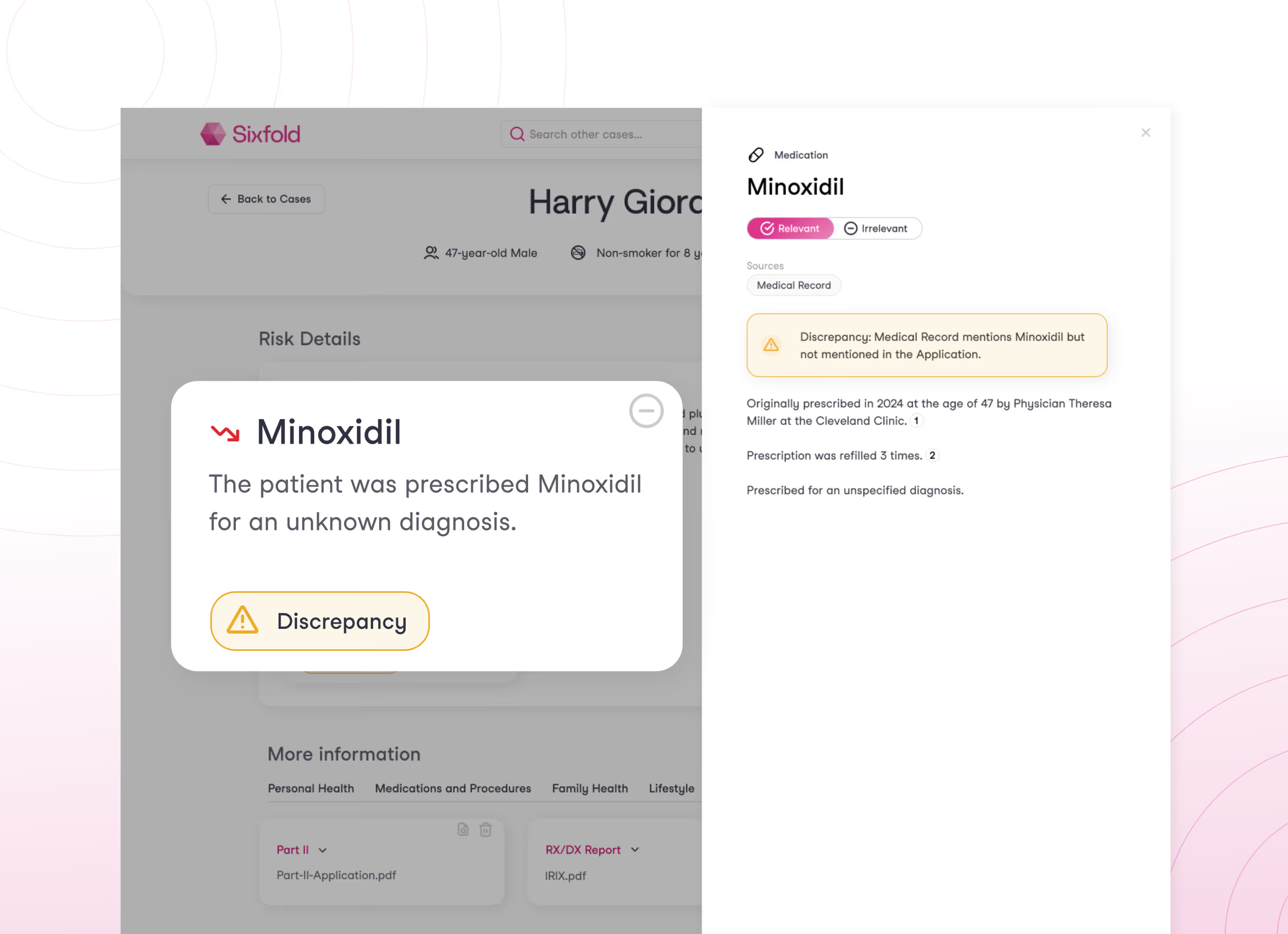
Just Launched: Instantly Spot Gaps in Medical Reporting
Sixfold’s AI for life and disability insurance is now able to automatically flag mismatches between what applicants report and what’s found in their medical records, giving underwriters a faster, more standardized way to catch inconsistencies before they become costly.
In life and disability underwriting, one of the most time-consuming and error-prone steps is verifying an applicant’s self-reported information.
Why? Because applications are long and detailed, and even when applicants are trying to be honest, omissions, intentional or not, are common. This is a growing concern across the industry, a recent Munich Re’s survey identified applicant misrepresentation as the most rapidly increasing form of fraud.
Sixfold’s Discrepancy Scan capability was built to address exactly this issue. Sixfold’s AI is now able to automatically flag mismatches between what applicants report and what’s found in their medical records, giving underwriters a faster, more standardized way to catch inconsistencies before they become costly.
When risk is hiding in the records
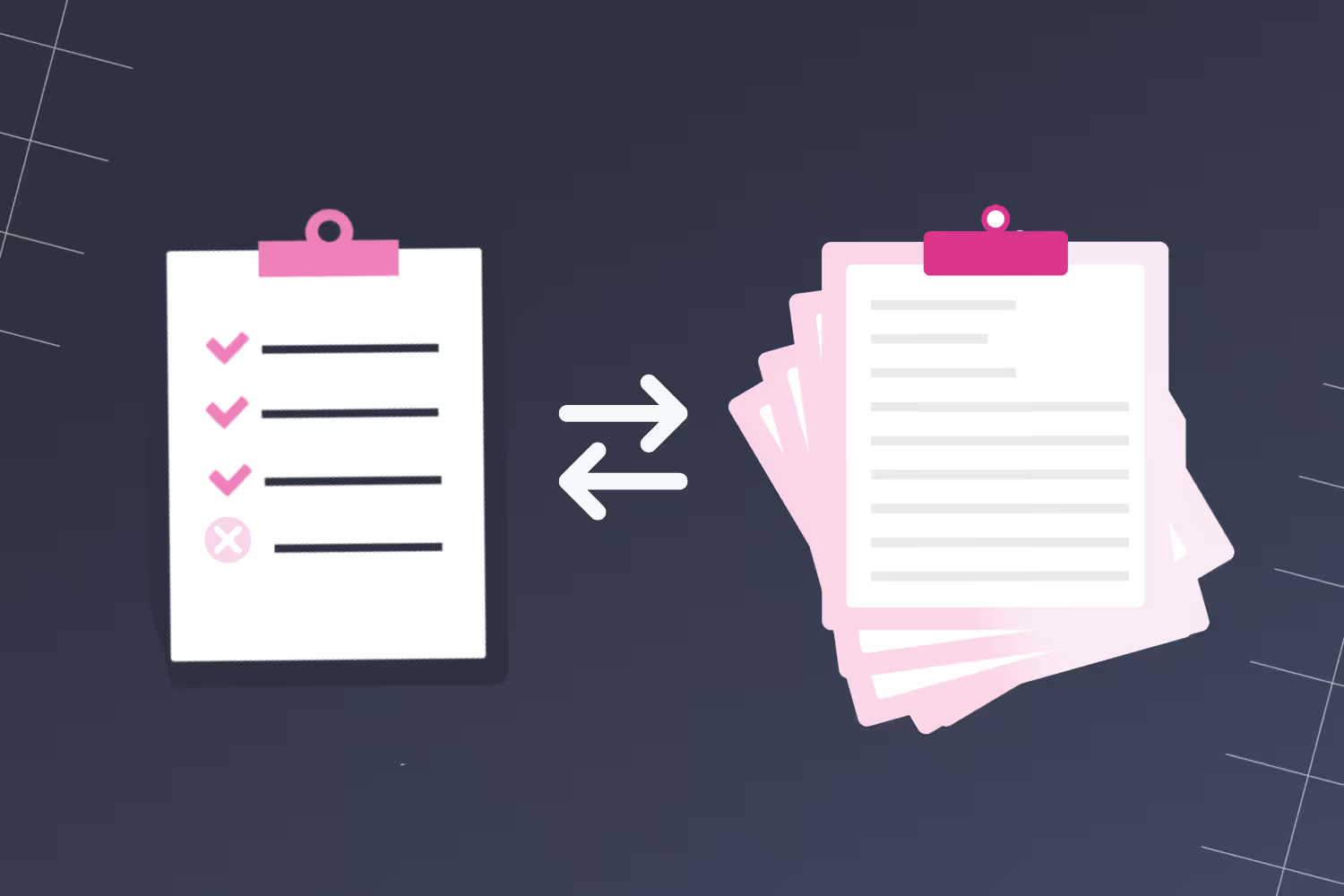
When someone applies for individual life or disability coverage, they complete a health questionnaire, like Part II, eMed, or a Med Supplement, disclosing conditions, medications, and history. From there, the underwriter kicks off verification: ordering APS reports, Rx histories, labs, and other third-party records.
As these often hundreds of pages of documents arrive, the underwriter is essentially playing detective — comparing what the applicant said to what the medical records reveal. Did the applicant disclose all relevant conditions? Are they taking medications they didn’t mention? Is there a difference in diagnoses or treatment history?
Underwriters dedicate significant time to identifying discrepancies because they are critical. A person's prescription history can reveal underlying health issues, sometimes even before a formal diagnosis is made. For example, a prescription for a weight-loss medication might indicate an associated morbidity.
Any inconsistency could signal fraud or simply an oversight. Either way, it matters.
See below for a quick product walkthrough with Noah Grosshandler, Product Manager at Sixfold.
The feature is currently focused on medications, but that’s just the beginning. We're planning to expand this capability to detect discrepancies across pre-existing conditions, procedures, family history, and lifestyle factors—always guided by what’s material to each insurer.
Minutes vs. hours of detective work
Sixfold’s new capability eliminates a critical bottleneck in underwriting. The traditional approach of manually reviewing hundreds of pages to spot inconsistencies is both time-intensive and susceptible to oversight.
The Discrepancy Scan changes that completely, surfacing critical discrepancies automatically instead. The result is a more efficient process where underwriters can confidently assess risk based on complete information, without the administrative burden of document comparison.
“Sixfold goes beyond summarizing medical histories, we spotlight the contradictions that can change a morbidity assessment. By drawing connections across medical records, we emphasize the most crucial facts for investigation.
This approach transforms hours of detective work into minutes, providing underwriters with confidence and efficiency in their decision-making processes.”
— Lana Jovanovic, Head of Product @ Sixfold
Get the full story upfront
Accuracy is everything in life and disability underwriting. With Sixfold’s automatic discrepancy detection, underwriters are able to get to a more accurate underwriting decision by:
- Catching omissions and inconsistencies at the beginning of the review cycle
- Reducing misclassification of risk due to overlooked or conflicting information
- Detecting potential fraud patterns before they result in costly claims
- Maintaining consistency and transparency when cases move between underwriters
How the feature works
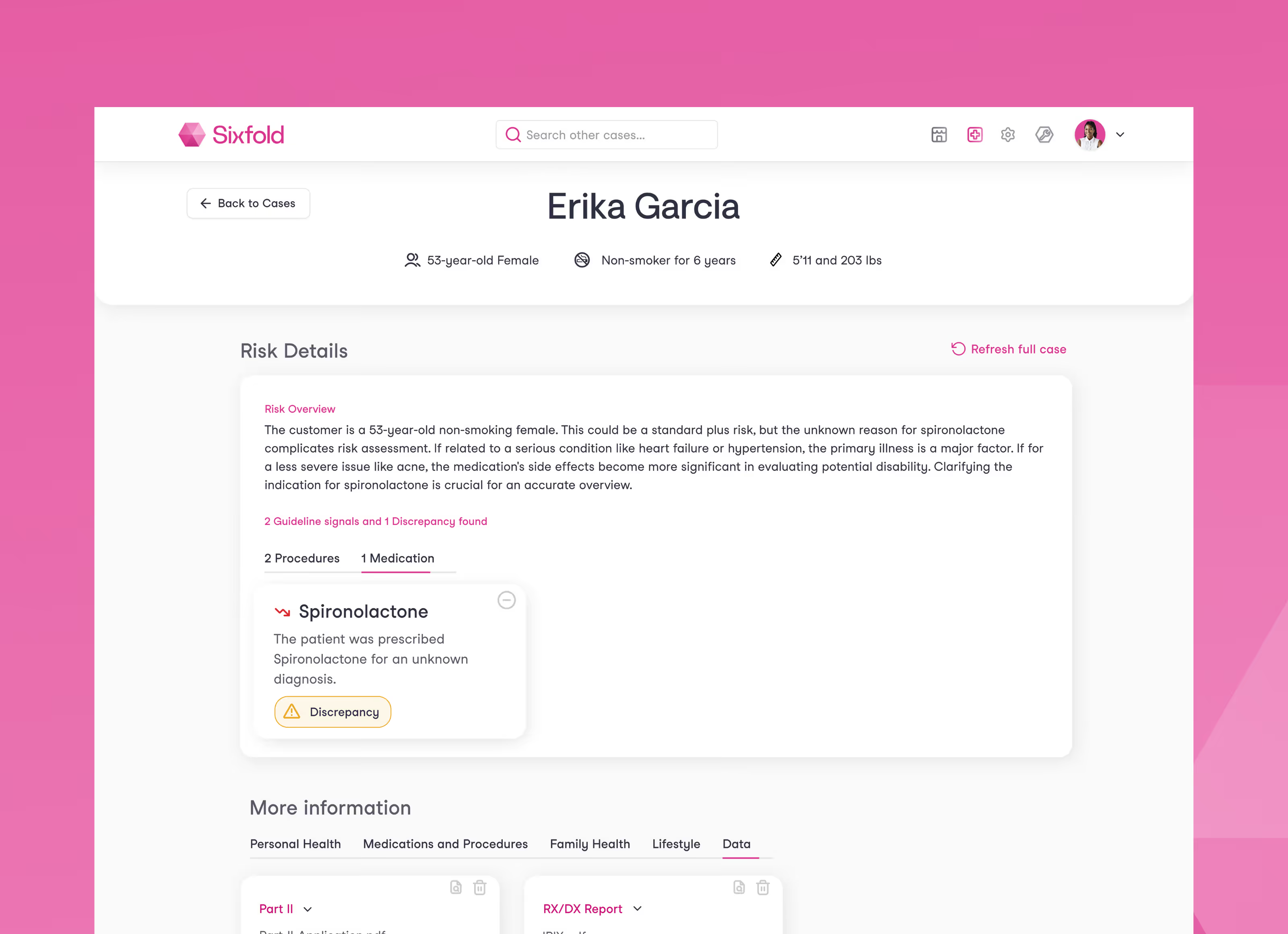
The Discrepancy Scan automatically compares the self-reported application data against the supporting medical documents and flags any mismatches related to material facts.
Prescriptions are often a leading indicator of an underlying diagnosis, one that could directly impact insurability or rating decisions. But not every medication matters the same way, and what’s considered “material” varies from carrier to carrier.
By securely ingesting each carrier’s unique underwriting guidelines, Sixfold identifies which medications are truly relevant in each context, connecting the dots between prescriptions, diagnoses, and underwriting impact.
Here’s how the feature works in practice:
1. Medical Document Review
Sixfold’s AI reviews both the submitted application and any supporting documents uploaded (APS, MIB, Rx histories, etc.) for medical data relevant for risk assessment.
2. Discrepancy Detection
Sixfold then compares the findings in the medical documentation to what the applicant reported. If a medication appears in the documents but not in the application, it’s flagged as a discrepancy.
3. Discrepancy Alert
Within the underwriter's dashboard, discrepancies appear clearly labeled with clear icons. Clicking into a card brings up the relevant context e.g., “Blood thinner mentioned in the medical report, not disclosed by the applicant.”
4. Clear Next Steps
Underwriters can use this insight to request clarification from the applicant or additional documentation from providers.
5. Always-Current Monitoring
Because documents arrive asynchronously, the system continually updates as new files are uploaded. Discrepancies are flagged dynamically based on the most current information.
Learn More
Insurtech Insights takes a closer look at the Discrepancy Scan
Interested in a hands-on demo? Reach out for a Sixfold walkthrough
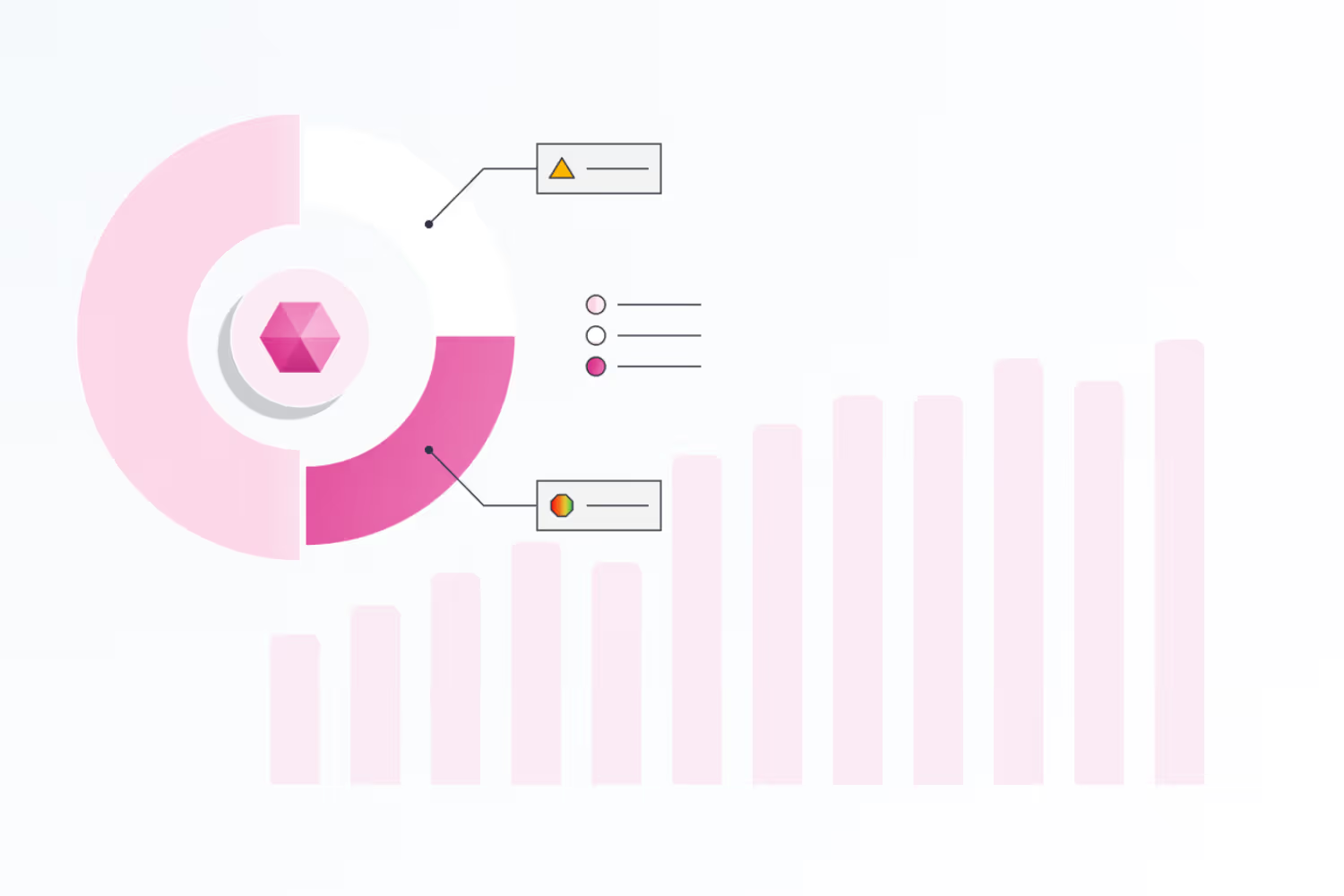
Meet the First AI Accuracy Validator Built for Insurance Underwriting
This application provides customers with a transparent and comprehensive way to evaluate Sixfold’s accuracy, reinforcing our commitment to bring reliable and trustworthy risk assessments to underwriters.
Today, we’re excited to introduce the first-ever AI Accuracy Validator built for insurance underwriting.
This application provides our commerical insurance customers with a transparent and comprehensive way to evaluate Sixfold’s accuracy—reinforcing our commitment to bring reliable and trustworthy risk assessments to underwriters.
Why did we build this?
For an AI solution to truly add value in underwriting, it needs to be both efficient and accurate. Many claim to be both—but is there proof?
For an AI solution to truly add value in underwriting, it needs to be both efficient and accurate. Many claim to be both—but is there proof?
Measuring efficiency can be fairly straightforward—reducing manual work, processing submissions faster, and automating repetitive tasks all provide clear benchmarks. But accuracy? That’s a completely different challenge.
How does it work?
The Accuracy Validator compares Sixfold’s AI-generated insights to the ideal version—what an experienced underwriter at the carrier would expect. It checks for accuracy, scores the results, and provides feedback to improve alignment with human analysis.
Here is a video overview from Lana, Head of Product at Sixfold, on how the validator works:
AI that speaks Underwriter
For AI solutions built for underwriters, accuracy isn’t about finding a single “correct” answer—it’s about reasoning like an underwriter. Take a risk summary as an example, an AI-constructed risk summary shouldn’t just condense information; it should highlight the key risk factors that matter to each carrier.
But what happens if an AI summary leaves out a key risk detail? How do you measure how off it is? What do you compare it to? And when a model is updated, how do you know it’s actually improving accuracy—not just changing the output?
So we started searching for an evaluation tool that could help us answer these questions — but nothing existed.
These were the questions we asked ourselves. So we started searching for an evaluation tool that could help us answer these questions — but nothing existed. It wasn’t just that we couldn’t find the right tool—we realized the industry wasn’t even thinking about accuracy in an insurance-underwriting-specific way.
So, we built it. With this capability in place, we can continuously improve Sixfold’s output, ensuring underwriters receive factually correct, reliable, and actionable insights for every risk assessment.
Benefit #1 - Track progress over time
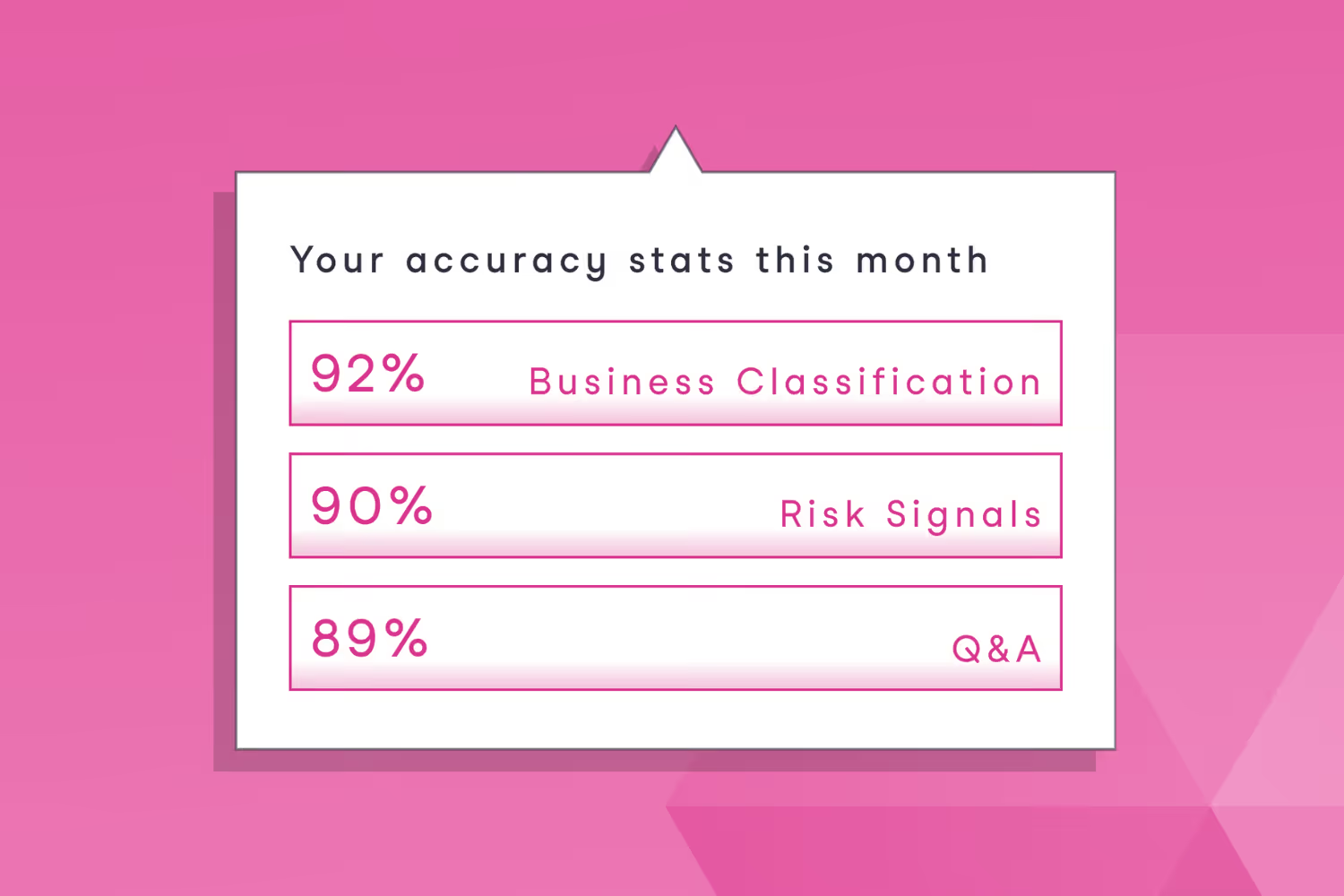
Evaluating AI accuracy isn’t just a one-time task—it’s about ensuring consistency and continuous improvement. With clear benchmark metrics, insurers can easily track progress and see how Sixfold’s AI aligns with their underwriting standards over time.
Accuracy benchmarks help insurers assess Sixfold’s performance during the pilot phase, ensuring it delivers value to the underwriting team before moving to full implementation.
Considering a Sixfold pilot? Accuracy benchmarks help insurers assess Sixfold’s performance during the pilot phase, ensuring it delivers value to the underwriting team before moving to full implementation. Want to keep tabs on accuracy? No problem. We offer on-demand reports to give our customers a real-time look at how well our AI is performing, whenever they need it.
Benefit #2 - Confident AI adoption
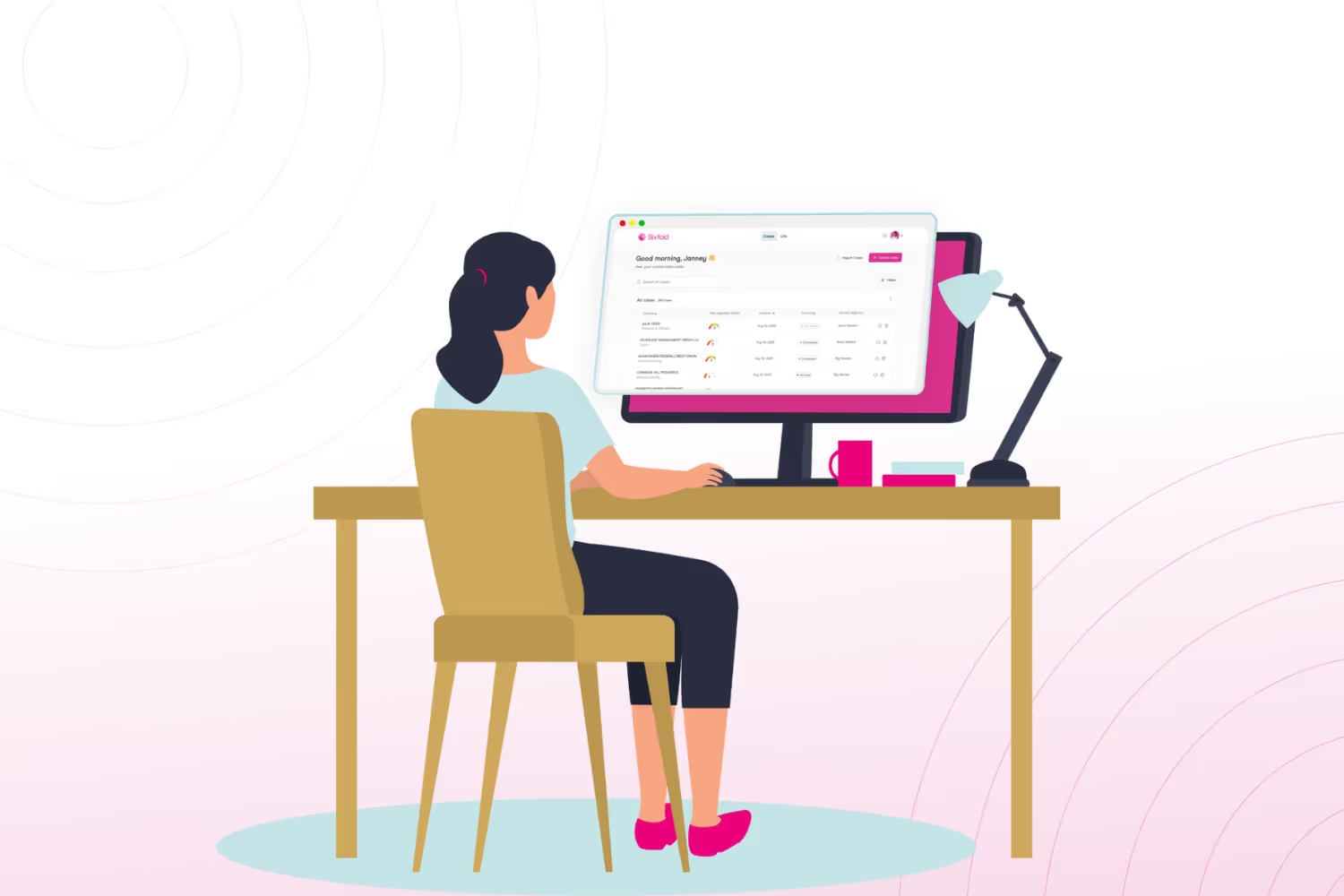
From day one, our goal has been to build an underwriting AI solution that users trust. If underwriters can’t trust Sixfold’s insights, why would they rely on them for critical decisions?
Even in low-stakes tasks, AI’s accuracy isn’t always guaranteed. Take general-purpose LLMs—they handle simple research tasks and tasks such as summarizing reports, but even then, you might find yourself second-guessing their output. They’re right sometimes—but how often? And can you tell when they’re not?
The result? More confident decisions, stronger justifications, and a clearer business case for when to quote—and when not to.
That kind of guesswork isn’t good enough for underwriting. The high-stakes decisions underwriters make every day demand high-stakes trust.
With transparent accuracy reporting, underwriters know exactly how reliable Sixfold’s insights are. The result? More confident decisions, stronger justifications, and a clearer business case for when to quote—and when not to.
Benefit #3 - Audit-ready records
To support insurers’ audit and compliance needs, we conduct regular assessments using this application — both after code updates and at scheduled intervals—to prevent model drift and ensure reliability. This process helps identify inconsistencies and flag any deviations from expected results before they impact underwriting decisions.
The Accuracy Validator generates a transparent, audit-ready log for each assessment, allowing insurers to:
✅ Verify the reasoning behind AI-generated insights and decisions.
✅ Monitor model performance over time to proactively address potential drift.
✅ Demonstrate compliance with regulatory requirements by providing clear, documented AI processes
Feedback from customers
As we’ve started to introduce this capability to insurers, the response has been overwhelmingly positive. Some have even asked if they can use it to evaluate some of their other AI applications — a very clear proof of its value from day one. Others have asked to use the Accuracy Validator outside of AI applications to monitor overall underwriting accuracy.
Another key feedback we’ve received is that no other AI solution offers this level of structured performance measurement and tracking.
Another key feedback we’ve received is that no other AI solution offers this level of structured performance measurement and tracking. Sixfold is the first to give insurers a clear way to validate AI impact and track results over time in underwriting.
Curious to learn how you can get started with Sixfold? Check out the FAQ section to learn more about our pilot program, designed to help insurers fully assess the value of Sixfold before scaling up.
Reach out with any additional questions!
Now Live: One-Click Source Verification for Every Fact
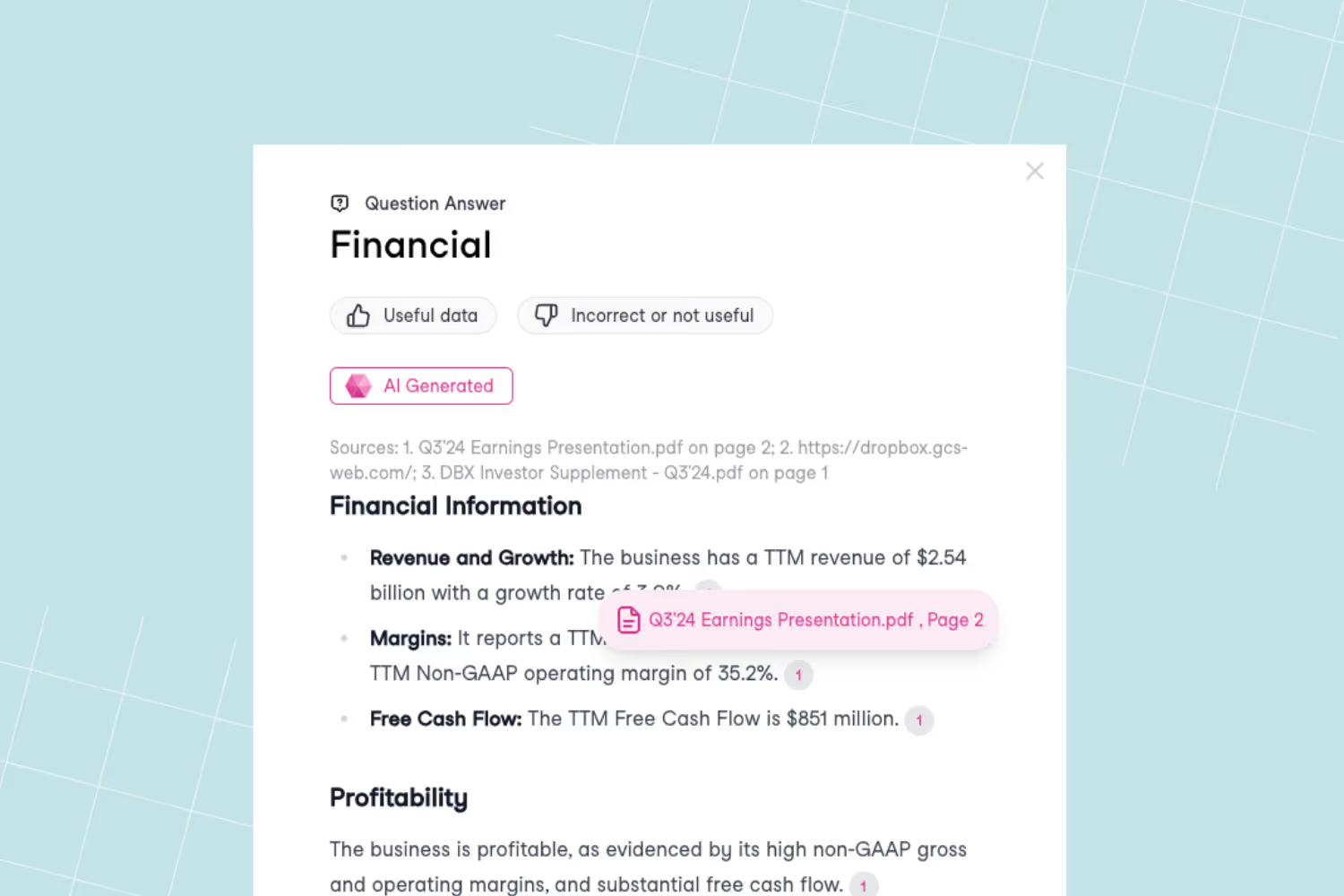
Sixfold’s in-line citation feature is all about building trust and confidence with underwriters by making it effortless to trace the source of Sixfold’s insights. And now, with our latest update we’re making this feature even better!
Sixfold’s in-line citation feature is all about building trust and confidence with underwriters by making it effortless to trace the source of Sixfold’s insights. And now, with our latest update we’re making this feature even better on our commercial platform!
So, what is new?
When reviewing an applicant’s case, you'll notice these improvements:
- Exact Source Page: No more searching through the entire document—now you’ll see the exact page where a fact was found.
- In-line Fact Attribution: Each fact provided by Sixfold will include a specific source citation.
- One-Click Verification: Click any citation, and it will instantly open the source page for you.
It’s now even easier and more intuitive to check exactly where Sixfold’s insights came from—whether a questionnaire, loss run statement, webpage, or any other source. This improves traceability and gives underwriters extra peace of mind. No need to read through a full report or scroll through multiple pages to validate Sixfold’s insights.
“This feature exemplifies our commitment to building trustworthy and explainable AI with elegant simplicity.”
- Drew Das, AI Software Engineer
Get in touch to get a full demo of Sixfold's platform.
FEATURED REPORTS
Guides and Reports
A closer look at AI, adoption, and the future of underwriting.