How AI is Improving Life & Health Underwriting
The bottleneck in life & health underwriting
Life & health underwriting is slowed by manual submission triage and the work of reading dense medical evidence for risk assessment. AI underwriting platforms now read and reason through an entire submission before an underwriter even opens it.
Every life and health submission arrives as a stack of unstructured information, like application data and medical records such as attending physician statements, lab results, and prescription histories, that can run to hundreds, even thousands of pages. Historically, underwriters spent the bulk of their time finding, reading, and organizing that evidence before they could make a single risk decision. That manual effort is the real constraint, not the decision-making process itself.
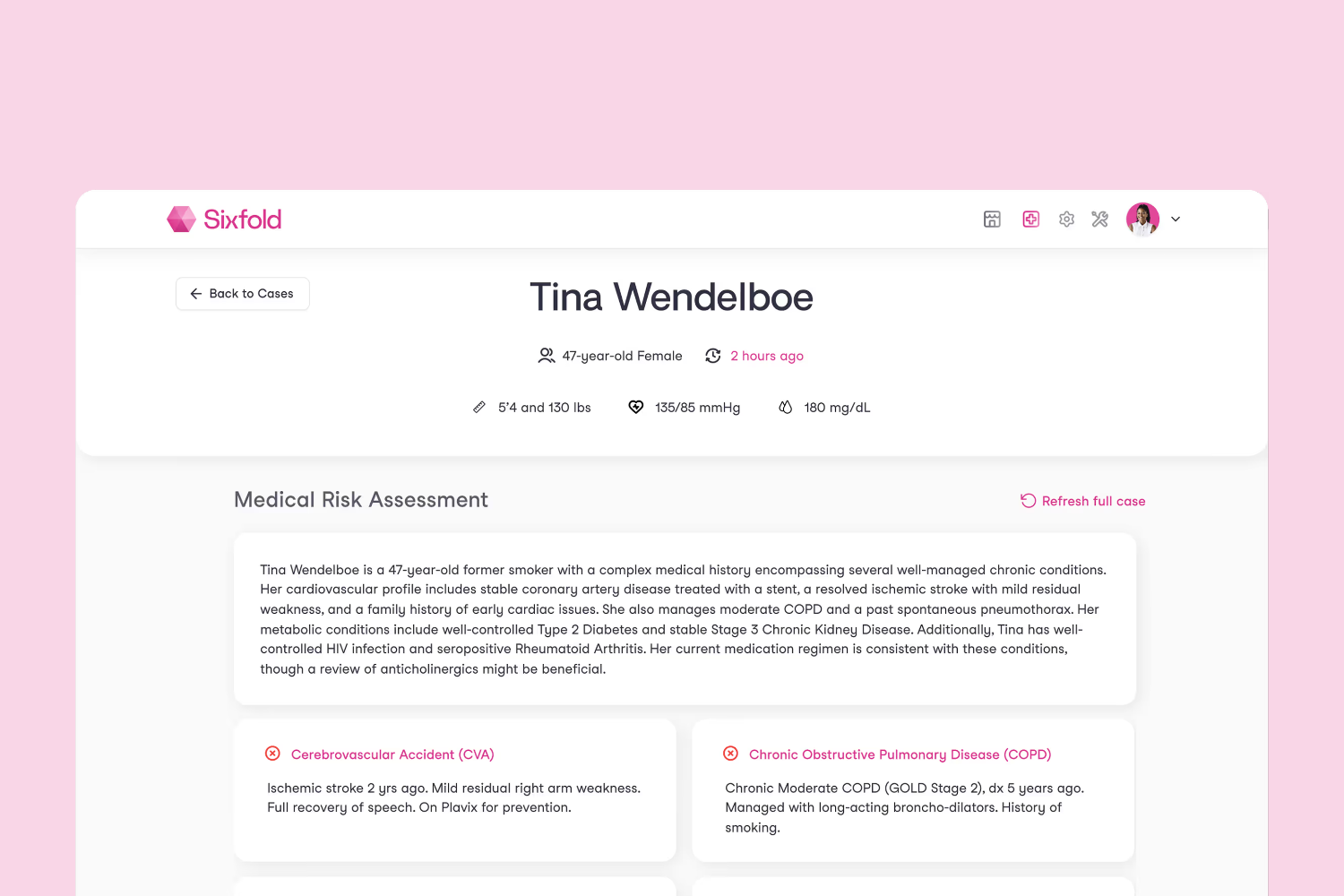
Sixfold changes that. Its AI agents read and reason across the full submission the way an experienced underwriter would, surfacing the relevant medical evidence aligned with the carrier's underwriting manual, flagging key risk factors, and delivering a clear health overview. All steps to support the underwriter's decision-making.
Using medical software to read records and find key information faster
Medical evidence software exists because reading through the records is the most time-consuming part of a life & health case analysis.
Sixfold processes attending physician statements, lab panels, and prescription data, extracts the clinically relevant findings, and ties them back to the risk factors that matter for the underwriting decision. Instead of skimming a 200-page record for a single relevant medical condition, the underwriter gets a structured, evidence-backed summary with a traceable source.
Because the system comes pre-trained with underwriting knowledge, it recognizes what matters most to a life or health risk from day one, rather than requiring months of configuration. It plugs into the underwriting workbench the team already uses, so the medical evidence summary appears within the existing workflow.
Reducing time spent in manual submission triage with AI
Doing the initial review of a submission, checking if all the information is available to proceed or if it needs more data from brokers or agents, is where underwriting teams spend the most time on operational work. An AI platform automates triage by ingesting each submission as it arrives, assessing completeness, pulling and organizing the medical evidence, and producing a preliminary recommendation before a human review.
The result is that when underwriters start the case review, it's already prioritized, and the risk assessment is complete, ready for a final underwriting decision. Underwriters get to spend their time on judgment, complex risk cases, and broker relationships rather than on sorting and data entry.
Across Sixfold customers, this contributes to a 50% reduction in turnaround time, hit ratios up 15% or more, and up to 30% more gross written premium per underwriter, because capacity is redirected from administrative triage to writing business.
L&H Frequently Asked Questions
How do life and health insurers use medical-evidence software to speed up the underwriting process?
Life insurers use Sixfold's AI to automatically read and interpret medical records, attending physician statements, lab results, and prescription histories. It extracts relevant findings, links them to risk factors, and presents an evidence-based summary, so underwriters can focus on the decision rather than digging into information. It provides a risk assessment ready for decision-making, including recommendations on what to do next in a case.
Sixfold comes pre-trained with underwriting knowledge from day one. It integrates directly with existing underwriting workbenches, keeping the source evidence visible for every conclusion. Customers see processing times 50% to 97% faster as a result.
How do underwriting teams reduce manual submission triage using AI platforms?
Underwriting teams reduce manual triage by having the AI platform ingest each submission on arrival, check completeness, organize the medical evidence, and automatically generate a risk assessment and next-step recommendations. Underwriters then start case review with cases that are already prioritized and pre-analyzed, focusing their time on risk judgment rather than sorting and data entry.
Having Sixfold help with triage, teams redirect capacity from administrative work to writing business. Sixfold customers report hit ratios up 15% or more and up to 30% more GWP per underwriter. Adoption stays high, over 90% of expected users, because the platform fits how underwriting actually works rather than forcing a new process.
What are the top tools for automating life underwriting decisions?
The top tools for automating Life and Health underwriting decisions are purpose-built underwriting AI platforms that reason across a full submission, automated medical evidence and record summarization software, and integrations into the underwriting workbench. The strongest options combine all three: decisioning, evidence analysis, and workflow fit.
About Sixfold
Sixfold is the first AI solution built specifically for insurance underwriting, in market since early 2023, and is live in production across 50 lines of business, including life & health lines. It has processed more than 1.5 million submissions globally and is used by more than 1,000 underwriters, from insurers like Guardian and New York Life.