AI in Underwriting: Lessons from Leaders on What's Working
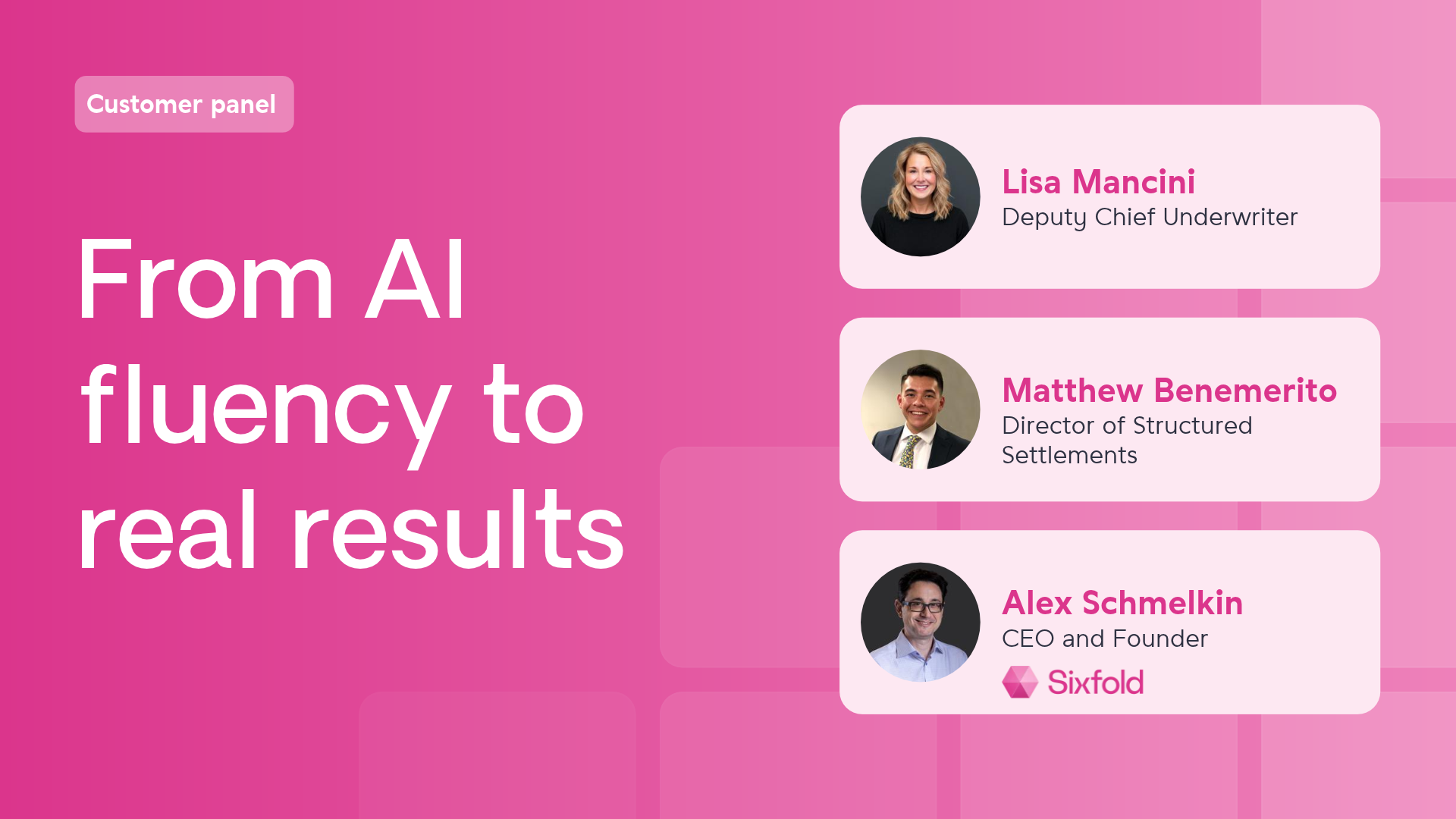
At the inaugural Protectors conference in Las Vegas, Sixfold CEO Alex Schmelkin welcomed Lisa Mancini, Deputy Chief Underwriter at PartnerRe, and Matthew Benemerito, Director of Structured Settlements at New York Life, for a conversation on what's working with AI in underwriting and how they got there.
It Starts with AI Fluency
Being fluent in AI involves more than using it frequently. It means knowing what the technology can do, what should be handed over to it, and what stays with the underwriter. Durting the panel, both leaders agreed that AI is there to help underwriters do their work, not replace them.
For Lisa, there are four key pillars of AI fluency: understanding what the technology can and can't do, giving it clear instructions, verifying the information it produces, and using it responsibly.
"This is a tool in your toolbox. It's going to help you do your job, but it's not going to do your job for you." Lisa Mancini
For Matthew, investing in people and providing training are essential to building AI fluency, since everyone starts from a different place with the technology.
"You have to really invest in your people. You have to create training and sandbox environments for them to play around with and test in." Matthew Benemerito
How They're Using AI Today
As Matthew explained, structured settlements aren't New York Life's "bread and butter." The business provides financial security to injured individuals through tax-free annuity payments, and underwriting each case involves reviewing the claimant's medical records. Those records can run 30 pages, often with handwritten notes, and reviewing a single claim could take up to 30 minutes.
With Sixfold, the relevant information comes together in one place, with impairments, vitals, and key characteristics clearly outlined. Before rolling it out, the team tested it on more than 1,000 cases they had already underwritten.
Matthew reported that in over 92% of cases, underwriters arrived at exactly the same rated age as they had through the manual process. In approximately 97% of cases, the difference was no more than one year.
"We had our thesis, we tested it, and we got good results." Matthew Benemerito
PartnerRe, on the other hand, is working with Sixfold to bring AI into post-issue audits, the reviews that confirm policies were underwritten according to guidelines and that mortality slippage is where it should be.
"What we're doing is helping the auditor be able to do more. From a scale standpoint, most companies don't have the resources to do as many audits as they want to." Lisa Mancini
Increasing the number of audits also helps the team identify patterns in underwriting decisions and monitor whether risks are being assessed consistently with guidelines.
Keeping Underwriters in Charge
Both teams have controls in place to make sure results meet their standards. Matthew's team in New York Life, underwriters review approximately 50 randomly selected cases processed using AI each month to ensure the results are accurate. Cases above a certain rating also require peer review.
"We have different controls in place because underwriting is impacting the claimants or the amount of money that they're getting, the annuity, and everything that's funding their lifestyle. We want to make sure that it is human-centric at the end of the day." Matthew Benemerito
On the reinsurance side, Lisa explained how PartnerRe works with each carrier on what it wants to achieve. The carrier reviews its audits from its own perspective, PartnerRe reviews them as a reinsurer, and then they compare findings.
Driving Adoption
Bringing AI into underwriting changes how teams work, and that can be challenging. Leaders have to recognize that their teams include people with varying levels of comfort with technology and align everyone on expectations and goals.
Lisa learned this firsthand. When she asked her team for a volunteer to champion AI, she expected a rush of hands, but nobody stepped forward. She decided to take a different approach after realizing that some underwriters didn't trust the technology, while others weren't familiar or comfortable with it. She focused on showing the team how AI could help them in their day-to-day work.
Matthew shared that AI adoption was initially slower than expected. His division helped improve adoption through an "AI champions group" that found new use cases and encouraged colleagues to try the technology, including through a prompting competition. He also highlighted the importance of giving employees time to experiment:
"If we want adoption and we want them to embrace this solution, we need to create an environment for them to feel free to experiment, to play around with it. This way, they can figure out what is the best use for an AI tool and how to use it." Matthew Benemerito
What the Time Back Makes Possible
With the time back, Matthew's team is now getting involved in other parts of the business, including quoting and application processing, building new skills along the way. They also have room to handle a higher volume of cases, which helps the business grow.
"At least on our end, the time savings that have been derived from the usage of the AI tool have been sixfold. There's a lot of time that the underwriters now get back." Matthew Benemerito
One Piece of Advice
To close the discussion, Lisa shared one piece of advice for underwriters looking to build AI fluency:
"Use AI. Don't just talk about it. Don't just read about it. Absolutely embrace it and use it. I would say start small and prompt intentionally. You can't run a marathon without running a 5K first." Lisa Mancini
Learn more about Sixfold for Life & Health here.